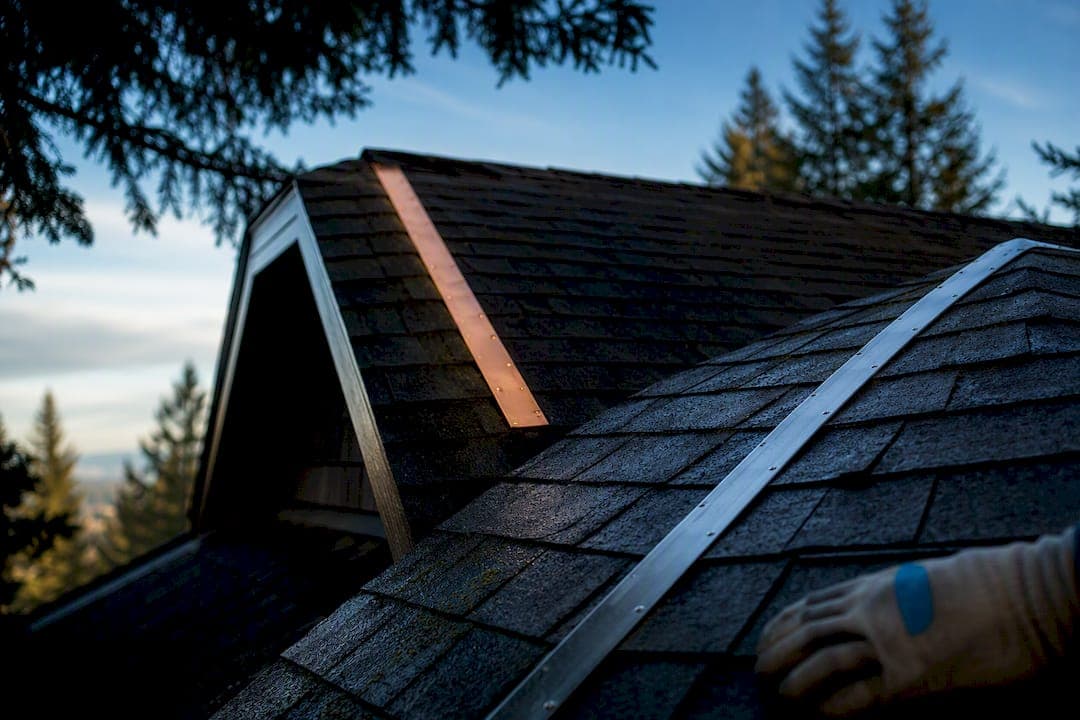
For most roofs with light to moderate shade, zinc strips do the job at a lower cost. If your roof sits under trees and keeps growing moss back year after year, copper is worth the extra money. Either way, clean the roof first: strips stop regrowth, they don't remove what's already there, and any metal runoff should be managed with Canadian water guidance in mind.
TL;DR:
- Zinc strips are cost-effective and suitable for roofs with light to moderate shade and good airflow but need replacement sooner than copper in wetter conditions.
- Copper strips, while more expensive upfront, last longer and are better suited for shaded, damp, or heavily moss-prone roofs, especially in complex roof geometries.
- Both metals slow moss by releasing ions through rainwater but do not remove existing moss, so a roof cleaning is necessary before installation.
- Proper placement involves installing strips at the ridge and along additional ridges for extended protection, avoiding valleys due to water pooling.
- Regular maintenance and ensuring compatible fasteners help keep strips effective, and runoff should be managed to protect nearby water bodies based on local water quality guidelines.
Table of Contents
- Zinc vs copper at a glance
- How zinc and copper strips actually work
- When copper earns its higher price
- How long each metal lasts, and what it costs
- Where and when to install roof strips
- What Canadian water guidance says about metal runoff
- Keeping strips working: maintenance and limits
- Where strips fit into a real roof care routine
- Get your roof cleaned right before you add strips
- Sources
- FAQ
Zinc vs copper at a glance
Both metals work the same way: rain washes trace ions off the strip and down the roof, slowing new moss and algae growth. The difference is in how strong that effect is and how long it lasts.
Zinc strips:
- Lower upfront cost, making them the practical pick for most homes.
- Work well on roofs with light to moderate shade and decent airflow.
- Need replacing sooner than copper on the same roof.
Copper strips:
- Release stronger ions and keep working longer, according to practical roofing comparisons.
- Perform better on shaded, damp, or repeat-offender roofs.
- Cost more upfront and can develop a visible green patina over time.
Best for: choose zinc if your roof gets decent sun and this is your first moss problem. Choose copper if the same shaded section keeps growing moss back no matter what you do.
How zinc and copper strips actually work
Zinc and copper strips are strips of raw metal fastened near the roofline. When rain hits them, it dissolves tiny amounts of metal and carries those ions down the roof surface as it flows toward the gutters. This isn't a coating or a chemical spray, it's a slow, steady release triggered by every rainfall.
That's also why coverage is directional. The area that benefits most is the strip of roof directly below the metal, in the path of the runoff. A ridge strip protects the water that flows down from the ridge, but it does very little for a section of roof that drains a different way. Rainfall frequency and drying time between storms also matter: a roof that dries out between rains supports less growth than one that stays damp.
One point homeowners often miss: zinc and copper strips slow new growth, they don't kill or lift what's already established. A roof with a thick moss mat needs to be cleaned before strips will do anything useful.
When copper earns its higher price
Exposure and roof geometry decide which metal makes sense. A south-facing roof with good airflow and minimal debris dries quickly between rains, and zinc usually keeps it clean. A north-facing roof shaded by conifers, or a valley that collects needles and leaves, holds moisture far longer, and that's where copper's stronger, longer-lasting ion release earns its keep.
Roof complexity matters too. A simple gable roof with one ridge line gets full protection from a single strip. A roof with multiple ridges, dormers, or long valleys needs more than one line of strips, since each ridge only protects the runoff path below it.
As a simple rule: if the same section of roof has needed cleaning more than once in a few years, or sits under a heavy tree canopy most of the day, spend the extra money on copper. If you're dealing with a first-time, light moss problem on a sunnier roof, zinc is enough. Copper generally outperforms zinc in shaded and recurring-growth conditions, but neither metal solves a moisture problem caused by poor drainage or overhanging branches.
How long each metal lasts, and what it costs
Copper strips generally outlast zinc strips and keep releasing effective ion levels for longer, which is the main argument for paying more upfront. Zinc costs less to buy and install but tends to need replacing sooner, especially in wetter, shadier spots where it's working hardest.
The trade-off is straightforward: if your roof rarely regrows moss, zinc's lower material cost wins over the strip's lifespan. If you're on a shaded roof that would otherwise need reworking every few years, copper's longer effective life can offset its higher price over time.

A couple of side notes worth knowing before you buy. Copper strips have a small resale value as scrap metal, which occasionally makes them a target for theft on accessible roofs. Both metals can leave streaking or a patina on roofing material over time, something to weigh against the visual style of your home.
Where and when to install roof strips
Placement and timing matter as much as which metal you choose.
- Install strips near the ridge first: this is the highest point on the roof, so it protects the longest possible runoff path.
- Add extra strip lines on long or wide roof sections, since one ridge line only protects the water flowing directly beneath it.
- Skip valleys as a primary placement: water pools and changes direction there, so strips are less reliable in that spot.
- Install strips right after a full roof clean, or at reroof time, never over an established moss mat.
- Keep the strip's fasteners and any flashing made from a different metal, since dissimilar metals in direct contact can corrode faster through galvanic reaction.
A contractor familiar with metal roofing detailing can confirm your fasteners and flashing are compatible before strips go on.
What Canadian water guidance says about metal runoff
Zinc and copper strips work by shedding metal into rainwater, and that water eventually reaches soil, storm drains, or nearby streams. British Columbia's technical guidance treats dissolved copper as the ecologically relevant fraction for aquatic life, meaning it's not the total metal present but the dissolved portion that determines toxicity risk, and that risk shifts with local water pH, hardness, and organic content, according to BC's copper water-quality guidelines. BC's zinc guidance treats zinc the same way, as a metal managed to protect freshwater aquatic life at low concentrations.
For most homeowners, the practical response is simple: keep gutters clear so runoff doesn't pool and concentrate metal near a single outlet, and where possible, direct downspout water onto planted beds or lawn rather than straight into a storm drain. If your property drains toward a stream, wetland, or any water body used for fish habitat or aquaculture, it's worth checking with your local municipality or provincial environment office before assuming your runoff is fine as is.

Keeping strips working: maintenance and limits
A quick seasonal check keeps strips doing their job. Look for green or grey staining trailing down from the strip, confirm the fasteners are still tight, and clear any leaves or needles piling up against the strip itself.
Strips won't help everywhere. Shingles nearing the end of their service life, or roof sections with a constant moisture source like a leaking flashing or overhanging branch, will keep growing moss regardless of the metal installed. If a strip seems to have stopped working, check the drainage path first, then the canopy overhead, before assuming the strip has failed. In most cases, a professional soft wash resets the roof and lets the strip do its job again.
Where strips fit into a real roof care routine
We generally recommend strips as a follow-up to a proper clean, not a replacement for one. On shaded coastal roofs across the Comox Valley, that combination, a full soft wash followed by strip placement at the ridge, tends to hold moss off far longer than either step alone.
Our crews pair that with gutter clearing so runoff doesn't sit and stall against clogged debris. It's a simple sequence, and it's the same one we walk homeowners through on our roof cleaning service page.
— Island
Get your roof cleaned right before you add strips
Strips only protect a roof that's already clean, so the first call worth making is for a proper soft wash. Our roof cleaning service uses low-pressure, eco-friendly methods to lift moss and grime without damaging shingles, and it comes with a two to two-and-a-half year moss-return guarantee, one of the reasons Comox Valley homeowners keep booking us instead of guessing at a DIY fix.
Once the roof is clean, we can talk through whether zinc or copper strips make sense for your specific exposure, and pair that with gutter cleaning so runoff never has a chance to pool. If your gutters are due for a look too, our gutter cleaning service covers that in the same visit. Book online or call 250 650 8123 to get a date on the calendar before the wet months set in.
Sources
British Columbia's technical reports on copper and zinc water-quality guidelines lay out how dissolved metal concentrations are assessed for aquatic life. For homeowner-facing installation advice, This Old House and other roofing comparisons cover placement and material trade-offs in more detail.
- Copper water quality guidelines for the protection of freshwater aquatic life — BC user’s guide
- Zinc vs copper strips for moss prevention (explanatory homeowner resource)
- This Old House — preventing roof moss with zinc (and copper) strips
FAQ
Which is better for roofing, copper or zinc strips?
Copper generally releases stronger ions and lasts longer, making it the better pick for shaded or repeat-moss roofs, while zinc costs less and suits roofs with lighter exposure. The right choice depends more on your roof's shade and moisture pattern than on one metal being universally superior.
Which is better for roof moss, zinc strips or copper strips?
For persistent moss on shaded or damp roof sections, copper tends to outperform zinc because its ion release is stronger and longer lasting, according to practical roofing comparisons. For lighter, first-time moss growth on sunnier roofs, zinc is usually enough.
Do zinc strips on roofs work?
Yes, zinc strips slow new moss and algae growth by releasing trace ions into rainwater as it runs down the roof. They work best on roofs with moderate sun exposure and won't remove moss that's already established, so cleaning first is essential.
Which is better for a roof, copper or zinc?
Neither metal is better in every case: copper suits shaded, high-moisture roofs with recurring growth, while zinc suits roofs with lighter exposure and lower budgets. Both only prevent new growth and need to be installed on a roof that's already been cleaned.