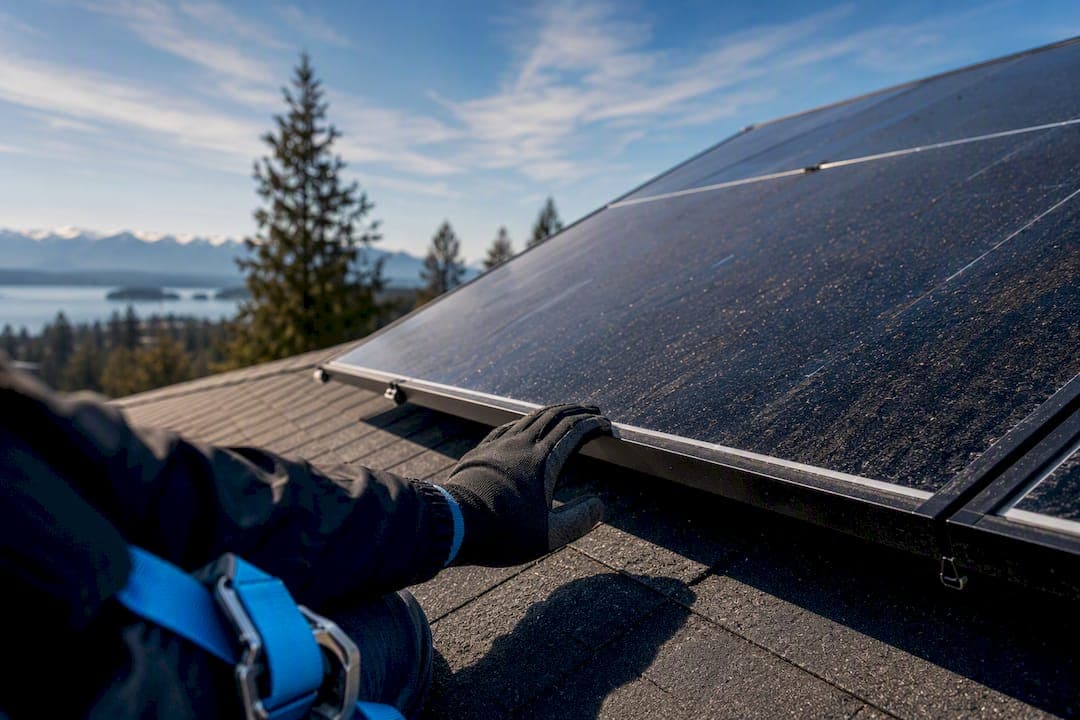
Cleaning your solar panels can recover several percents of lost power, and the payoff depends on your soiling level, roof tilt, and local weather. It usually pays off when you have heavy bird droppings, a low-tilt array, or a dusty, dry site nearby. In rainy, temperate regions, a DIY wipe-down beats paying for a professional visit most years.
TL;DR:
- Cleaning can recover up to 15% or more of lost power in dusty, coastal, or high bird droppings areas, especially when dirt causes significant shading.
- Professional cleaning rarely pays for itself in rainy climates unless your soiling losses exceed about 8% annually, which is uncommon outside dusty or salty environments.
- Frequency of cleaning varies by climate, with biannual or quarterly intervals recommended depending on site conditions, always guided by output monitoring rather than a fixed schedule.
- Safe DIY cleaning involves rinsing with a gentle hose, wiping with a soft brush or squeegee, and avoiding pressure washers or harsh detergents to prevent panel damage.
- Hiring a professional is advisable if roof safety is a concern, your warranty requires approved service, or you want combined roof and panel maintenance for better protection and performance tracking.
Table of Contents
- Solar panel cleaning benefits: what you actually gain
- Cost and ROI: when solar panel cleaning pays off
- How often should you clean solar panels?
- Safe cleaning methods for homeowners
- When cleaning matters most on your property
- Warranty, appearance, and water-use trade-offs
- Why we still recommend a professional set of eyes on your roof
- Islandmossbusters: solar panel cleaning done safely, alongside your roof care
- Sources
- FAQ
Solar panel cleaning benefits: what you actually gain
Dirt, pollen, and bird droppings block sunlight before it ever reaches your cells. Even a thin film can scatter enough light to cut your output, and a concentrated patch of droppings can shade an entire cell string, dragging down the whole panel's performance rather than just the dirty spot. That is the core reason cleaning solar panels matters more than most homeowners realize.
Here are the real advantages you get from staying on top of it:
- Higher light transmission, less shading loss. Removing grime lets more sunlight hit the cells directly, which is the most immediate way cleaning improves solar panel efficiency.
- Meaningful production recovery in the right conditions. Global soiling losses average roughly 4 to 7% a year, but they climb to 15% or more in deserts, high pollution zones, and coastal areas exposed to salt spray, according to an industry review of dust and PV performance. Concentrated soiling from bird droppings behaves differently than diffuse dust. It can cause a sharper, localized power drop even when your overall roof looks fairly clean.
- Lower risk of permanent cell damage. Debris sitting on a panel for months can contribute to hot spots and accelerated degradation in the shaded area, since that section works harder while producing less. Catching this early during a cleaning pass often means spotting a problem before it becomes a warranty claim.
- Early detection of real damage. A cleaning visit puts eyes on every panel, which is when cracked glass, loose mounting hardware, or a nesting bird gets noticed.
- Better curb appeal and resale value. Streaked, grimy panels look neglected from the street or in listing photos, and a clean roofline signals a well-maintained home.
- Reduced fire and pest risk. Leaves, nests, and dry debris trapped under panels are a genuine hazard, and clearing them out removes fuel and discourages animals from settling in.
- A modest environmental win. Recovering lost output means your system produces more clean energy per panel, and less wasted potential offsets some of the water or labour used to clean it.
None of this means every home needs frequent professional service. It means the benefit is real, and the size of that benefit depends entirely on your specific site.
Cost and ROI: when solar panel cleaning pays off
The ROI math is simple: multiply your system's typical daily output by your estimated soiling loss percentage, then compare that recovered energy value against what cleaning costs you. Whether it is worth paying for depends entirely on the price of the visit.
- DIY supplies typically run $15 to $40 and take one to three hours for an average home.
- Professional cleaning visits typically cost $120 to $280 depending on roof access and system size.
Statistic to remember: residential professional cleaning rarely breaks even unless annual soiling losses exceed roughly 8%, a threshold most homes in rainy climates never hit. That is why UC San Diego researchers found paid cleaning often did not pay back at many California sites, with low-tilt arrays and persistently dusty locations as clear exceptions. Keep before-and-after monitoring data anyway. It protects your warranty claims and helps you catch gradual degradation early.
How often should you clean solar panels?
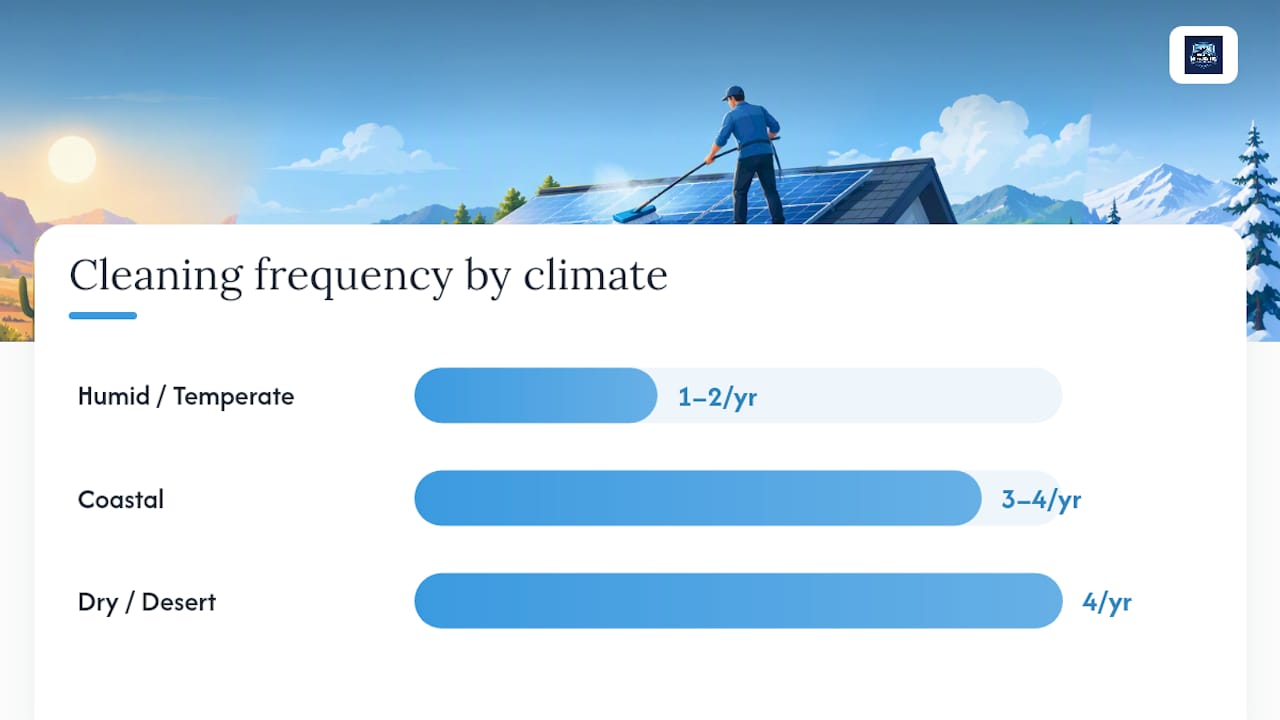
There is no single universal schedule. An IEEE techno-economic study comparing four global locations found the ideal cleaning frequency shifts with local soiling rate, cleaning cost, and your utility tariff, not a fixed calendar.
A practical starting point by climate:
- Humid or rainy regions: once or twice a year, since rainfall does much of the work for you.
- Temperate climates: spring and late summer cleanings are usually enough, per Enphase's homeowner guidance of one to two cleans annually for most residential systems.
- Dry or desert regions: quarterly, or after any dust storm.
- Coastal properties: every three to four months to manage salt film buildup.
- Near farms or highways: monitor closely and spot-clean after harvest, spraying, or construction dust events.
The smarter trigger is your monitoring app, not the calendar. When output drops without a matching change in weather, that is your cue to check the panels.
Safe cleaning methods for homeowners
Cleaning solar panels safely starts with timing. Early morning or an overcast day works best, since cold water on hot glass can cause thermal shock and micro-cracking.
- Shut down the system at the inverter following your manufacturer's procedure.
- Rinse loose dust and debris with a garden hose on a gentle setting.
- Wipe gently with a soft brush or squeegee and a small amount of mild, biodegradable soap.
- Rinse thoroughly and let panels air dry before restarting the system.
Avoid pressure washers, abrasive sponges, and strong detergents entirely. Popular Mechanics warns that pressure washing can crack seals and force water into junction boxes, which voids most manufacturer warranties outright.
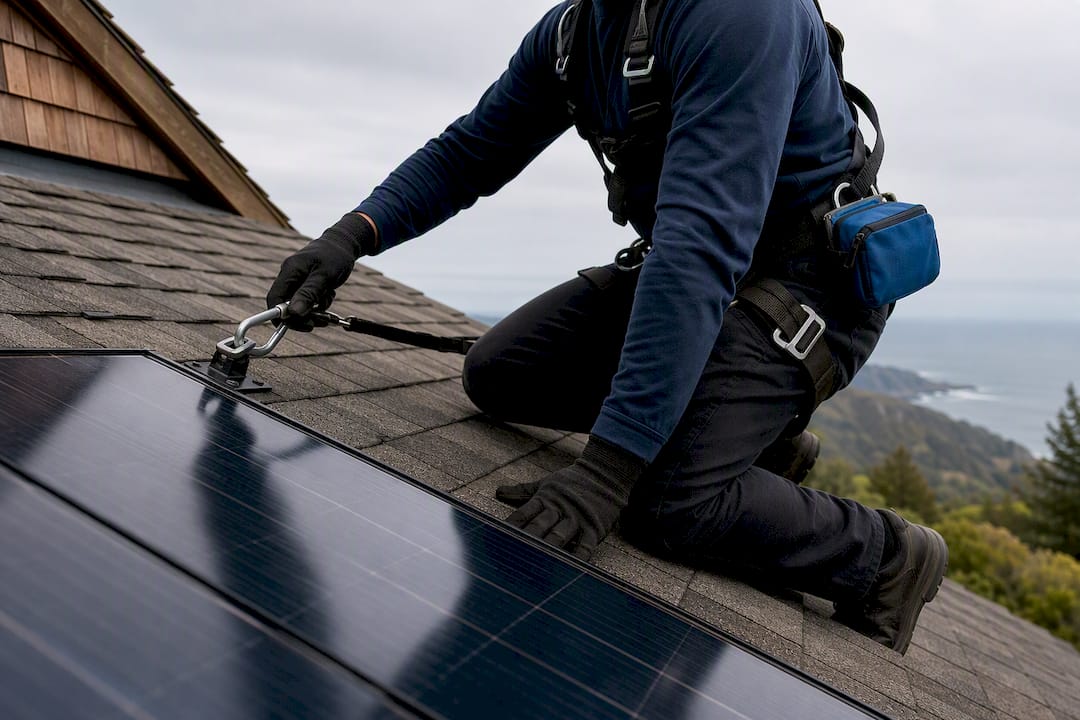
Call a professional if your roof is steep, you cannot safely isolate the DC side, or your warranty specifies approved service providers. Trained crews carry the right harnesses and know how to access panels without walking on fragile mounting rails.
Pro Tip: Screenshot your inverter app's daily output before and after cleaning. That single comparison tells you, in real numbers, whether the job was worth the time or money you spent on it.
When cleaning matters most on your property
Not every roof faces the same soiling risk. A few site factors push cleaning from "nice to have" to genuinely necessary:
- Low-tilt panels (under 15 degrees) trap dust and droppings instead of letting rain wash them off.
- Proximity to highways, farms, or industrial sites adds fine particulate and organic residue faster than typical suburban dust.
- Coastal homes deal with salt spray that leaves a stubborn film rain alone cannot fully clear.
- Trees with roosting birds overhead concentrate droppings on specific cells, causing localized shading loss.
- Seasonal events like pollen season or a regional dust storm can justify a spot-clean outside your normal schedule.
A typical Comox Valley homeowner with a steep roof and regular rain rarely needs more than a seasonal check. A home near farmland or with low-slope panels under a tree tells a different story entirely.
Warranty, appearance, and water-use trade-offs
Beyond kilowatt-hours, a few practical factors shape the cleaning decision. Manufacturer warranties sometimes specify approved cleaning methods, and keeping simple before-and-after records protects you if you ever need to file a claim over premature degradation.
- Clean panels catch buyers' eyes during a home sale and photograph better for listings.
- A cleaning visit is also a visual inspection, catching bird nests or hail damage early.
- Low-water and waterless methods exist, though a 2026 comparative study found robotic and electrostatic systems perform best on large arrays, while manual cleaning remains the most practical option for a typical home.
Why we still recommend a professional set of eyes on your roof
The company approaches every panel with the same care as a roof inspection for moss. Most homes we visit need a light seasonal clean, not monthly service, and we say so honestly. We document conditions before we start, so you have a clear before-and-after picture for your own records. Before any visit, clear roof access and confirm your inverter shutdown steps with your installer.
— Island
Islandmossbusters: solar panel cleaning done safely, alongside your roof care
If your panels sit on a mossy or grimy roof, cleaning them in isolation only solves half the problem. Islandmossbusters is the local alternative to hiring separate specialists for your roof, gutters, and solar array. Our crews already work at height using safe, low-pressure methods and Canadian made eco-friendly solutions, so adding solar panel cleaning to a scheduled roof cleaning and moss removal visit means one insured team, one appointment, and no guesswork about DC isolation or roof access.
We back our roof work with a two to two-and-a-half year moss return guarantee, and we pair it naturally with gutter cleaning and spraying advice so debris does not just move from your panels into your downspouts. If you are in Comox, Courtenay, or anywhere across the Comox Valley, call 250 650 8123 or book your visit at Islandmossbusters to get your panels and roof looked after in one trip.
Sources
- UC San Diego study on soiling and PV performance
- Solar panel cleaning and maintenance guide | Enphase
- How to clean solar panels | Popular Mechanics
FAQ
Does cleaning solar panels really make a difference?
Yes, but the size of the difference depends on your soiling level and site. In dusty or coastal areas, losses can reach 15% or more annually, while rainy, temperate homes often see only a small daily loss that cleaning barely moves.
How often should solar panels be cleaned?
Most residential systems only need cleaning one or two times a year, with quarterly service for dusty, coastal, or agricultural sites. Let your monitoring app's output drop, not the calendar, decide when it is time.
What should you not clean solar panels with?
Never use a pressure washer, abrasive sponge, or strong detergent, since these can crack seals and void your warranty, according to Popular Mechanics. Stick to a soft brush, mild soap, and a gentle hose rinse in cool conditions.