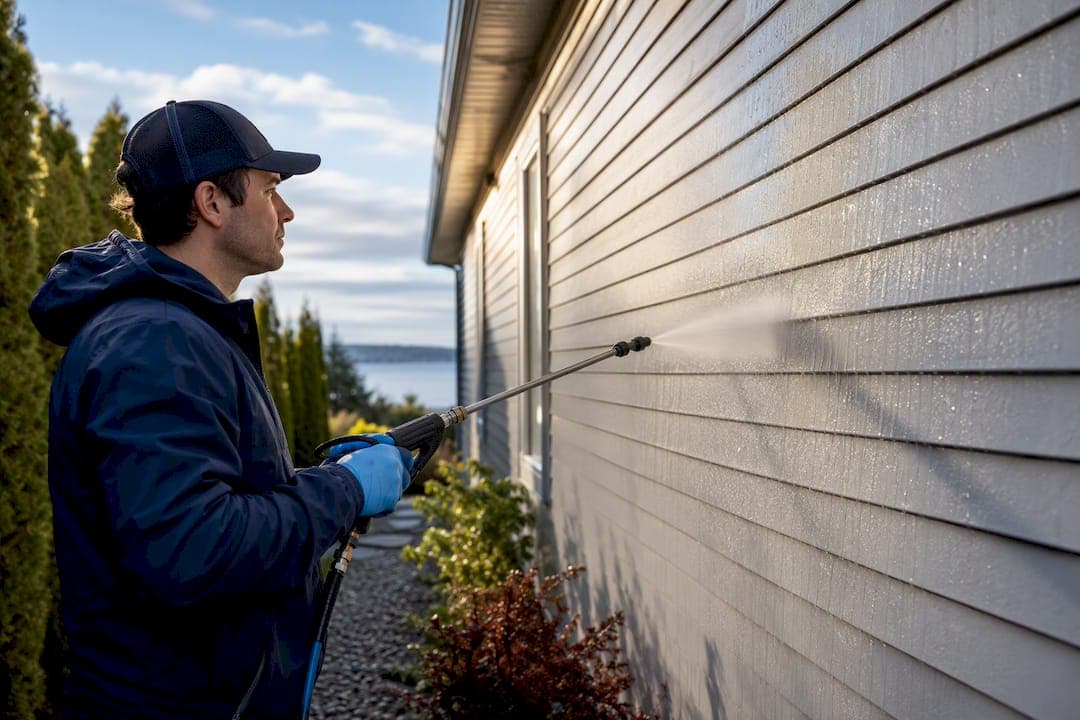
Soft washing uses low-pressure water and a chemical mix to kill mould, algae, and moss at the root, instead of blasting them off with force. It works safely on most siding when the mix stays around 1 to 2% on-surface concentration. DIYers can handle small, easy-access jobs with the right gear, but roofs, multi-storey homes, and heavy moss call for a professional.
TL;DR:
- Soft washing typically lasts over a year on siding, while pressure washing often requires re-treatment within months due to spores not being killed.
- The ideal chemical concentration for soft washing is 1 to 2% sodium hypochlorite on the surface, with higher mixes risking paint oxidation and plant damage.
- DIYers should use a downstream injector or a 12V pump system to accurately dilute the chemical mix, avoiding nozzle tips designed for concrete.
- Soft washing is suitable for various sidings and roofs, but concrete, brick, and unpainted masonry usually need pressure cleaning instead.
- Professionals prioritize timing, wind, and chemical control, with late summer or early fall being optimal for moss removal before conditions worsen.
Table of Contents
- What is soft washing a house, and how does it differ from pressure washing?
- What equipment do you need to soft wash a house?
- What chemical mix is safe for soft washing siding?
- How do you soft wash a house step by step?
- When should you hire a professional instead of DIY soft washing?
- What do professional crews see that homeowners often miss?
- Why the "just pressure wash it" advice keeps homeowners stuck in a cycle
- Book a soft wash with Island Moss Busters
- Sources
What is soft washing a house, and how does it differ from pressure washing?
Soft washing kills organic growth with chemistry, not force. A pressure washer relies on mechanical impact to strip dirt off a surface, which works fine on concrete but can crack vinyl, strip paint, or drive water behind siding on a house. Soft washing applies a diluted cleaning solution at low pressure, lets it sit long enough to kill algae and mould at the root, then rinses it away.
The difference shows up in how long the results last. Soft-wash results on siding typically hold for over a year and up to two years, while pressure-only cleaning often lets regrowth return within months because it never kills the spores.
Surfaces suited to soft washing:
- Vinyl, fibre cement, cedar shakes, stucco, and most painted siding
- Asphalt shingle and metal roofs with moss or lichen
- Fences, soffits, and covered patio ceilings
Surfaces that usually still need pressure washing:
- Concrete driveways, patios, and walkways
- Brick and unpainted masonry
What equipment do you need to soft wash a house?
A downstream injector is the entry point for most DIYers. It hooks onto a standard pressure washer and pulls chemical from a tank, diluting stock solution before it hits the surface. Injectors run about $30 to $80, and dilution ratios vary between roughly 7:1 and 10:1 depending on the injector and machine flow rate.
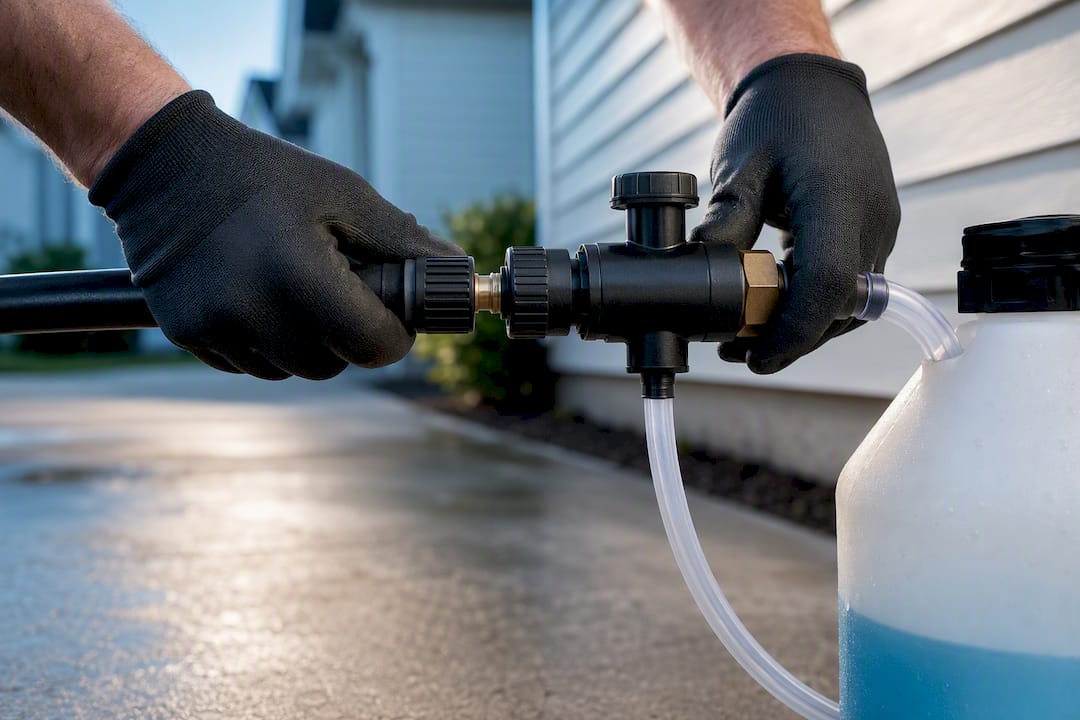
Professionals more often run 12V pump systems, which cost more upfront (around $300 to $700) but give tighter control over mix ratios and pressure across a full day of work.
Round out the kit with:
- A 65° nozzle for soap application and 25° or 40° nozzles for rinsing
- A mixing tank sized to the job, plus a chemical-resistant pickup hose
- Chemical-rated gloves, splash goggles, and a respirator rated for chlorine fumes
Pro Tip: Skip 0° pinpoint tips and rotary "turbo" nozzles entirely on siding. They're built for concrete and will force water and chemical behind panels.
What chemical mix is safe for soft washing siding?
Most soft-wash mixes start with 12.5% sodium hypochlorite, the same strength found in pool shock, then get diluted down through the injector or pump to a target on-surface concentration of roughly 1 to 2%. That downstream dilution behaviour catches a lot of first-time DIYers off guard: tank mixes need to be far stronger than the target surface percentage, and a small math error at the tank can easily double what actually lands on your siding.
On-surface target: aim for 1 to 2% sodium hypochlorite on the surface for routine house washing. Going past that range raises the risk of paint oxidation and plant damage without cleaning any faster, according to operator guidance on vinyl siding.
Add a surfactant to the mix. It helps the solution cling to vertical siding long enough to work, rather than sheeting straight off. Surfactants widen your practical dwell window, but keep them off windows and screens, since they can leave a film behind.
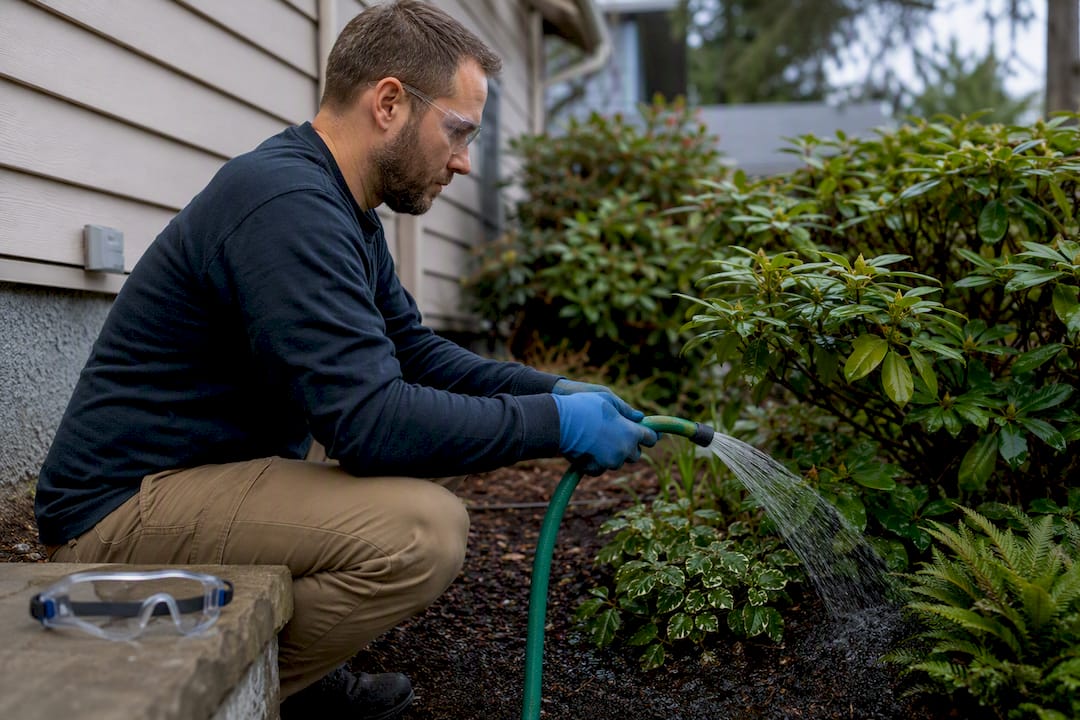
Before you turn anything on, soak nearby plants and shrubs with plain water for general cleaning tips. Have a garden hose ready to re-rinse them the moment you finish, and keep gloves, goggles, and a respirator on the whole time you're mixing or spraying.
How do you soft wash a house step by step?
Work methodically and you'll avoid the two mistakes that cause almost every callback: letting the mix dry on the siding, and rushing the rinse.
- Inspect and prep. Walk the house and note any loose siding, cracked caulking, or bare wood that chemical could soak into. Move patio furniture, close windows, and bag anything electrical that sits at spray height.
- Pre-wet landscaping. Soak every plant, shrub, and lawn patch within reach of overspray.
- Mix and check your ratio. Fill the tank to your recipe, confirm the injector or pump is dialed to the correct dilution, and attach your nozzles.
- Apply bottom-up. Spray the lowest section of a wall first, working upward at roughly 100 to 200 PSI with the 65° soap tip. Bottom-up application prevents streak-loading, the vertical drip lines that form when solution runs down over already-clean surface.
- Hold your dwell time. Let the mix sit for 5 to 15 minutes depending on heat and shade; hot, sunny walls need shorter dwell to avoid flash-drying. Keep the surface visibly wet the whole time. A cloudy, cool day gives you more working room than a hot, windy one.
- Rinse top-down. Switch to the 25° or 40° nozzle and rinse from the roofline down, at 200 to 500 PSI, holding a standoff distance of 6 to 12 inches. Application distance runs wider, at 12 to 18 inches, to avoid forcing water behind panels.
- Work in sections. Tackle one side of the house at a time, and test any new product on an inconspicuous panel before committing to the whole wall.
- Flush the landscaping. Re-rinse every plant you pre-wetted, and neutralize runoff near sensitive beds if you're unsure how much chemical made it into the soil.
Pro Tip: Wind is the enemy of a clean soft wash. Overspray on a breezy day lands on plants, cars, and windows you never intended to hit, so reschedule if gusts pick up.
When should you hire a professional instead of DIY soft washing?
Some jobs are safer left to a crew with the training and gear to do them right the first time. Reach for the phone instead of the sprayer if you're facing:
- Roof moss or lichen removal, where footing and chemical runoff both carry real risk
- A multi-storey home where ladder work or extension wands are involved
- Thick, established moss or lichen that needs a stronger dwell and repeat treatment
- A property near a pond, well, or sensitive plantings where runoff control matters
- Missing PPE or an unclear read on your mix ratios
Before signing anything, ask a prospective company exactly which chemicals they use and at what on-surface percentage, what equipment they run, whether they carry insurance, and how they handle plant protection and runoff. Ask for references and a written guarantee too.
Budget-wise, typical vinyl siding jobs run about $0.20 to $0.35 per square foot, which works out to roughly $300 to $525 for a 1,500 square foot single-storey home and $500 to $900 for a two-storey home around 2,000 square feet. Most residential house washes take a crew half a day to a full day, depending on siding condition and access.
What do professional crews see that homeowners often miss?
Most callback jobs share the same root causes: solution left to dwell too long in direct sun, application on a windy day that pushed overspray onto plants or windows, or landscaping that never got pre-wetted before the first pass. Crews who've done this hundreds of times build habits around exactly those failure points, checking wind and sun exposure before mixing a single tank.
On Vancouver Island's coast, timing matters more than most homeowners expect. Moss and algae take hold fastest through the wet fall and winter months, which makes late summer through early fall the ideal window to soft wash before conditions turn. A crew using eco-friendly solutions, backed by a moss return guarantee on roof work, reflects the kind of standard that separates a one-time clean from a lasting result.
Why the "just pressure wash it" advice keeps homeowners stuck in a cycle
The most common piece of bad advice is treating a house wash like a driveway wash: crank the PSI, blast the dirt off, done. That approach strips wax off vinyl, drives water behind panels, and leaves algae spores alive underneath the surface, which is exactly why so many homeowners find themselves rewashing the same wall every single season.
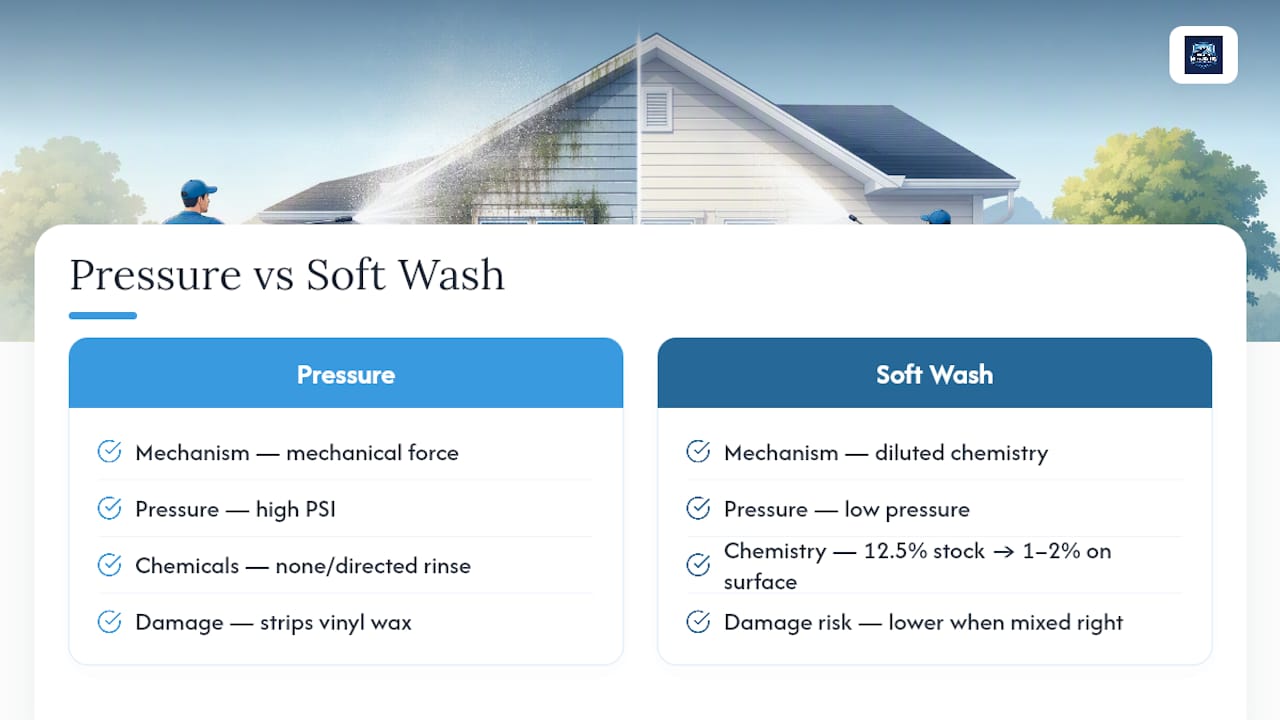
What actually matters is the math most DIY guides skip over: getting from a 12.5% stock chemical down to a 1 to 2% on-surface concentration through your specific injector or pump. Get that wrong and you're either wasting chemical on a mix too weak to work, or risking paint and plant damage on a mix that's too hot. That's the detail worth spending your time on, not the brand of nozzle you buy.
If there's one thing worth prioritizing first, it's dwell time discipline. Rushing the rinse or letting solution flash-dry on a hot wall causes more streaking and damage complaints than any other single mistake. Slow down, watch the wall stay wet, and the rest of the process falls into place.
— Island
Book a soft wash with Island Moss Busters
A local exterior cleaning company gives homeowners a done-right alternative to renting equipment and guessing at chemical ratios. Their crews run the correct on-surface concentrations every time, protect landscaping before a drop of chemical goes down, and back roof work with a moss return guarantee.
A typical visit starts with a walk-around to check siding condition, plantings, and access, followed by a written quote covering the chemical mix, timeline, and any prep work like pre-wetting or masking. They use eco-friendly solutions on every job, whether it's a single-storey home in Courtenay or a multi-storey property near Qualicum Beach. Pair a house wash with gutter cleaning or roof moss removal to get the whole exterior handled in one visit before the wet season sets in. Call 250 650 8123 or book your quote online to get a date on the calendar.
Sources
The mixing ratios, PSI ranges, and application sequence in this guide draw from MakeWash's operator guide for downstreaming math and pricing, Soft Wash Technologies for step-by-step workflow, and Motor For Nerd for bottom-up technique and streak prevention.
- Pressure Washing Vinyl Siding: Complete Operator Guide · MakeWash
- How to Soft Wash Siding: 2026 Expert Guide & Reviews - Motor For Nerd
- Soft Wash vs Pressure Wash for Bellingham Homes: Which Method Saves Your Siding | Bellingham Painting Co.