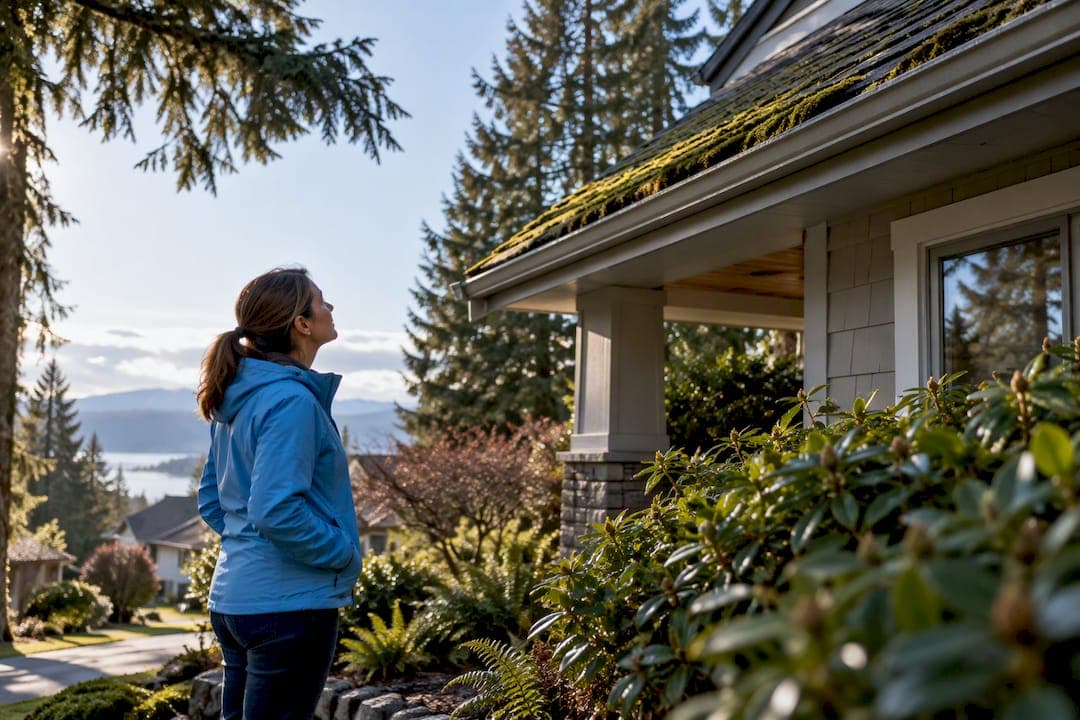
Most homes need a roof cleaning at regular intervals based on roof material, climate, and how much tree cover shades your property. Asphalt shingles typically require more frequent cleaning than metal roofs, which often can wait longer. Spring and fall are the best windows to book, since both seasons let you clear debris before the weather turns.
TL;DR:
- Cleaning frequency should be adjusted based on climate, tree cover, roof material, and recent storms, with more frequent cleaning needed in wetter or shaded areas.
- Asphalt shingles typically require cleaning every one to five years, while metal roofs can often go longer between cleanings, usually around three to five years.
- DIY cleaning is suitable for gutters and ground checks, but professional soft washing is recommended to avoid damage and ensure thorough moss and algae removal.
- Regular inspections twice a year, especially in spring and fall, help detect early signs of moss or debris buildup, delaying costly repairs.
- Using eco-friendly, low-pressure cleaning solutions extends roof lifespan, reduces environmental impact, and minimizes the risk of mold-related health issues.
Table of Contents
- Why regular roof cleaning matters
- Factors that determine how often you should clean your roof
- Recommended cleaning intervals by roof type and environment
- DIY vs professional cleaning: what homeowners can do and when to hire a pro
- Inspection schedule and visual signs that mean you need a clean now
- Practitioner perspective: what a Vancouver Island roof cleaning crew sees on the job
- Impact of roof cleaning frequency on roof lifespan and maintenance costs
- Environmental benefits and considerations related to cleaning frequency
- Health implications of infrequent roof cleaning such as mold allergy risks
- What the conventional advice on roof cleaning gets wrong
- How to get Island Moss Busters to inspect or clean your roof
- Sources
- FAQ
Why regular roof cleaning matters
Moss, algae, and leaf litter hold moisture against your shingles long after a storm passes. That trapped moisture softens roofing materials over time and gives biological growth a foothold that spreads faster the longer it sits there.
A maintenance-first approach pays off. Roof life-cycle research from NRC Canada found that regular inspection and upkeep lowers life-cycle costs and helps roofs avoid the steep expense of early replacement. Skipping cleaning does not save money. It just delays a bigger bill.
Clean roofs also support:
- Curb appeal: streak-free shingles make a home look cared for, which matters if you are selling.
- Energy performance: dark moss and algae patches can absorb extra heat compared to a clean roof surface.
- Warranty and insurance standing: some manufacturers and insurers expect documented maintenance if you ever file a roof-related claim.
Factors that determine how often you should clean your roof
Your ideal interval shifts based on a handful of local conditions. Start with these before locking in a schedule.
- Climate and exposure: humid, rainy, or salt-exposed coastal areas encourage faster moss and algae growth than dry inland climates.
- Tree cover and shade: overhanging branches drop needles and leaves and block sunlight that would otherwise dry the roof surface.
- Roof pitch and drainage: low-slope roofs and clogged gutters hold water longer, which speeds up biological growth.
- Roof material: some materials shed water and resist growth better than others, which changes how often they need attention.
- Recent storms or visible damage: wind-blown debris and missing granules are signals to move up your next cleaning regardless of your usual schedule.
Pro Tip: Walk the perimeter of your home twice a year with binoculars and check the north-facing slope first. It dries slowest and shows moss and algae before any other section of the roof.
Recommended cleaning intervals by roof type and environment
Material matters as much as climate when you are setting a schedule. Here is how the main roofing types typically break down.
- Asphalt shingles: CertainTeed's maintenance guidance puts typical cleaning at every one to five years depending on exposure, with homes under heavy tree cover or in wet climates trending toward the annual end of that range.
- Metal roofs: their smooth, sloped surface sheds water and debris well, so they often go longer between cleanings than shingles, though valleys and seams still deserve a seasonal check.
- Tile and slate: these materials are durable but porous grout lines and overlapping tiles trap moisture, which raises moss risk and often calls for cleaning closer to once a year in wet regions.
- Cedar and wood shake: wood absorbs moisture readily and needs more frequent attention along with protective treatments to prevent rot and fungal growth.
Heavy tree cover or a coastal, wet climate pushes every one of these ranges toward the shorter end. A metal roof under a stand of fir trees on a rainy coastline may need the same attention as an asphalt roof in a drier, more open setting.
DIY vs professional cleaning: what homeowners can do and when to hire a pro
Some roof upkeep is safe to handle yourself. Clearing gutters from a ladder, removing small piles of leaves with a leaf blower, and doing a ground-level visual check are all reasonable homeowner tasks.
Climbing onto the roof itself is a different story. Walking on shingles can crack tiles or dislodge granules, and a fall from roof height carries obvious risk. CertainTeed also advises against high-pressure washing, which can strip granules and shorten a shingle roof's life even as it clears the surface.
That is where professional soft washing comes in. Soft wash treatments use low-pressure application and cleaning solutions designed to kill moss and algae at the root, paired with an inspection that catches problems before they grow.
- Roof size and pitch affect how long a job takes and how much access equipment is needed.
- Infestation level determines whether a single treatment is enough or a heavier application is required.
- Safety and access on steep or multi-storey roofs often add to the cost of a professional visit.
A maintenance-first approach is generally more cost-effective than reactive repair or replacement, according to NRC Canada's roof life-cycle analysis, which found that regular upkeep reduces the odds of a roof failing before its expected service life.
Inspection schedule and visual signs that mean you need a clean now
A regular inspection habit catches small problems while they are still cheap to fix. Trade and manufacturer guidance generally recommends checking your roof at least once a year, with twice yearly, in spring and fall, as the ideal cadence.
- Spring inspection: clears winter debris and catches early moss or algae before the warmer months help it spread.
- Fall inspection: prepares the roof for winter and clears gutters, which reduces the risk of ice damming once temperatures drop.
- Post-storm checks: after any major wind or rain event, look for missing granules, lifted shingles, or debris piled in valleys.
- Immediate triggers: persistent moss patches, dark streaking, blocked valleys, or sagging gutters mean you should book a cleaning rather than wait for your next scheduled check.
You can do the first pass yourself from the ground. Walk around your home, look at each roof plane with binoculars, and check that gutters are flowing freely rather than overflowing during rain.
Practitioner perspective: what a Vancouver Island roof cleaning crew sees on the job
Island Moss Busters works on roofs across the Comox Valley and the surrounding coastline, where damp winters and heavy tree cover push most homes toward the shorter end of the cleaning range. The team backs its roof soft washing and moss removal service with a two to two and a half year moss return guarantee, a commitment that reflects how thoroughly the crew treats moss at the root rather than just knocking it off the surface.
Every job uses eco-friendly cleaning solutions and low-pressure application, and every crew is fully insured. On roofs shaded by cedar or fir, homeowners in this climate often see moss return faster than the guarantee window unless gutters and valleys are kept clear between visits, which is why pairing gutter cleaning with roof treatment tends to stretch the interval between full cleanings.
Impact of roof cleaning frequency on roof lifespan and maintenance costs
The connection between cleaning frequency and roof lifespan comes down to what moisture does when it is left in place. Moss and algae hold water against the roofing surface, and that sustained dampness accelerates wear on shingles, tile grout, and wood shake alike.
NRC Canada's life-cycle research frames this as a cost curve rather than a single event: roofs maintained on a regular schedule avoid the steep cost spike that comes with premature replacement. A small annual or biennial cleaning investment defers a much larger expense down the road.
This matters most for homeowners who plan to stay in their home for years, since deferred maintenance compounds. A roof that goes uncleaned for five years in a damp, shaded location is not just five years further into its lifespan. It has spent that time absorbing moisture damage that a one or two year old roof in the same spot never experienced. The same logic applies to commercial buildings, where a missed cleaning cycle on a large roof can turn into a costly repair contract instead of a routine maintenance line item.
Setting your cleaning frequency by material and climate, rather than by habit or guesswork, is the difference between managing a roof's expected wear and paying to fix damage that regular cleaning would have prevented.
Environmental benefits and considerations related to cleaning frequency
Roof cleaning frequency has an environmental side that is easy to overlook. A roof cleaned with a low-pressure soft wash and biodegradable solutions has a lighter footprint than one cleaned with high-pressure equipment and harsh chemical treatments, both in water use and in what eventually runs off into the yard or storm drain.
Cleaning on a sensible schedule, rather than either neglecting the roof for years or over-cleaning it, also limits how much product and water gets used over the life of the roof. A roof cleaned appropriately every one to three years, matched to its material and exposure, needs less aggressive treatment than one that has been left long enough for moss to establish a deep root structure.
There is also a materials angle. Extending a roof's usable life through regular cleaning reduces how often shingles, tile, or wood shake end up in landfill through early replacement, which lines up with the same maintenance-first logic that keeps costs down. Choosing a service that uses eco-friendly cleaning solutions and gentle application methods keeps that environmental benefit intact rather than trading one problem for another.
Health implications of infrequent roof cleaning such as mold allergy risks
A roof left uncleaned for years does not just look worn. Moss, algae, and organic debris create a damp environment that can support mold growth, particularly in valleys, around chimneys, and near clogged gutters where water pools.

Mold spores from a neglected roof can work their way into attic spaces through small gaps and vents, and prolonged exposure to mold is a known trigger for allergy symptoms and respiratory irritation in sensitive individuals. Homes with poor attic ventilation are especially vulnerable, since trapped moisture from a mossy roof has fewer ways to escape.
Keeping gutters clear and cleaning the roof on a regular schedule reduces how much moisture reaches the attic in the first place. This is one more reason inspection cadence matters as much as the cleaning itself: catching a damp patch or early moss growth during a spring or fall check means addressing it before it becomes an indoor air quality problem rather than just a roofing one.
What the conventional advice on roof cleaning gets wrong
Most roof cleaning advice treats frequency as a fixed number, telling every homeowner to clean every year or every two years regardless of what is actually happening on their roof. That is the wrong starting point. The material overhead your roof, the trees around your property, and your regional climate matter more than any generic calendar rule.

The bigger blind spot is that most homeowners wait for visible moss before they act, when the smarter move is treating inspection as the real habit worth building. A five-minute walk around your home twice a year catches problems while they are still a quick soft wash rather than a moss infestation that has already worked into the shingle surface.
If you take one thing from this guide, prioritize the spring and fall inspection over any specific interval. Let what you actually see on your roof, not a number in an article, decide when to book the next cleaning. The homeowners who stay ahead of moss and algae are the ones who look, not the ones who count years.
— Island
How to get Island Moss Busters to inspect or clean your roof
If your roof is showing moss, streaking, or clogged valleys, a professional soft wash gets ahead of the problem without the risks of DIY roof walking or high-pressure equipment. Island Moss Busters serves homeowners and commercial properties across the Comox Valley and the wider Vancouver Island region, using low-pressure soft wash treatments and eco-friendly cleaning solutions on every job.
- A soft wash appointment starts with a full inspection to confirm moss growth, gutter condition, and any early damage.
- Treatment targets moss and algae at the root using low-pressure application, not a high-pressure blast that risks the shingle surface.
- Roof cleaning jobs are typically backed by a moss return guarantee and completed by insured professional crews.
Book an inspection or request a quote through the roof cleaning and moss removal service page, or call 250 650 8123 to get on the schedule before the wet season sets in.
Sources
FAQ
How much should I pay to have my roof cleaned?
Roof cleaning cost depends on roof size, pitch, moss level, and access, so pricing varies by property. Island Moss Busters provides quotes for its roof soft washing and moss removal service after assessing these details for your specific home.
What time of year should you clean your roof?
Spring and fall are the best windows, since spring clears winter debris and treats growth before warm months, while fall prepares the roof for winter and lowers the risk of ice damming. Cleaning outside these windows still helps if you spot moss or streaking sooner.
What time of year should you put moss killer on your roof?
Moss treatments generally work best in the spring or fall inspection windows, alongside a full cleaning, since cooler and damper conditions in these seasons match the periods when moss growth is most active. Treating during these windows lines up with the twice yearly inspection cadence recommended for most homes.
What is the average cost to soft wash a roof?
Soft wash pricing depends on the same factors as any roof cleaning cost, including roof size, pitch, and moss severity, so there is no single average figure. Homeowners can get an exact quote for a soft wash treatment through a professional roof cleaning service after an on-site or photo-based assessment.