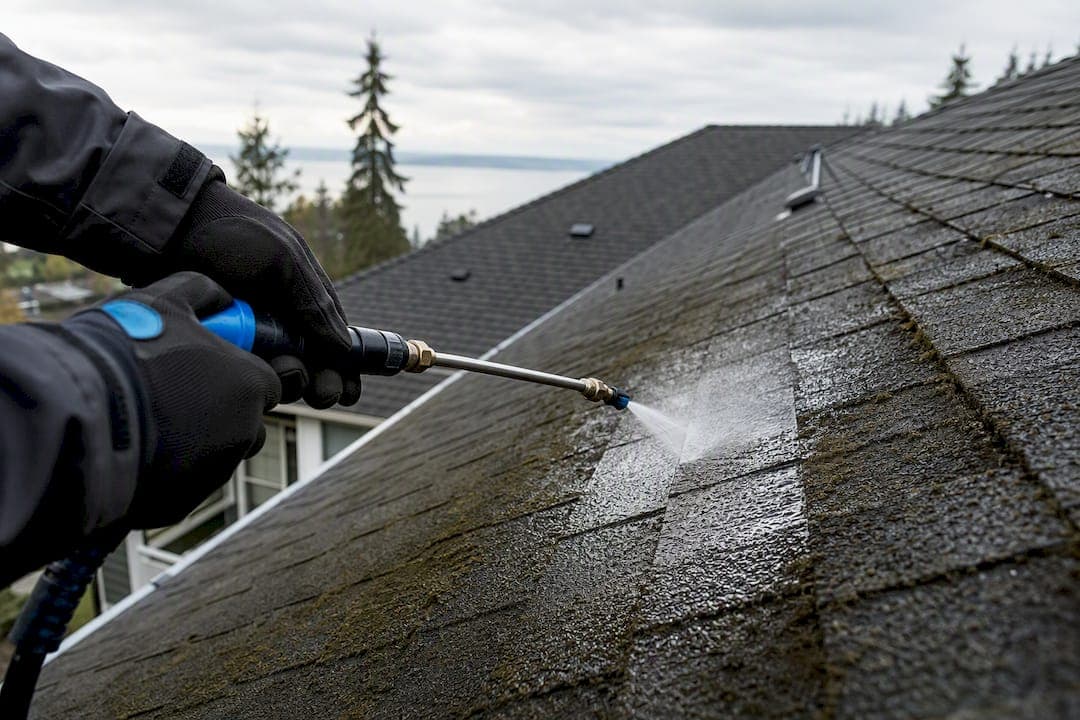
The safest, fastest way to handle roof algae removal on asphalt shingles is a soft wash using a diluted sodium hypochlorite solution, applied with low pressure and rinsed off with a garden hose. Never use a pressure washer on your roof. Once the algae is gone, zinc or copper strips, regular gutter cleaning, and tree trimming keep it from coming back.
TL;DR:
- Applying a diluted sodium hypochlorite solution with low pressure and thorough rinsing is the fastest, safest method for removing roof algae on asphalt shingles.
- Use protective gear, pre-wet the roof and surrounding landscaping, and avoid pressure washers to prevent damage or runoff issues during cleaning.
- Alternatives like oxygen bleach and commercial apply-and-leave products are gentler but require longer dwell times; vinegar and baking soda are less effective for established algae.
- Professional cleaning is advisable for steep, damaged, or large-area growth, and should include proper dilution, low-pressure rinsing, and landscape protection.
- Preventative measures such as zinc or copper strips, trimming trees, gutter cleaning, and choosing algae-resistant shingles extend the intervals between cleanings and protect roof longevity.
Table of Contents
- What can you do about roof algae right now?
- How do you safely soft wash asphalt shingles?
- Are there gentler alternatives to bleach?
- When should you call in a roof cleaning professional?
- How do you stop roof algae from coming back?
- How often should you inspect and clean your roof?
- How does Island Moss Busters apply these standards on real roofs?
- Why prevention beats repeated emergency roof cleans
- Get a roof that stays clean longer, not just clean today
- Where this guidance comes from
- Sources
What can you do about roof algae right now?
Before you touch a ladder, check a few things. Roof work is not the place to improvise, and a fall risk is a fall risk no matter how motivated you are to fix those black streaks.
- Confirm your ladder is rated for the job, wear non-slip footwear, and have a spotter holding the base.
- Water your garden beds and lawn near the roofline before you start. Damp soil and pre-watered plants handle chemical runoff far better than dry, stressed ones.
- Cover sensitive shrubs and flower beds with tarps, especially anything directly below the eaves.
- Pre-wet the roof and surrounding walls with plain water, apply your treatment, let it dwell, then rinse thoroughly.
- Book a professional instead if your roof is steep, the growth covers a large area, or you have any hesitation about working at height.
If your roof pitch is anything beyond a gentle slope, or your shingles feel brittle or older than fifteen years, this is one job where hiring out is the smarter call, not the lazy one.
How do you safely soft wash asphalt shingles?
This is the method ARMA recommends, and it is the same approach reputable roof cleaning contractors use on residential jobs. Here is how it works, step by step.
Materials and PPE you will need:
- A pump sprayer or hose-end sprayer rated for chemical use
- Household bleach (sodium hypochlorite) or a pool shock product, plus a mild surfactant or dish soap to help it cling to shingles
- Tarps for plants and landscaping
- Rubber gloves, safety glasses, and old clothes you don't mind ruining
- A standard garden hose for rinsing
Mixing and application:
- Mix a 50:50 solution of household bleach and water for a typical algae job, as ARMA outlines. Older or more fragile shingles may do better with a milder ratio, closer to one part bleach to two or three parts water.
- Add a small amount of surfactant so the solution sheets across the shingle surface instead of beading and running off immediately.
- Working from the peak down, apply the solution evenly across affected areas using low pressure, under 150 PSI.
- Let it dwell for 15 to 20 minutes. ARMA's own guidance settles on that window; some contractors stretch it to 30 minutes on heavier black streaking.
- Rinse from the top down with a standard garden hose. No pressure washer, ever.
Moss and lichen behave differently than algae. Algae usually lifts clean with chemical treatment alone, but established moss or lichen colonies often have physical root structures gripping the shingle surface, so a gentle scrape before the chemical application can help, according to Fine Homebuilding's remediation guidance. Never use a wire brush or anything abrasive.
Pro Tip: Test your mix on a small, hidden section of roof first. Some shingle colours and coatings react differently to bleach concentration than others, and you'll want to know before you commit to the whole roof.
Protect flashing, skylights, and anything metal from prolonged concentrated contact, and keep the solution moving so it never sits and dries on the shingle. If one application doesn't fully clear the streaking, a second pass a week later usually finishes the job. But if you're seeing exposed mat or heavy granule loss where the algae was, that's a repair issue, not a cleaning one.
Are there gentler alternatives to bleach?
Sodium hypochlorite works fast, but it isn't the only option, and it isn't always the right one.
- Oxygen bleach (sodium percarbonate) is gentler on metal flashing and nearby plants, but needs a longer dwell time, 30 to 45 minutes, and shows slower visible results than chlorine-based soft washing.
- Apply-and-leave commercial products skip the rinse step entirely. They work over weeks or months rather than in an afternoon, which suits homeowners who want less handling and no runoff to manage.
- Horticultural vinegar or baking soda solutions get pitched online as natural fixes, but their effectiveness on established algae is limited. They're better suited to very light, early-stage discolouration than a roof with visible black streaking.
If your landscaping is dense or your shingles are older and worn, lean toward the gentler chemistry, even if it costs you patience. If you want the streaks gone this weekend and your yard can handle it, sodium hypochlorite gets there faster.
When should you call in a roof cleaning professional?
Some roofs are DIY-friendly. Plenty aren't, and knowing the difference saves you from a trip to the emergency room or a shingle repair bill that dwarfs what a professional clean would have cost.
- Hire a pro if your roof pitch is steep, your shingles are aging or brittle, or the algae and moss cover more than a small section.
- A competent roof cleaning service protects landscaping and gutters, applies soft wash chemistry at the correct dilution, rinses at low pressure, and often includes a gutter clean-out in the same visit.
- Before you book anyone, ask about insurance coverage, references from local jobs, exactly which chemicals they use, and whether they offer any guarantee against the algae or moss returning.
- Ask how they'll stage the job to minimize harm to your landscaping, and whether they document the work for warranty or insurance purposes.
A typical residential job runs a few hours to a full day depending on roof size and access, and a reputable roof cleaning provider will walk you through the process before they start, not after.
How do you stop roof algae from coming back?
Cleaning solves the immediate problem. Prevention decides whether you're doing this again in eighteen months or in five years.
- Zinc or copper strips installed near the roof ridge release trace metal ions with every rainfall, which suppresses new algae growth across the slope below. They're a one-time installation with an effective lifespan measured in years, not months.
- Trim overhanging tree branches to cut down shade and let the roof dry faster after rain.
- Clear debris and clean gutters and downspouts regularly. Clogged gutters back up water onto lower shingle courses, which is exactly the damp environment algae favours.
- Improve attic ventilation where possible. A hot, poorly vented attic in summer and a cold, damp one in winter both accelerate shingle wear and can indirectly worsen surface moisture retention.
- Consider algae-resistant shingles at your next roof replacement. They cost more upfront but cut down significantly on how often you need to clean.
North-facing and heavily shaded slopes deserve extra attention on every inspection, since algae concentrates wherever moisture lingers longest, and those slopes dry out slowest after every rain or dew cycle.
Regrowth timelines vary by climate. Homeowners in wet coastal regions often see new growth within one to two years even with reasonable maintenance, while drier inland climates can go three to five years between cleanings.
How often should you inspect and clean your roof?
A simple twice-yearly rhythm catches most problems before they become expensive ones.
- Inspect your roof in spring and fall, plus after any major storm, checking for new dark streaking, loose or curling shingles, and gutter blockages.
- Clean every one to two years if you're in a damp, coastal, or heavily shaded property; every three to five years in drier climates with good sun exposure.
- Note the extent of growth, roof slope, access difficulty, and proximity of landscaping during your inspection. That's exactly the information a contractor needs to give you an accurate quote instead of a guess.
How does Island Moss Busters apply these standards on real roofs?
Island Moss Busters builds its roof service around the same soft wash approach outlined above, using Canadian-made eco-friendly solutions rather than harsh commercial chemistry, and backs the work with a two to two and a half year moss return guarantee.
A typical job sequence looks like this:
- Protect landscaping, plants, and nearby surfaces before any chemical touches the roof
- Apply the soft wash treatment at the correct dilution for your specific shingle age and condition
- Rinse at low pressure, never with a pressure washer
- Clean gutters and downspouts as part of the same visit where scheduled
- Walk through prevention options, including metal strip placement, before leaving
Why prevention beats repeated emergency roof cleans
Reactive cleaning costs more over time than steady maintenance. A modest investment in zinc strips, gutter upkeep, and tree trimming stretches the interval between cleans and protects shingle life, which is cheaper than premature replacement or repeated emergency call-outs. Islandmossbusters builds its guarantee around exactly that philosophy.
— Island
Get a roof that stays clean longer, not just clean today
This provider offers an alternative to a one-off DIY weekend or a guesswork contractor call, because the roof soft washing and moss removal service comes with a moss return guarantee, something a bottle of bleach and a Saturday afternoon simply can't offer.
The crews use Canadian-made eco-friendly solutions, protect landscaping the same way this guide describes, and pair the roof work with gutter cleaning so water keeps moving off your roof instead of pooling where algae thrives. Homeowners across Comox, Courtenay, and the wider Comox Valley also book house washing and gutter guard installation in the same visit, which covers the exterior maintenance that actually keeps algae from returning. If your roof has visible black streaking, steep pitch, or you'd simply rather not spend a Saturday on a ladder with bleach, call 250 650 8123 or book a roof cleaning quote online.
Where this guidance comes from
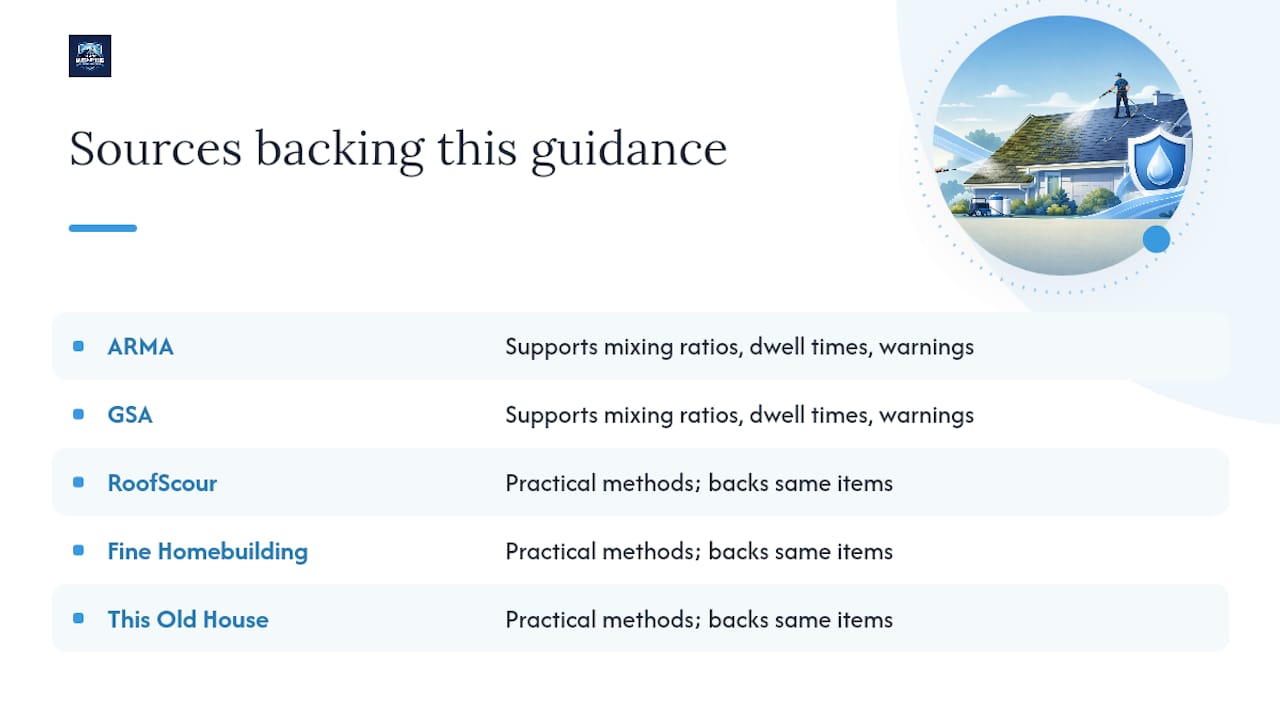
This guide draws on ARMA's asphalt roofing guidance, the GSA's technical guidance on biological growth removal, and practical contractor resources including RoofScour, Fine Homebuilding, and This Old House. Each source backs the mixing ratios, dwell times, and pressure-wash warnings covered above. For a broader look at surface chemistry and runoff protection, this overview of algae removal on concrete and this comparison of pressure washing versus soft washing are useful supplementary reads.
Sources
- Algae on roofs: how to remove it and stop it coming back | RoofScour
- Algae streaks on a roof: Cause, Clean, Prevent | TRB