If you decorate every year, own a commercial property, or want your lights up for months at a time, a permanent lighting system usually pays off. If you decorate occasionally, rent your home, or want the lowest possible upfront cost, temporary string lights still make sense. Either way, check for certified components and think about your roof access before you buy or book anything. The checklist below walks through both, along with the professional installation route if you decide permanent is the better fit.
TL;DR:
- Permanent lighting systems are best suited for users who decorate frequently or require year-round control, providing long-term durability and programmable features.
- Temporary string lights, although cheaper upfront, wear out faster and need annual replacement, making them suitable for infrequent decorators with manageable roof access.
- Certification markers like CSA, cUL, or cETL are essential to ensure outdoor lights meet safety standards, and overload or GFCI protection are critical safety considerations.
- Proper installation of permanent systems involves sealed, weatherproof components, with electrical work performed exclusively by qualified electricians when wiring changes are necessary.
- Vancouver Island's wet climate emphasizes the importance of moisture-resistant fixtures and regular maintenance, including inspecting connectors and sealing joints annually to prevent corrosion.
Table of Contents
- Pros and cons compared: durability, looks, labour, and storage
- How to calculate total ownership cost and a simple example
- Certified products, GFCI, and Canadian Electrical Code basics
- What permanent installs require and how to keep them working
- Decision checklist and next steps
- Island Moss Busters' real-world view and installer checklist
- Regulatory or homeowner association restrictions impacting installation
- Environmental impact and sustainability considerations
- What we've learned installing lights on Vancouver Island
- Light up your property without the yearly ladder work
- Sources
- FAQ
Pros and cons compared: durability, looks, labour, and storage
Permanent lighting systems and temporary string lights solve the same problem in very different ways, and the right pick depends on how you use your lights and how much hands-on work you want each year.
- Durability: permanent systems use weatherproof, sealed components built to stay outside year-round, while temporary strings are made for short seasonal use and wear out faster with repeated setup and takedown.
- Labour: a professional permanent install removes the annual ladder work, while temporary lights mean climbing up and down every fall and again every January.
- Looks and control: permanent systems often include programmable colours and scenes for different occasions, while strings offer more variety in style but less flexibility once they are up.
- Storage and theft: temporary lights need a storage spot for eleven months and can be swiped off a porch, while permanent fixtures stay mounted and out of reach.
Neither option is wrong. A homeowner who decorates for two weeks a year may never recoup the cost of a permanent system, while a property that lights up every season loses money and time to the repeated cycle of buying, hanging, and storing strings.
How to calculate total ownership cost and a simple example
Sticker price tells you almost nothing about what lights actually cost over time. To compare fairly, add up:
- Hardware: the lights, clips, tracks, or fixtures themselves.
- Professional installation: labour to mount and wire the system correctly.
- Permits or electrician work: any cost tied to permanent wiring changes.
- Seasonal labour: the time (yours or a crew's) spent putting up and taking down temporary lights each year.
- Electricity: run time and wattage over the display period.
- Repairs and replacement: bulbs, cords, or sections that fail or fade.
- Storage: space and containers for temporary lights during the off-season.
Say a single-storey home spends $150 a year on new string lights plus a weekend of labour, every year, for five years. A hotel façade with a permanent system pays more upfront but skips the annual replacement cost and the labour of decorating a two- or three-storey exterior each season, which shortens its payback window compared with the house.
Pro Tip: If you do your own installation, put a dollar value on your time and any ladder rental before comparing it to a professional quote.
Certified products, GFCI, and Canadian Electrical Code basics
Before buying or hanging anything outdoors, check the packaging. Health Canada recommends decorative lighting carry a recognized Canadian certification mark such as CSA, cUL, or cETL, and that you check for recalls before installing.
Ground fault protection and avoiding overloaded circuits are two of the most repeated safety recommendations in Canadian guidance for outdoor lighting, reducing the risk of shock and fire.
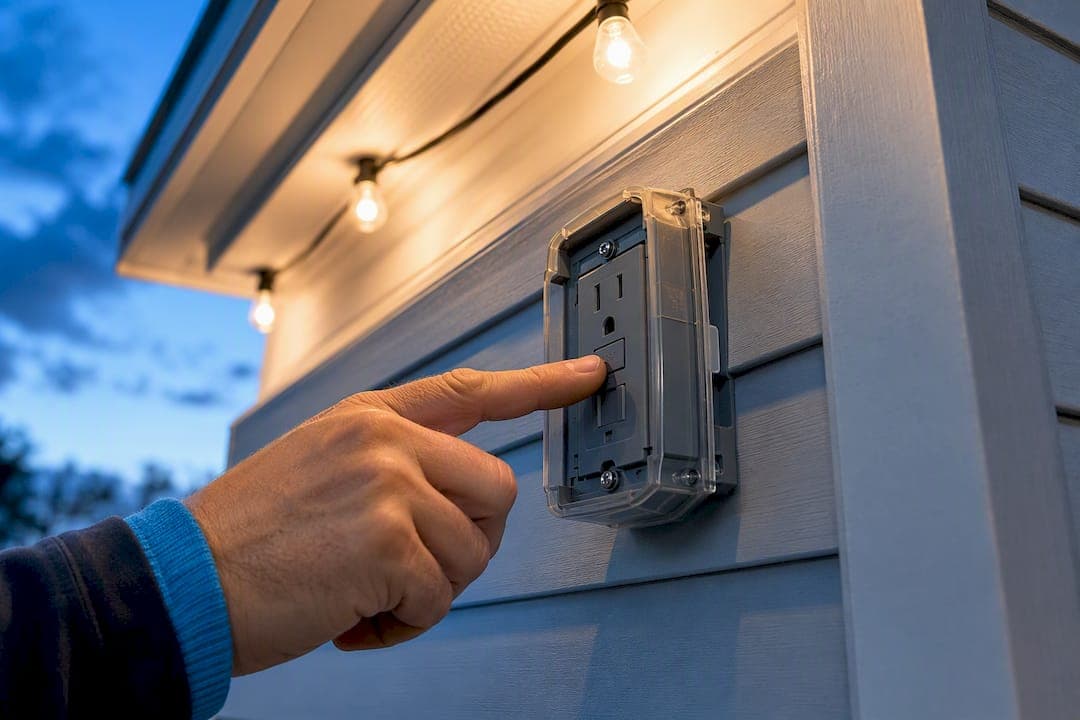
- Plug outdoor lights into a GFCI-protected outlet, as Health Canada's holiday safety guidance advises.
- Inspect cords and bulbs for cracks or fraying before each use, and replace damaged pieces rather than taping over them.
- Avoid running too many strings off one outlet or extension cord.
- Look for overhead power lines and keep clips and connections off the ground, following the ESA homeowner electrical safety handbook.
Once lighting involves new circuits or permanent wiring changes, it falls under the Canadian Electrical Code, which covers wiring methods and enclosure requirements for outdoor equipment and highlights the importance of hiring qualified electrical contractors as advised in Marketing for Electricians in Toronto & the GTA | OnLead. At that point, the work should go to a qualified electrician rather than a DIY project.
What permanent installs require and how to keep them working
A well-built permanent system relies on a few key parts: mounting clips or tracks fixed to your fascia or roofline, sealed connectors between light runs, weatherproof nodes with a suitable IP rating, and a controller or timer that manages when and how the lights run.
Moisture is the main enemy of any outdoor lighting system left up year-round. Water finds its way into unsealed connectors and low-rated fixtures, causing corrosion, flickering, and dead sections over time. Systems with IP65 or higher ratings and properly sealed joints shed water instead of trapping it, which matters even more in a wet coastal climate.
- Inspect connectors and mounting points once a year, ideally before the fall rains start.
- Clean nodes and tracks to clear debris and buildup.
- Replace any failed seals or nodes as soon as you spot them rather than waiting for a full section to fail.
- Keep a record of warranty work and part replacements so you know what has already been addressed.
Pro Tip: Check your permanent lights the same week you clean your gutters. Both jobs deal with the same moisture risks and pair naturally on a fall maintenance list.
Decision checklist and next steps
Run through these before choosing a system:
- Frequency: if you light up your property for more than one season or event each year, permanent starts to make more sense.
- Roof access: a single-storey bungalow is a manageable DIY job, but multi-storey homes and commercial façades carry real fall risk on a ladder.
- Control and appearance: if you want programmable colours or year-round accent lighting, only a permanent system delivers that.
- Budget shape: decide whether you would rather pay more upfront or keep spreading smaller costs across every season.
- Exposure and theft risk: an exposed porch or street-facing display is more vulnerable with temporary strings than with mounted fixtures.
If your roof is hard to reach safely, or you want a written warranty on the work, get a quote from a licensed electrician or a permanent-install specialist rather than tackling it yourself.
Island Moss Busters' real-world view and installer checklist
Island Moss Busters is a family-run, fully insured company using Canadian made eco-friendly solutions for exterior cleaning and home maintenance on Vancouver Island. Years spent on roofs and gutters have shown a clear pattern: moisture problems in gutters and roofing often show up later as lighting failures, since trapped water and debris create the same corrosion risk for wiring and connectors that they do for shingles.
Before hiring anyone for a permanent lighting install, ask:
- What IP rating do the fixtures carry, and are the connectors fully sealed?
- What warranty covers the components and the labour?
- What control options come with the system, timers, app control, or both?
- Does the estimate include a written breakdown of parts, labour, and any electrical work?
A clean roof and clear gutters, covered by gutter guard installation, give any permanent lighting system a drier surface to mount to and fewer moisture-related headaches down the road.
Regulatory or homeowner association restrictions impacting installation
Some municipalities and homeowner or condo associations set rules on exterior lighting, covering anything from display dates and hours of operation to where fixtures can be mounted on a shared building or strata property. Commercial properties and multi-unit buildings are more likely to face these restrictions than a detached single-family home.
Before installing a permanent system, check your local bylaws and, if you belong to a strata or homeowners' association, review its exterior alterations policy. Some associations require pre-approval for anything mounted directly to rooflines or shared walls, since permanent fixtures are considered a structural change rather than a seasonal decoration. Commercial building managers often need sign-off from a property owner or landlord before an installer can drill into fascia, soffits, or a façade.
Temporary lights generally face fewer restrictions since they are seasonal and removable, but some associations still limit display dates or require lights to come down by a set point in January. Confirming these rules before booking an installation avoids the cost of removing or relocating fixtures after the fact, which is one more reason to ask any installer whether they are familiar with your building type and local requirements.

Environmental impact and sustainability considerations
LED lighting, whether permanent or temporary, uses far less electricity than older incandescent strings, so the choice between the two has less to do with energy use and more to do with waste over time.
Temporary lights that are hung and taken down every year face more physical stress, which shortens their lifespan and sends more strings to the landfill as bulbs fail or wires crack from repeated handling. A permanent system installed once and maintained properly avoids that yearly cycle of replacement, which reduces the volume of discarded lighting from a single property over several years.
Sealed, well-built permanent fixtures also tend to have a longer working life than a budget string light kit, so fewer replacement purchases are needed overall. For property owners who care about reducing waste as much as reducing cost, a durable, properly maintained system usually has a lighter footprint over its lifespan than a string of lights replaced every couple of seasons.
What we've learned installing lights on Vancouver Island
Vancouver Island's wet climate is hard on anything left outside, lights included. Moisture and roof access are the two factors that decide most outcomes here. We usually recommend permanent systems to homeowners who decorate often or have multi-storey access issues, and temporary strings to anyone decorating once a year on a single-storey home. If you are unsure, start with a roof and gutter inspection before your lighting decision.
— Island
Light up your property without the yearly ladder work

If you have decided a permanent system is worth it, Island Moss Busters installs permanent Christmas lights across the Comox Valley and wider Vancouver Island using Govee lighting, so you get programmable colours and scenes without hiring a separate electrician for controls. A proper install means no more yearly ladder trips, no tangled boxes of string lights in the garage, and a system built to handle the wet season.
Here is what our installation includes:
- A site inspection to plan mounting points and wiring paths.
- Weatherproof, sealed components suited to coastal weather.
- Timer and smart control setup so your lights run on schedule.
- A written estimate before any work begins.
Call 250 650 8123 or book online at Islandmossbusters to get a quote for your property, and ask about pairing it with a roof or gutter check to protect your investment from moisture damage.
Sources
- Canada
- Canada
- Homeowner Electrical Safety Handbook - ESA
- Canadian Electrical Code, Part I (CEC 2024)
FAQ
Are permanent Christmas lights worth it for most homeowners?
They tend to be worth it for homeowners who decorate every season or want year-round accent lighting, since the system pays off through skipped annual labour and fewer replacements. For someone who decorates once a year on a single-storey home, temporary strings usually stay the more practical, lower-cost choice.
How long do temporary lights typically last?
Temporary string lights are built for seasonal use and tend to wear out faster than permanent systems due to repeated setup, takedown, and storage. Cracked cords, loose bulbs, and connector wear are common signs it is time to replace a string rather than keep patching it.
What certifications should I check before buying outdoor lights?
Look for a recognized Canadian certification mark such as CSA, cUL, or cETL on the packaging, as recommended in Health Canada's guidance on decorative lighting. Checking for active recalls before installation is also part of that guidance.
Do permanent lighting installations require an electrician?
Once an installation involves new or permanent wiring changes, the work falls under the Canadian Electrical Code and should involve a qualified electrician. Plug-in permanent systems that use existing outlets typically do not require electrical work, but any hardwiring should be assessed by a professional.
What does a professional permanent light installation include?
A proper professional installation should include a site inspection, use of weatherproof sealed components, timer or smart control setup, and a written estimate before work begins. The goal is a system that handles wet-climate conditions without yearly ladder work or replacement costs.