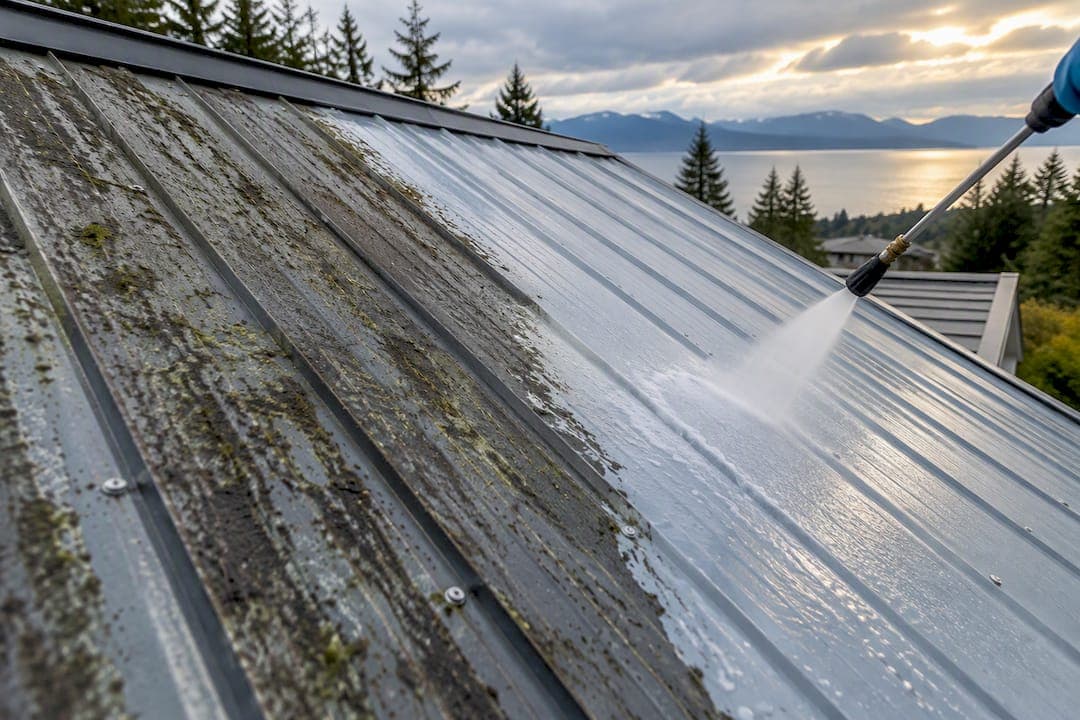
The safest way to remove algae from a metal roof is a low-pressure soft-wash system paired with a manufacturer-approved cleaning solution and proper runoff containment. Soft washing breaks down algae chemically instead of blasting it off, which protects painted finishes and factory coatings. Always test a small, hidden area first and shield nearby plants before you start. If your roof is steep, hard to access, or has a finish you're not sure about, call a trained pro instead of risking the surface yourself.
TL;DR:
- Soft washing with diluted bleach and low pressure under 100 psi effectively removes algae without damaging painted or coated metal roofs, provided the right dwell time is maintained.
- Proper runoff management involves soaking nearby plants beforehand, diverting downspouts, and neutralizing residues to prevent environmental harm and preserve warranty coverage.
- Manufacturers' warranties often exclude damage from high-pressure washing and aggressive chemicals, making it essential to follow specific guidelines for your roof finish type.
- Scheduled cleaning during cooler, milder seasons helps prolong the effectiveness of treatments and reduces thermal stress on the roof.
- For steep, complex, or finish-sensitive roofs, hiring professional services ensures safe, thorough cleaning with proper containment and documentation for warranty support.
Table of Contents
- Why soft washing protects your roof and pressure washing puts it at risk
- Step-by-step soft wash for a painted metal roof
- Warranty rules and finish types that change what's safe
- Simple prevention steps that slow algae from coming back
- When it makes more sense to call in a professional
- A professional soft wash from Island Moss Busters
- Sources
- FAQ
Why soft washing protects your roof and pressure washing puts it at risk
Soft washing means using low water pressure, usually under 80 to 100 psi at the wand, combined with a cleaning solution that does the actual work. The chemistry breaks down algae and organic buildup at the surface level, so you're lifting it away rather than physically scraping or blasting it off. That distinction matters for painted metal, where the finish is thin and easy to scratch or dull.
Most soft-wash solutions rely on diluted sodium hypochlorite, the same active ingredient in household bleach, mixed with a surfactant that helps the solution cling to the metal instead of sliding off. Industry guidance points to available chlorine concentrations of about 0.5% to 3.0%, depending on how heavy the staining is. The solution needs contact time, called dwell time, to actually break down the algae before you rinse. Letting it dry on the roof is one of the most common mistakes homeowners make, and it can cause flash oxidation on bare or lightly coated metal.
High-pressure washing skips the chemistry and relies on force instead, which is exactly what damages painted and coated metal roofs. Pressure above soft-wash levels can strip paint, chip protective coatings, and drive water under seams and fasteners where it doesn't belong. Combined with the wrong chemicals, corrosive cleaners can eat into finishes that were never designed to handle them, which is why most manufacturers exclude this kind of damage from their warranties.
Runoff matters just as much as pressure. Before you apply anything, soak nearby plants and shrubs with plain water and plan where the runoff will go.
- Wet down grass, plants, and garden beds near the roofline before applying any cleaning solution.
- Block or divert downspouts so runoff doesn't flow directly into storm drains or nearby waterways.
- Keep a neutralizing rinse ready in case solution pools in gutters or low spots.
Pro Tip: Work in sections and rinse as you go rather than treating the whole roof before rinsing anything; it keeps the solution from sitting too long in one spot.
Step-by-step soft wash for a painted metal roof
Once you've confirmed your roof's finish can handle a soft wash, the process itself is straightforward if you follow the sequence in order and don't rush the dwell time.
- Spot-test your solution on a small, hidden section of roof and wait 24 hours to check for discoloration or dulling.
- Mix your cleaning solution using a manufacturer-accepted starting ratio, such as 1/3 cup of powdered laundry detergent and 1 quart of 5% household bleach diluted into 3 quarts of water.
- Soak surrounding vegetation and set up containment for runoff before you begin applying anything to the roof.
- Apply the solution starting at the ridge and working down, using low-pressure equipment to keep the surface wet without blasting it.
- Let the solution dwell for 5 to 10 minutes, keeping the surface wet the whole time so it doesn't dry and bake onto the paint.
- Rinse thoroughly from the top down with clean water at soft-wash pressure until no residue or suds remain.
- Neutralize and manage the runoff according to local guidance before it reaches storm drains or ditches.
A dwell time of 5 to 10 minutes is the manufacturer-referenced starting point for painted metal roofs, though some soft-wash guidance allows up to 20 minutes on heavier staining. Longer isn't automatically better: the goal is enough contact time to break down the algae without letting the solution dry on the surface.
Avoid working in direct midday sun, since heat speeds up evaporation and increases the risk of the solution baking onto the paint before you can rinse it off. Early morning or a cool, overcast day gives you more control over dwell time. If your roof has a steep pitch, multiple valleys, or features you can't safely reach with a ladder, that's a reasonable point to bring in a professional instead of improvising access.

Warranty rules and finish types that change what's safe
Before you clean anything, it's worth checking your roof's warranty document, because most manufacturers spell out exactly what voids coverage. Warranty language commonly excludes damage from high-pressure washing, corrosive chemical exposure, and aggressive atmospheric conditions like salt spray near the coast. Reading that section before you start saves you from accidentally cancelling coverage over a weekend cleaning job.
- Painted finishes are generally more sensitive to concentrated chemicals and need the gentler end of the dilution range.
- Galvalume and other treated metals can react differently to bleach-based solutions, so a spot test matters even more.
- High-pressure washing is one of the most frequently cited exclusions in manufacturer warranty documents.
- Keeping receipts and job reports from any professional cleaning supports future warranty claims if you ever need one.
Timing also plays a role beyond just avoiding hot afternoons. Scheduling cleaning for cooler, milder stretches of the year gives the solution more working time before it evaporates, and it reduces the odds of thermal stress on the panels themselves. If you do hire a professional, ask them to document the service, including the products used and the date, in case you need that record later for warranty purposes.
Simple prevention steps that slow algae from coming back
Algae and moss thrive on moisture, shade, and organic debris, so the fastest way to stretch the time between cleanings is to remove what feeds them. A few small habits do most of the work.
- Install zinc or copper strips near the ridge; rain carries trace metal ions down the roof and creates conditions algae and moss don't like.
- Clear gutters regularly so trapped leaves and debris don't hold moisture against the roof edge.
- Trim back overhanging branches to cut down on shade and falling organic matter.
- Check attic ventilation seasonally, since trapped heat and moisture underneath the roof can encourage growth from the inside out.
Zinc and copper strips won't stop algae completely, but they measurably slow regrowth in the areas the rain washes over, which is why installers place them just below the ridge line on both sides of the roof.
Pro Tip: Walk your roofline twice a year, once in spring and once before the wet season, and look for early green or black streaking; catching it early means a lighter clean later. Keeping gutters guarded against debris, something a proper gutter guard system handles year-round, takes one recurring task off your list entirely.
When it makes more sense to call in a professional
Some roofs are reasonable DIY projects and some aren't, and the difference usually comes down to pitch, access, and finish sensitivity. A steep roof, a roof with multiple valleys and skylights, or a finish you're unsure about all raise the risk that a small mistake becomes an expensive one. Heavy landscaping around the house that makes containment difficult is another sign it's worth handing off.

Trained crews bring soft-wash rigs built to hold pressure in the safe range consistently, along with the experience to judge dwell time by staining severity rather than guesswork. They also handle containment and neutralization properly, which matters both for your plants and for staying within local environmental rules. A documented professional service, including the products used and the date, gives you a paper trail that supports any future warranty claim.
Look for a company that's upfront about its guarantee, carries proper insurance, and can point you to real service pages showing the work it does. That kind of transparency is a reasonable stand-in for a reference when you're trusting someone with your roof.
— Island
A professional soft wash from Island Moss Busters
If you'd rather skip the ladder entirely, Island Moss Busters handles roof soft washing and moss removal using eco-friendly solutions and low-pressure methods built to protect your finish, backed by a two to two-and-a-half year moss return guarantee. Every booked job includes a roof inspection, the soft wash itself, proper runoff management, and documentation you can keep for warranty records.
| What's included | Why it matters |
|---|---|
| Roof inspection before cleaning | Identifies finish type and problem areas before any solution touches the roof |
| Low-pressure soft wash | Protects paint and coatings while breaking down algae and moss |
| Runoff containment and neutralization | Keeps cleaning solution out of storm drains and garden beds |
| Service documentation | Supports manufacturer warranty records if you ever need them |
- Serving a range of locations within the Comox Valley and Vancouver Island.
- Multiple crews available to help with scheduling before the wet season.
Book online at Island Moss Busters' roof cleaning service page or call 250 650 8123 to get a soft wash scheduled before the wet months set in.
Sources
- Cleaning a metal roof — Sheffield Metals
- How to clean metal roofs without damage — JRacenstein
- Soft wash for metal roofs — New England Metal Roof
FAQ
How to get algae off a metal roof?
The safest approach is a low-pressure soft wash using a diluted bleach-and-detergent solution, applied from the ridge down and rinsed thoroughly after a short dwell time. A commonly referenced starting mix is 1/3 cup of detergent and 1 quart of 5% bleach in 3 quarts of water, but always spot-test first.
Does wet and forget work on metal roofs?
Wet and Forget style products are designed to be applied and left without rinsing, which works for some exterior surfaces but isn't the manufacturer-tested approach for painted metal roofs. Stick to a soft-wash solution with a defined dwell time and rinse step to avoid residue drying on the finish.
What is the best algae killer for roofs?
Diluted sodium hypochlorite, the active ingredient in household bleach, is the most widely used and manufacturer-referenced option for metal roofs, typically mixed with a surfactant to help it cling to the surface. The right concentration and dwell time depend on staining severity and the specific finish on your roof.
What is a good spray for cleaning metal roofs?
A soft-wash sprayer set to low pressure, under 80 to 100 psi at the wand, paired with a bleach-based solution gets the job done without stripping paint or coatings. Avoid standard high-pressure washers, since the force alone can damage painted metal finishes regardless of the chemical used.