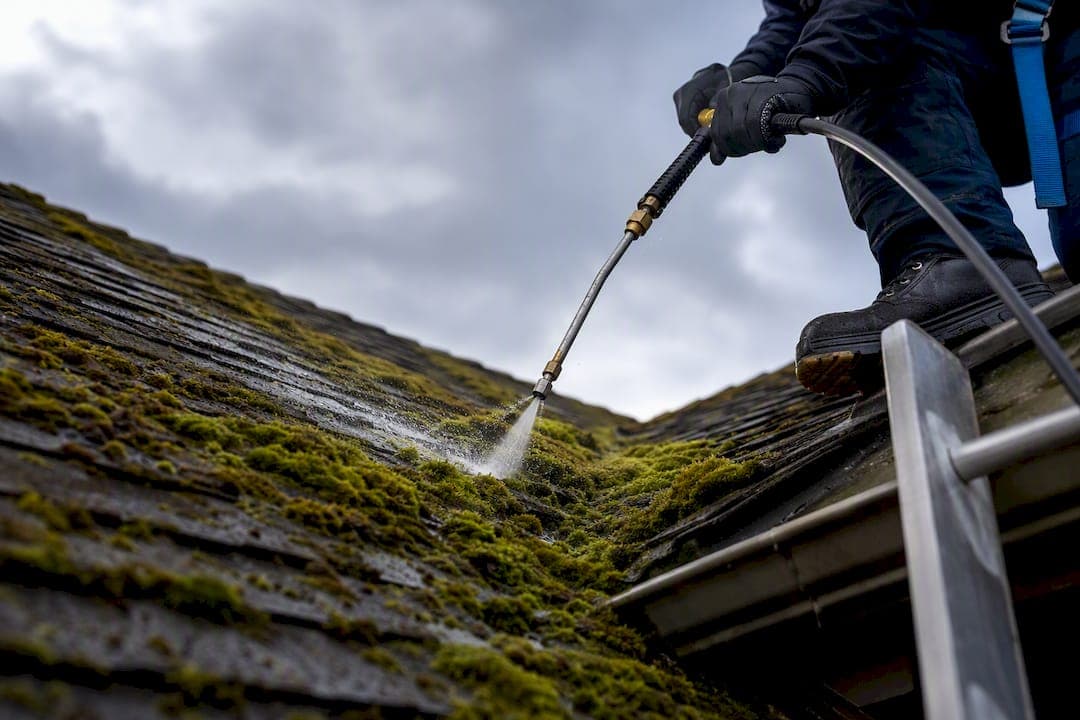
Yes, moss is bad for your roof. It traps moisture against shingles, lifts their edges, and lets water reach the wood underneath, which leads to rot and leaks over time. Moss rarely eats through shingles on its own, but it creates the damp, lifted conditions that do. If you're seeing thick patches, check your roof soon and consider removing it promptly.
TL;DR:
- Moss retains water against shingles for days after rainfall, increasing moisture damage and speeding up granule loss on asphalt roofs.
- Thick moss mats hold water and lift shingle edges, creating gaps that allow water to penetrate and accelerate rot in wood shake roofs or underlying decking.
- Sun-exposed, older, and shaded roofs with debris buildup are at higher risk, especially on north slopes and low-slope areas that drain slowly.
- Pressure washing damages shingles and should be avoided; gentle removal, soap-based treatment, and low-pressure rinsing are the effective methods.
- Regular trimming of overhanging branches, gutter cleaning, and minor structural modifications can significantly reduce moss regrowth and prolong roof lifespan.
Table of Contents
- Is moss bad for roof shingles? How the damage actually happens
- Which roofs and conditions invite moss trouble
- How urgent is it? When to watch and when to act
- How to remove roof moss without making it worse
- Stopping moss from coming back
- When rooftop moss becomes a job for a professional
- Where this advice comes from
- Sources
Is moss bad for roof shingles? How the damage actually happens
Moss doesn't attack shingles the way people imagine. It works more like a sponge that never dries out. Once a colony takes hold, it holds water against the shingle surface for days after every rainfall on the coast, and that constant dampness is what causes the real trouble.
Here's what happens underneath a mossy patch:
- Moisture retention feeds fungi and wood rot in the decking and, on wood shake roofs, in the shakes themselves.
- Moss roots (called rhizoids) work under shingle tabs and slowly lift the edges, opening small gaps.
- Those gaps let wind-driven rain and snowmelt travel sideways instead of running off, which is exactly the kind of lateral water movement home inspectors warn causes hidden leaks.
- Asphalt shingles lose granules faster once moss disturbs their surface, which shortens their expected lifespan.
The bigger picture: roofing experts who study this professionally point out that moss shortens the useful life of a roofing system by trapping moisture and enabling water to reach the underlying wood, which is the mechanism behind most moss-related leaks and rot.
Roof age matters here. A newer asphalt roof with tight, well-sealed shingles resists moss intrusion better than an older roof where sealant has started to break down and edges are more prone to lifting. Cedar shake roofs are a different story entirely, since the material itself is organic and moisture-loving moss can accelerate rot in the wood directly, not just the layers beneath it.
Which roofs and conditions invite moss trouble
Some roofs are simply moss magnets, and knowing whether yours is one of them tells you how urgently to act.
- Cedar shake roofs are particularly vulnerable. Wood holds moisture longer than asphalt, and moss root structures can work directly into the shake surface.
- Older asphalt shingles have worn granules and softer sealant strips, giving moss an easier foothold.
- North-facing slopes and shaded sections under overhanging trees stay damp far longer than sun-exposed areas, which is the single biggest driver of moss growth.
- Roofs with debris buildup in valleys and along the eaves hold moisture like a sponge sitting directly on the shingles.
- Low-slope roof sections drain slower, giving spores more time to establish before the surface dries.
If you're seeing moss patches that are thick or have started lifting shingle tabs when you look closely from a ladder, that's your signal to stop monitoring and start acting.
How urgent is it? When to watch and when to act
Small, thin patches of moss on a healthy, well-draining roof aren't an emergency. A dusting of green on a shaded ridge cap can often wait for your next seasonal check, provided you're actually tracking it.
Deep, spongy mats are a different matter. Once moss forms a mat thick enough to hold water like a wet towel, you're no longer looking at a cosmetic issue. That's when shingle edges start lifting, granules start sloughing off, and the roof deck underneath starts absorbing moisture it was never built to handle.
Climate accelerates all of this. On Vancouver Island's wet coastal weather pattern, a small patch can turn into a thick mat within a single rainy season if it's left alone, especially on shaded north slopes. There's no fixed calendar for removal. Extension guidance is consistent on this point: prompt action prevents deep-rooted colonies that are far harder to remove later. Left unchecked for a couple of seasons, a moss problem that would have cost a cleaning now can turn into a shingle replacement bill later, and in worse cases, deck repair from rot.
How to remove roof moss without making it worse
The single most common mistake homeowners make is reaching for a pressure washer. It feels satisfying, blasting moss off in seconds, but that same force strips protective granules right off the shingle and can drive water under the roofing material instead of removing it. University extension researchers are blunt about this: pressure washing is discouraged because it damages shingles rather than protecting them.
Here's the sequence that actually works:
- Clear bulk moss gently. Use a leaf blower or a soft-bristled broom, working from the ridge down, to lift off loose material without scraping granules.
- Treat what's left with a soap-based mossicide. Potassium salts of fatty acids are recommended for roof use because they're less corrosive than acid-based products and won't eat into metal flashing.
- Let it sit, then rinse at low pressure. A garden hose or a soft-wash sprayer, never a pressure washer, clears dead moss and detergent residue.
- Clear gutters and valleys afterward. Dead moss that isn't physically removed clogs drainage and creates new debris dams.
Avoid copper sulphate and other acidic products. They can work, but they carry real environmental runoff concerns for nearby soil, plants, and storm drains, and they're harder on flashing than soap-based alternatives.
This is also where professional and DIY approaches genuinely diverge. Trained crews use fall-protection gear and calibrated soft-wash equipment that balances the detergent strength against a low-pressure rinse, which kills moss at the cell level while leaving granules intact. That's a harder balance to strike from a garden hose on a ladder.
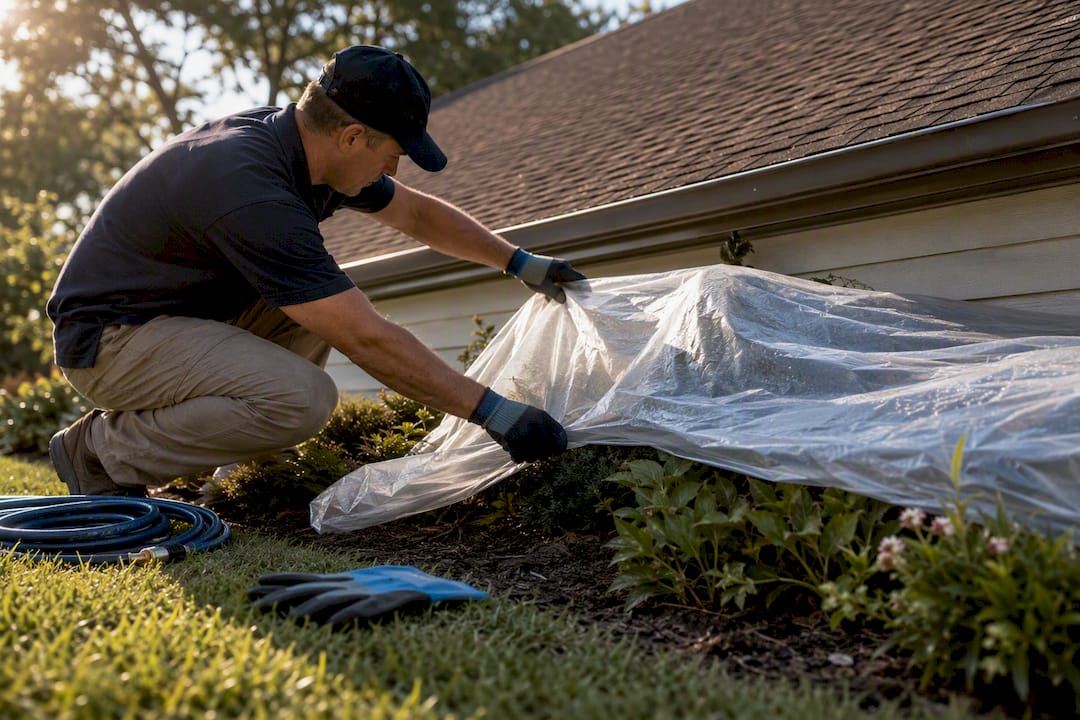
Pro Tip: Cover any plants or garden beds directly below your roofline with a tarp before treating moss, even with soap-based products. Runoff concentrates fast during rinsing, and diluting it matters more than most homeowners expect.
Stopping moss from coming back
Removing moss once is only half the job. Without changing the conditions that grew it, most colonies return within a season or two.
- Trim overhanging branches to cut shade and let the roof dry faster after rain. Plant pathologists consider this the single most effective long-term fix, more impactful than any chemical treatment, because it removes the shade and debris moss depends on.
- Clear debris from valleys and behind chimneys every season, not just once a year.
- Keep gutters flowing. Clogged gutters back water up under the lowest course of shingles, which is prime moss territory.
- Consider zinc strips near the ridge for roofs in persistent shade. They release trace zinc with rainfall that discourages regrowth, but they only protect a limited band below where they're installed and won't fix a roof that's already heavily colonised.
One caution worth taking seriously: DIY installation of metal strips carries real risk. Nailing strips into an existing roof can create new leak points if it's not done correctly, and zinc or copper runoff has documented toxicity concerns for nearby plants and waterways, which is why professional evaluation before installation is worth the conversation.
A realistic maintenance cadence is two checks a year, once heading into fall and once in spring, paired with a full gutter cleaning to keep water moving off the roof instead of sitting on it. If tree cover is heavy, working with a property maintenance service like Yard Smart on a regular trimming schedule pays off on the roof, not just the lawn.
When rooftop moss becomes a job for a professional
Climbing a moss-covered roof is genuinely dangerous. Wet moss is slippery underfoot, and dried moss mats can even act as a fire hazard in the right conditions, which is exactly why industry safety guidance flags moss as a walking hazard on roofs and decks alike, not just a maintenance nuisance.
A proper professional inspection checks more than surface moss. It looks at shingle granule loss, soft spots in the decking, and how close the roof already is to needing full replacement rather than another cleaning. That assessment alone is often worth the call.
At Islandmossbusters, our approach centres on soft washing rather than pressure washing, paired with gutter cleaning so debris doesn't undo the work. We're a family-run, fully insured crew using Canadian-made eco-friendly solutions, and we back roof moss removal with a multi-year moss return guarantee.
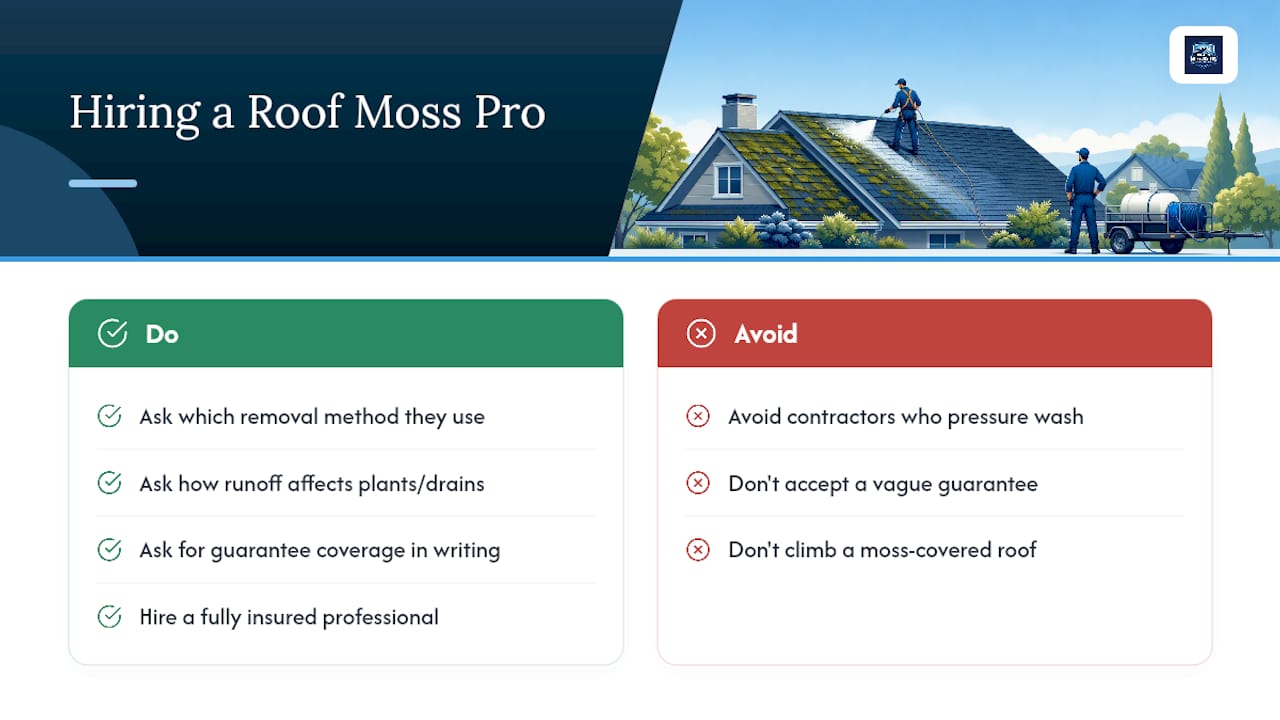
Before hiring anyone, ask three questions: What removal method do you use? What happens to runoff near plants and drains? What's covered under your guarantee, in writing? If a contractor's answer to the first question is "pressure washing," or their guarantee is vague on paper, treat that as a red flag.
— Island
Where this advice comes from
The mechanisms and removal guidance in this article draw on university extension research into roof moss control, including Oregon State's plant pathology guidance and its long-term prevention findings, alongside trade-expert reporting on the practical dangers moss creates for homeowners.
Sources
- Moss on Roofs & Walkways | solvepest
- How to control roof moss and prevent long-term damage | OSU Extension Service
- Maintaining a moss-free roof takes some effort | Newsroom | Oregon State University
- Home Repair Experts Reveal the Surprising Dangers of Having Moss on Your Roof