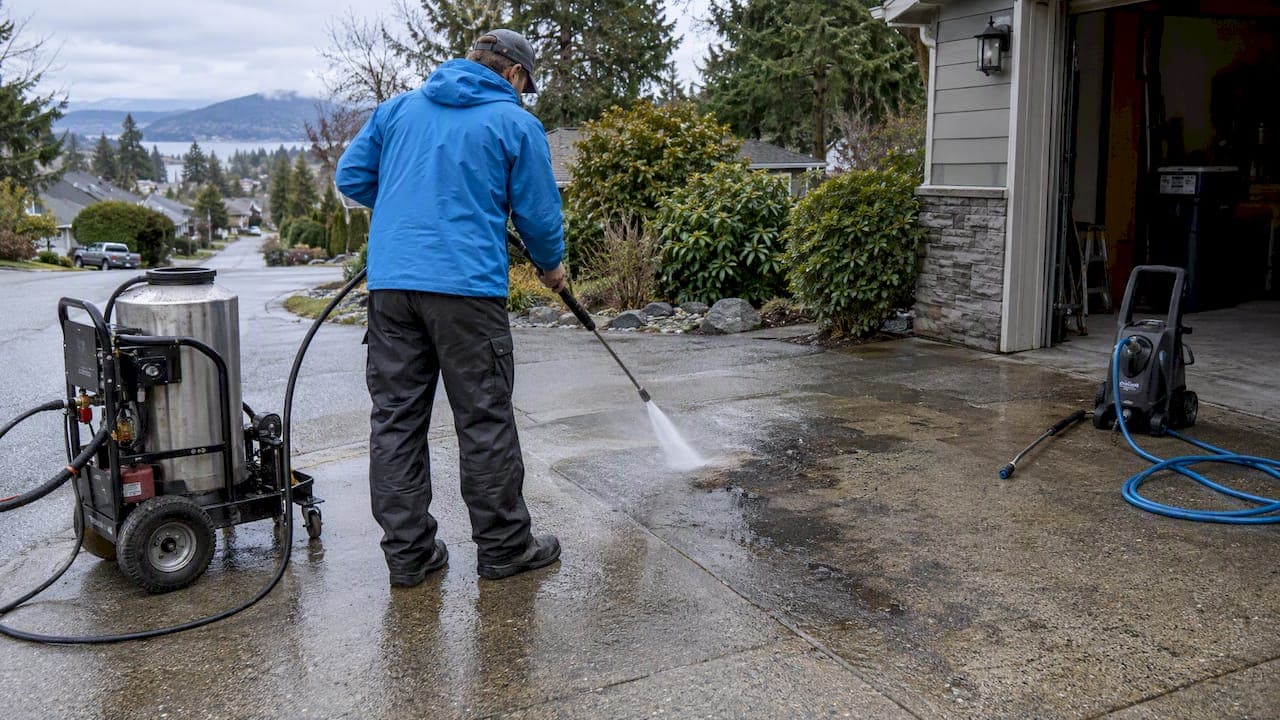
Use hot water for grease, oil and heavy commercial soiling, and use cold water or soft washing for most household dirt, mildew and paint prep. Hot systems cost more upfront and need more upkeep, but they save time and chemicals on grease-heavy jobs. Cold systems stay portable, affordable and plenty strong for routine cleaning around your home.
TL;DR:
- Hot water pressure washers are essential for heavy grease, oil, or baked-on stains, especially in commercial kitchens and on engine parts, due to their ability to soften oils and reduce surface tension.
- Cold water units suffice for most routine outdoor cleaning, such as mildew, algae, dirt, and paint prep, and are more affordable, lighter, and easier to maintain.
- Temperature limits on consumer models often make hot water units incompatible with older or delicate surfaces, requiring soft washing or professional assessment to prevent damage.
- Hot systems involve higher initial costs, ongoing maintenance, and safety risks like burns and fire hazards, while cold systems are simpler with fewer safety concerns.
- Energy efficiency favors cold units for regular use, except when hot water significantly reduces chemical or labor costs on recurring heavy-duty cleaning tasks.
Table of Contents
- Use cases: jobs best for hot water and jobs fine for cold
- How heat changes cleaning: the science and practical effects
- Equipment, costs, maintenance and safety for hot vs cold systems
- How to decide: a concise checklist for homeowners and property managers
- Energy efficiency comparisons including environmental considerations
- Publisher perspective: practical notes from Island Moss Busters
- How Island Moss Busters can help
- Sources
- FAQ
Use cases: jobs best for hot water and jobs fine for cold
Picking the right temperature starts with knowing what you're actually cleaning off.
For most homeowners, cold water handles the day-to-day jobs just fine:
- Siding with mildew or algae streaks
- General driveway dirt, dust and tire marks
- Deck and patio surfaces before refinishing
- Paint prep on fences, trim and siding
- Window sills and exterior frames
Hot water earns its place when the soil is oily, waxy or baked on:
- Garage floors stained with motor oil
- Engine bays and equipment caked in grease
- Commercial kitchen exhaust hoods and floors
- Tar, chewing gum and heavy oil stains on concrete
Heat works here because grease and oil do not rinse away with plain pressure. They need to be softened first, and that is where temperature comes in, as industrial pressure washer guides point out when comparing hot and cold units for heavy-duty cleaning. A commercial kitchen degreasing service is a good example: hood and exhaust grease responds to heat in a way plain cold water rarely matches.
There's one more category worth flagging: roof shingles, older siding and anything with moss or biological growth. High-temperature pressure, hot or cold, can strip granules, crack boards or drive water under flashing. These jobs call for soft washing or a professional with experience reading what a surface can actually handle.
How heat changes cleaning: the science and practical effects
Heat does two things water alone cannot. It lowers the viscosity of oils and fats, and it reduces surface tension, which helps detergents and surfactants emulsify grease so it lifts and rinses away instead of smearing across the surface. That is the core reason hot water pressure washers outperform cold ones on grease and oil: the chemistry of the soil changes, not just the temperature of the rinse.
Pressure and flow do different jobs, and it is easy to mix them up. PSI (pounds per square inch) is what knocks adhered deposits loose. GPM (gallons per minute) is what carries that loosened soil off the surface. A machine with high PSI but weak flow can blast a stain loose and then fail to rinse it away, leaving streaks behind. Flow rate often matters more for efficient rinsing than raw peak pressure, which is why professionals weigh GPM as closely as PSI when choosing equipment.

Temperature limits matter too. Many consumer pressure washers cap inlet water temperature around 40°C (104°F), well below what dedicated hot-water units produce. Feeding hotter water into a cold-rated machine risks damaging seals and pumps not built for it.
The payoff for heat shows up on repeat jobs. When grease is the recurring problem, hot water cuts the chemical volume needed and shortens the time spent scrubbing, which is why commercial operators often justify the added equipment cost over the long run.
Equipment, costs, maintenance and safety for hot vs cold systems
Hot-water units carry a heater, a coil and a burner on top of the standard pump and hose setup, which makes them heavier and dependent on fuel or a power source. Cold units skip all of that, so they are lighter, simpler and cheaper to run.
- Upfront and running cost: hot units cost more to buy and need regular burner and coil maintenance; cold units are cheaper to buy, maintain and rent for occasional use.
- Rental versus owning: if you need hot water for a one-off job, renting is usually more economical than buying a unit you'll use once a season.
- Winter storage: manufacturer manuals warn that freeze damage from improper storage voids warranty coverage, so units need to be drained and stored above freezing between uses.
- Safety: the Canadian Centre for Occupational Health and Safety recommends proper PPE, warns against spraying near power sources, and flags burns and back-blast as real risks with high-pressure or steam equipment. Open-flame burners also carry fire risk in combustible settings, a concern covered under general hot work safety guidance.
Pro Tip: Never point a pressure washer nozzle, hot or cold, at yourself, another person or a pet. The force at close range can break skin even at modest pressure settings.
How to decide: a concise checklist for homeowners and property managers
A few quick questions will point you to the right method before you spend a dollar on rental or detergent.
- What's the soil type? Oil, grease or wax points to hot water; dirt, mildew or algae is a cold-water job.
- What's the surface? Delicate shingles, aging siding or painted wood call for low-pressure soft washing, not high heat or high PSI.
- How big is the job? A small patio stain is a DIY cold-water task; a full commercial kitchen floor is a hot-water job best left to a crew with the right equipment.
- Do you have power or fuel access? Hot units need a reliable energy source on site, which matters for remote properties or older electrical setups.
- What's your budget? Renting a hot unit for a single job often costs less than buying one you'll rarely use again.
If the job involves roof work, chemical-sensitive landscaping or a large oil cleanup, that's a signal to call a licensed professional rather than tackle it yourself. Ask any contractor what pressure and flow rate they plan to use, whether they soft wash delicate surfaces, and what insurance covers the work. A contractor who can't answer those clearly is a red flag.
Energy efficiency comparisons including environmental considerations
Cold-water pressure washing uses less energy overall because there's no heater or burner running. Hot-water units draw additional fuel or electricity to heat the water, which adds to the running cost and the environmental footprint of the job, a trade-off worth weighing against the maintenance and operating costs of keeping either system in good working order.
Water usage and runoff matter regardless of temperature. Detergents and degreasers used with hot water can carry oils and chemical residue into storm drains if not managed properly, so containment and eco-friendly cleaning solutions matter as much as the temperature choice. Lower-pressure, soft-wash methods generally use less water per job than high-pressure blasting, since they rely more on dwell time and detergent action than on brute force.

For routine residential cleaning, cold water with a biodegradable detergent is typically the lighter environmental choice. Hot water earns its footprint back only when it meaningfully cuts chemical use and labour time on heavy, recurring grease jobs, the same trade-off that drives commercial operators to justify the added fuel cost.
Publisher perspective: practical notes from Island Moss Busters
We default to low-pressure, eco-friendly methods for most residential jobs, roofs, siding and moss included, because the surface usually matters more than raw heat or PSI. Choosing gentler methods without cutting corners is important for effective cleaning and maintenance. A greasy commercial pad gets hot water; a mossy roof gets a soft wash backed by a moss return guarantee.
— Island
How Island Moss Busters can help
Choosing the right temperature and pressure takes judgment, and getting it wrong can mean stripped paint, cracked shingles or a stain that comes right back. If you'd rather skip the guesswork, our crews handle house washing, driveway and exterior pressure washing, and roof soft washing and moss removal with eco-friendly solutions and fully insured crews.

| Service | What it solves | Why it matters |
|---|---|---|
| House washing | Mildew, algae and grime on siding | Soft-wash method protects paint and trim |
| Driveway pressure washing | Oil stains, dirt and general grime | Right pressure and detergent for the surface |
| Roof cleaning and moss removal | Moss and biological growth | Backed by a moss return guarantee |
Call 250 650 8123 or book online at Islandmossbusters to get a crew out before the wet season sets in.
Sources
- Hot vs. Cold Water Pressure Washers | Choosing Power Washers
- CCOHS: Garages - Washing and Cleaning
- Simoniz XE32 / 2300 PSI manual
FAQ
What are the don'ts when pressure washing a house?
Never spray directly at windows, electrical outlets, light fixtures or under siding edges, since water can force its way behind the material. Avoid using high pressure on aging paint, soft wood or asphalt shingles, and never point the wand at yourself or another person, a risk the CCOHS specifically warns about for high-pressure equipment.
Is 2500 psi enough to clean a driveway?
Yes, for most residential driveways, moderate pressure paired with adequate flow is enough to clear dirt, algae and light staining. Heavier oil or grease stains may need a degreaser and hot water rather than more pressure alone.
Are hot pressure washers worth it?
They're worth the added cost mainly for grease, oil and heavy commercial soiling, where heat cuts chemical use and labour time on repeat jobs, a trade-off industrial guides describe as justifying the higher purchase and maintenance cost. For routine household dirt and mildew, cold water does the job without the extra fuel and upkeep.
What are the common problems with heated pressure washers?
Freeze damage from improper winter storage is one of the most common issues, and manufacturer manuals note this voids warranty coverage on many units. Burner and coil maintenance, plus burn risk from hot water or steam during operation, are ongoing concerns that cold-water units simply don't have.