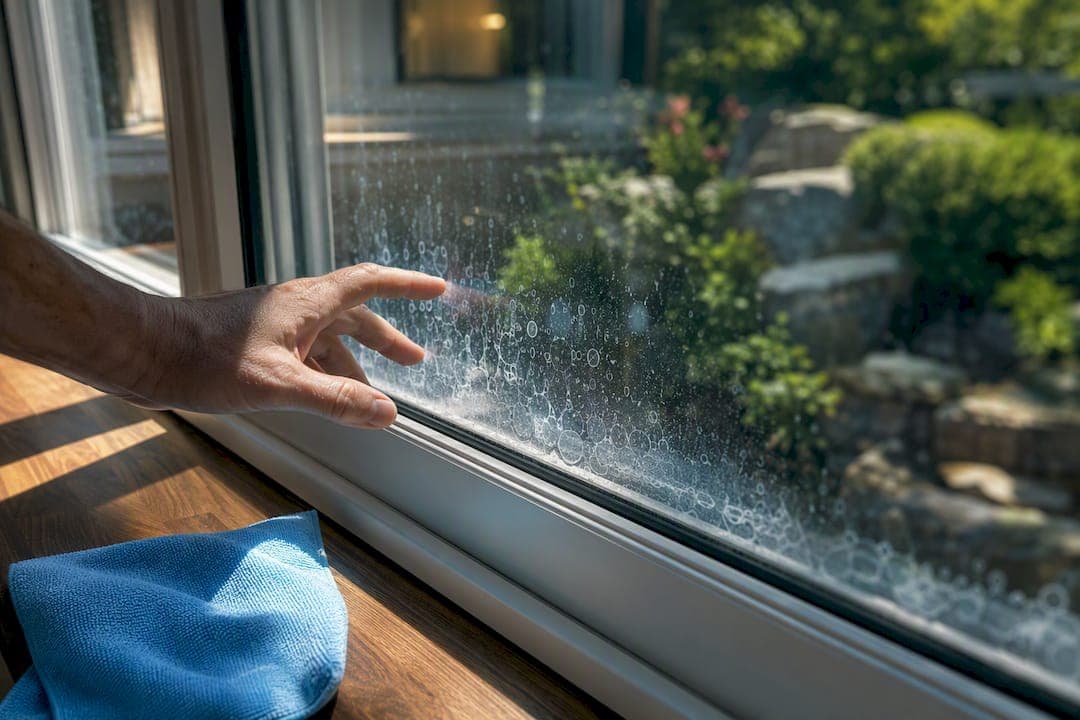
Most hard water stains on windows respond to a 50:50 mixture of white vinegar and distilled water, applied with proper dwell time, then rinsed and dried thoroughly. If a mark doesn't lighten when the glass is wet, or barely budges after a short vinegar test, it's likely bonded or etched, and that's your cue to call a professional. We'll walk you through the safe DIY escalation path below, and where a team like Islandmossbusters fits in.
TL;DR:
- Surface mineral deposits typically respond to a vinegar and water mixture applied with proper dwell time, but bonded or etched stains require professional treatment.
- Testing with wet water and vinegar spots helps distinguish between removable residue and permanent glass damage, especially on coated or special glass types.
- Escalate from mild remedies like vinegar or baking soda paste to commercial removers only if initial attempts fail, and avoid aggressive polishing on your own.
- Persistent stains that do not improve or cause roughness and reappear quickly suggest actual etching, indicating the need for professional diagnosis and restoration.
- Prevent future stains by adjusting sprinkler aim, cleaning gutters, and applying rain-repellent coatings, with final rinses using distilled water to avoid reintroducing minerals.
Table of Contents
- How to tell if hard water stains windows temporarily or permanently
- What removes hard water residue from glass, step by step
- When should you call a professional for hard water stains?
- How do you stop hard water stains from coming back?
- How Islandmossbusters diagnoses and treats hard water damage
- What most homeowner guides get backwards about hard water stains
- Get professional help with stubborn window stains
- Sources
- FAQ
How to tell if hard water stains windows temporarily or permanently
Before you scrub anything, run two quick checks. They take less than five minutes and save you from wasting a Saturday on marks that DIY simply can't fix.
- Wet-versus-dry test: Spray the glass with plain water and look at the stain while it's wet. If it fades or disappears when wet and reappears once dry, you're dealing with surface mineral deposits, not etched glass.
- Vinegar spot test: Dab a small patch with undiluted white vinegar, let it sit two to three minutes, then wipe. If the residue softens or lifts, you're in removable territory.
Professionals generally sort hard water residue into a rough severity scale: light deposits that vanish when wet, bonded film that needs vinegar or a stronger acid, and true etching that no amount of scrubbing will touch. The wet-versus-dry and vinegar tests are the standard way pros distinguish between the three before deciding whether to keep cleaning or start talking about restoration.
One caution: if your windows have a Low-E coating, tint, or any special exterior treatment, skip acids and abrasives entirely until you've confirmed the coating's care instructions. Coated glass scratches and clouds more easily than plain float glass, and once that happens, no amount of vinegar brings it back.
What removes hard water residue from glass, step by step
Start mild, test small, and only escalate if the gentler method genuinely fails. Skipping straight to the strongest product you own is how homeowners turn a light mineral film into a scratched pane.
- Vinegar and distilled water. Mix equal parts white vinegar and distilled water in a spray bottle. Saturate the stain, let it dwell 10 to 20 minutes, then agitate with a microfiber cloth, rinse with clean water, and dry immediately with a squeegee or a second dry cloth. This dwell-and-agitate approach handles most fresh deposits and can be repeated for stubborn patches.
- Baking soda paste. For spots that shrug off vinegar alone, mix baking soda with a small amount of water into a paste, apply with a soft cloth, and rub gently in circular motions. Rinse thoroughly. The mild abrasive action helps break up mineral crust that pure acid can't dissolve on its own.
- Lemon juice or a melamine sponge. Lemon juice works similarly to vinegar and is worth trying if you're out of the latter. A melamine sponge can lift tougher film, but test it on a small corner first since its micro-abrasive surface can dull coated or Low-E glass.
- Commercial hard-water removers. Products with mild acids (calcium, lime, and rust removers) tackle bonded mineral film that home remedies can't. Test on a small area first, follow label dwell times exactly, and rinse quickly. These acids can pit metal frames or degrade rubber seals if left too long.
Pro Tip: Keep a spray bottle of distilled water on hand for the final rinse. Tap water often reintroduces the same minerals you just removed, leaving a faint film behind even after a good cleaning.
If mechanical polishing comes up in your research, that's your signal to stop. Cerium-oxide polishing shows up in trade practice for a reason: it takes the right pad, the right pressure, and real experience to avoid distorting the glass's optical clarity. This isn't a weekend DIY skill.
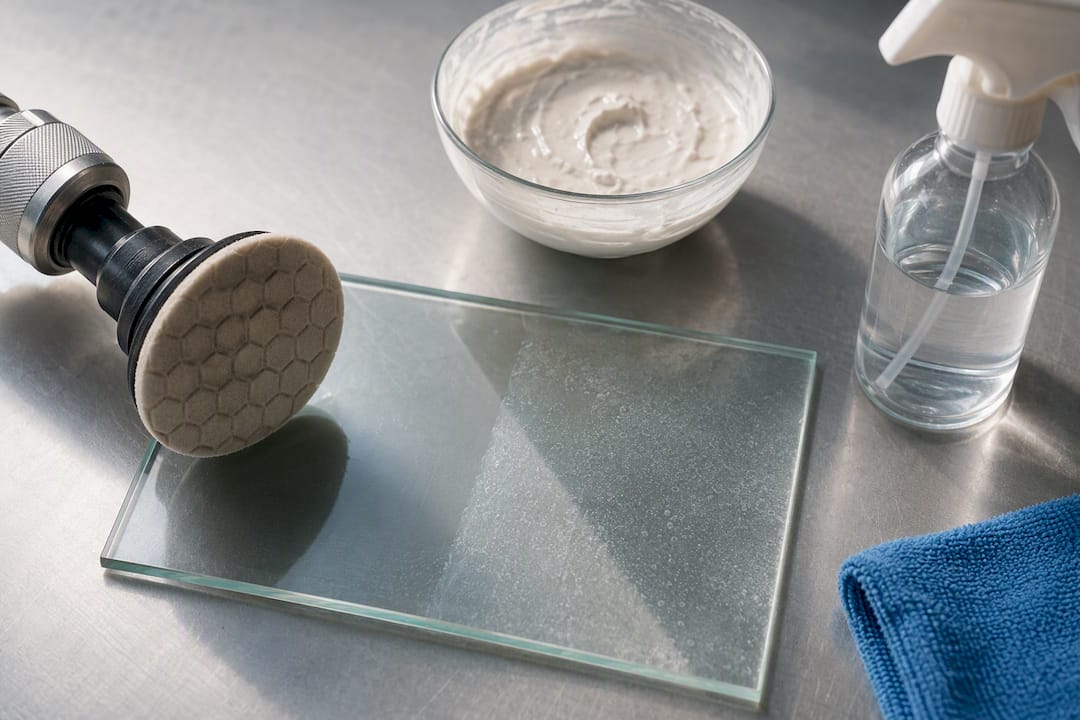
Your escalation checklist: vinegar first, baking soda paste if that fails, lemon or melamine with caution on coated glass, then a commercial remover tested small before full application. If none of those shift the mark, stop and get a professional opinion.
When should you call a professional for hard water stains?
DIY has limits, and pushing past them usually costs more than the service call would have. Watch for these signals:
- The stain shows no change during the wet or vinegar test, which points to actual etching rather than surface residue.
- The glass feels rough or pitted to the touch, not just visually marked.
- Stains reappear within days of cleaning, suggesting a recurring water source rather than a one-time cleaning problem.
- The windows sit two storeys up, over a steep roofline, or anywhere a ladder isn't a safe option.
Professionals bring tools most households don't: pure-water rinse systems that leave zero mineral residue, controlled acid application dosed for the specific mineral buildup, and cerium-oxide polishing for light etching that DIY methods can't touch. Expect the cost to reflect the access and severity involved. Light residue on ground-floor windows is a quick job; genuine etching restoration on a two-storey home takes longer and costs more, but it's still cheaper than replacing the glass.
How do you stop hard water stains from coming back?
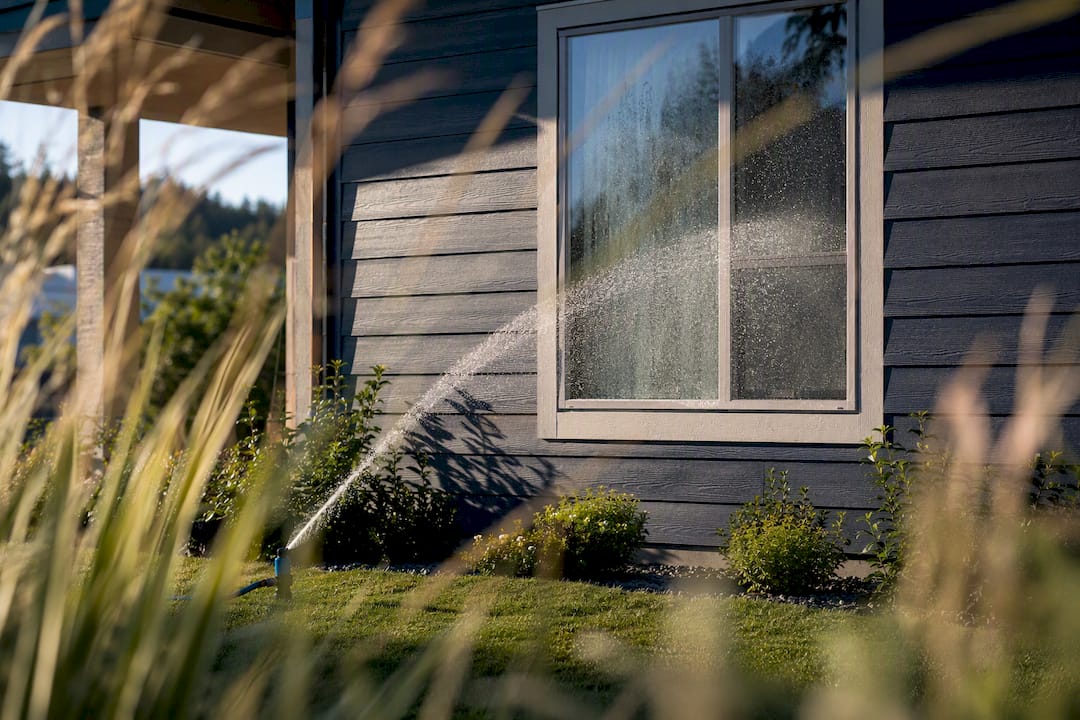
Cleaning the glass fixes the symptom. Stopping the water source fixes the actual problem. If your windows keep spotting within days of a cleaning, the culprit is almost always a sprinkler head or a gutter overflow hitting the same pane over and over.
- Redirect or re-aim sprinklers so spray doesn't land directly on window glass.
- Check gutters for overflow points that drip mineral-heavy runoff down your exterior walls and windows.
- Squeegee or wipe glass dry after rain or irrigation exposure instead of letting water evaporate and leave mineral residue behind.
- Consider a hydrophobic rain-repellent coating, reapplied every few months, which helps water bead and roll off rather than sit and dry. Products in this category are common in the window and exterior treatment space.
Pro Tip: Rinse with filtered or distilled water whenever possible, especially on your final pass. Pure-water rinses leave no dissolved minerals behind, which is exactly why professional crews favour them for large or hard-to-reach exterior windows.
How Islandmossbusters diagnoses and treats hard water damage
Our crews see hard water residue on nearly every exterior window job across the Comox Valley, largely because the region's wet coastal climate keeps minerals cycling through sprinklers, gutters, and runoff all year. That repetition means we've built a consistent process for sorting what's fixable from what needs a heavier hand.
- We run the same wet and vinegar diagnostics homeowners can do themselves, just calibrated by frequent exposure to what removable versus etched glass actually looks like up close.
- Our window cleaning service uses pure-water rinse methods where appropriate, which helps reduce mineral re-deposition that can leave streaky glass after cleaning.
- When we spot genuine etching, we say so directly rather than pushing a treatment that won't hold, and we can advise on next steps.
- Pairing window cleaning with house washing often catches the runoff sources feeding the problem in the first place.
What most homeowner guides get backwards about hard water stains
Most advice treats hard water stains as a cleaning problem. It's really a water-source problem wearing a cleaning problem's clothes. You can scrub the same window every month for a year, and if the sprinkler head still sprays the glass daily, you're managing a symptom on a loop.
The conventional wisdom oversells DIY persistence and undersells the diagnostic step. Homeowners often escalate straight to abrasive pads or a stronger acid before running the two tests that would have told them, in under five minutes, whether they're wasting their time. Etched glass doesn't care how hard you scrub or which product you switch to next.
What actually matters, in order: diagnose first, treat mildly, escalate only when the milder step genuinely fails, then fix the water source so you're not repeating the whole cycle every few weeks. Prevention isn't the afterthought most guides make it. It's the step that determines whether you're doing this once a year or once a month.
— Island
Get professional help with stubborn window stains
Islandmossbusters offers homeowners a done right the first time alternative to guesswork and repeat scrubbing: the crews diagnose whether a mark is removable or etched before treating the glass, helping avoid ineffective treatments. Our window cleaning service covers full inspection, safe removal for surface deposits, and an honest referral path if what you're looking at is genuine etching rather than residue.

If your windows sit two storeys up, near a steep roofline, or somewhere a ladder isn't a safe bet, that's exactly the kind of job our crews handle regularly using low-pressure, eco-friendly methods. It's also worth pairing with a broader exterior refresh. If your gutters are feeding the runoff that causes the spotting in the first place, our gutter cleaning service addresses that at the source. Call 250 650 8123 or book online to get your windows assessed before the wet season sets in.
Sources
- How to remove water spots from window — Glass Doctor
- How to remove hard water stains from glass — The Spruce
- How to clean exterior windows & doors — CLR (manufacturer guidance)
- How to remove hard water stains from windows — South Mountain Window Cleaning
FAQ
How do you get hard water stains off windows?
Mix equal parts white vinegar and distilled water, apply it to the stain, and let it dwell for 10 to 20 minutes before agitating with a microfiber cloth and rinsing. For tougher spots, a baking soda paste or a tested commercial remover can lift bonded mineral film that vinegar alone won't budge.
Are hard water stains on windows permanent?
Not always. Most surface mineral deposits respond to vinegar or a commercial remover, but true etching, where the mineral has actually damaged the glass surface, generally isn't reversible with home methods. A quick wet-versus-dry test tells you which type you're dealing with before you spend hours scrubbing.
Does dish soap and vinegar remove hard water stains?
Vinegar diluted with water is the active ingredient doing the work here, since its acidity dissolves mineral deposits, while dish soap mainly helps cut through grime and grease alongside it. For pure mineral buildup, a straight 1:1 vinegar and water solution with a proper dwell time tends to outperform soap-based mixes.
How do you remove years of built-up hard water stains from glass?
Long-standing buildup usually needs a commercial calcium and lime remover rather than vinegar alone, since the mineral layer has had time to bond more firmly to the glass. Test a small area first, follow the dwell time on the label, and rinse promptly. If the residue still feels rough or doesn't shift, that's usually etching, and a professional assessment from a team like Islandmossbusters is the next sensible step.