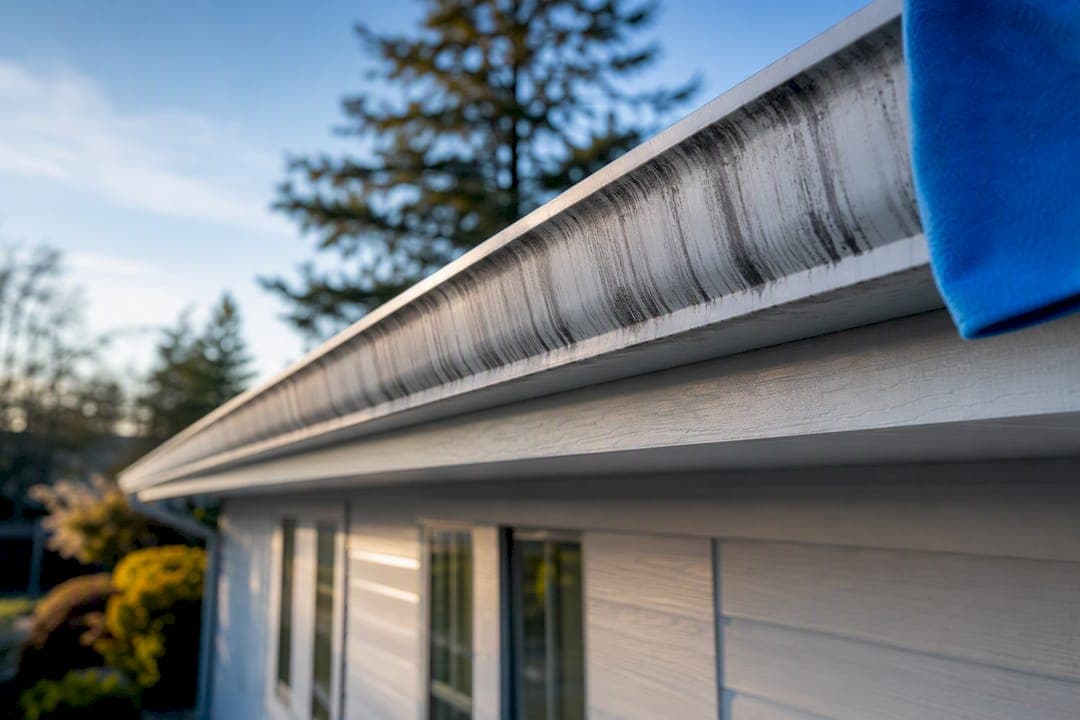
Those dark vertical streaks running down your gutter face are called tiger stripes, and they form when roof runoff and oxidation bond to the aluminium finish. The fastest reliable fix is a dedicated aluminium gutter brightener applied with soft-bristle brushing and a low-pressure rinse, or a soft-wash professional if the staining is heavy. Pressure washing alone rarely works and can strip the factory finish, making future staining worse.
TL;DR:
- Use a dedicated aluminium gutter brightener with soft-bristle brushing and low-pressure rinsing for effective removal of tiger stripes, avoiding pressure washers.
- Regular gutter cleaning, roof maintenance, and the installation of gutter guards help prevent the buildup of bonded residues that cause tiger stripes.
- The most effective cleaning occurs after winter and before the heavy rains of spring or fall, with a focus on thorough interior clearing and exterior brightening.
- Homeowners can usually treat light to moderate stripes with DIY products, but multi-season or deep-set stains often require professional soft-wash treatments.
- Differentiating tiger stripes from rust, mildew, or leak stains is crucial, as the latter require different repair or cleaning approaches to avoid unnecessary work.
Table of Contents
- What causes tiger stripes on gutters?
- How do you remove tiger stripes from gutters yourself?
- What's the best cleaner for gutter tiger stripes?
- How do you stop tiger stripes from coming back?
- Ladder safety and finish care: when DIY isn't worth the risk
- When should you hire a pro for tiger stripes?
- Tiger stripes vs. other gutter stains: how to tell the difference
- Do tiger stripes get worse in certain seasons?
- Author perspective: DIY versus calling a pro
- How Islandmossbusters handles tiger stripes and gutter upkeep
- Sources
What causes tiger stripes on gutters?
Tiger stripes aren't dirt in the way most homeowners picture dirt. They're the result of asphalt shingle runoff, petroleum-based residue, and tiny granule particles binding electrostatically to an oxidized aluminium surface. As aluminium ages, its protective coating breaks down at a microscopic level, and that oxidized surface actually attracts and holds onto these particles more readily than a fresh finish would. That's why an older gutter system develops stripes faster than a newer one exposed to the same roof runoff.
Airborne pollutants, pollen, and organic debris from nearby trees add to the mix, layering onto the bonded residue every time it rains. Water overflowing the same points on your gutter face, usually where debris has built up inside, creates the vertical striping pattern rather than a uniform stain. Every time water crests the same low spot, it drags the same particles down the same path, and the streaks deepen.
Vertical stripes below the gutter's outer edge are almost always tiger stripes. But if you're seeing staining paired with sagging sections, pooling water, or paint bubbling near the seams, you might be looking at a drainage problem rather than a cosmetic one.
A few patterns are worth knowing:
- Stripes concentrated near seams or end caps often point to overflow, not just runoff
- Stains that appear only after heavy rain suggest a clogged section upstream
- Light discolouration on newer aluminium is more likely pollen or dust than bonded oxidation
Tiger stripes form most aggressively where asphalt shingle runoff meets an already-oxidized surface, which is exactly why the fix has to target the chemistry of that bond, not just scrub at what's visible on top.
How do you remove tiger stripes from gutters yourself?
Breaking an electrostatic bond takes the right sequence, not brute force. Rushing the process, or skipping dwell time to save ten minutes, is the single biggest reason DIY attempts fail on the first pass.
Before you start, gather your checklist:
- Safety glasses and chemical-resistant gloves
- A pump sprayer for even, low-pressure application
- A soft-bristle brush (never wire or abrasive pads)
- A garden hose with an adjustable nozzle
- A tarp or plastic sheeting for nearby plants
- Your chosen aluminium gutter brightener, diluted per label instructions
Here's the workflow that actually works:
- Clear the interior first. Scoop out leaves, granules, and standing debris from inside the gutter run before you touch the exterior stripes. Residue sitting in the channel will just wash back down and undo your work.
- Pre-wet everything nearby. Soak surrounding siding, trim, and any plants below the work area with plain water. This dilutes any overspray and protects foliage from the cleaner.
- Work in short sections. Tackle 3 to 4 foot stretches in the shade if you can. Direct sun causes cleaners to dry too fast, which leaves streaking of its own.
- Apply the brightener evenly. Spray a light, even coat across the striped section using your pump sprayer. Don't drench it, a thin, consistent layer is what activates the chemistry.
- Let it dwell. Give the product 5 to 10 minutes to break down the bonded residue. Check the label, dwell times vary by formula.
- Agitate gently. Run the soft-bristle brush along the stripes in the direction of water flow. You're loosening the bond at this point, not scrubbing it off by force.
- Rinse top to bottom. Use your garden hose on a moderate spray setting, working from the top of the gutter down. This carries loosened residue away instead of redepositing it lower down the run.
- Assess before repeating. Stubborn or multi-year staining might need a second pass. If you're not seeing any improvement after two attempts, that's your signal the stain has baked in deeper than a DIY product can reach.
Avoid using a pressure washer at close range during this process. Pressure washing rarely removes tiger stripes on its own and the force involved can etch or dull the aluminium finish, which only accelerates future oxidation and staining.
Pro Tip: Test your gutter brightener on a small, hidden section first. Some formulas react differently depending on how oxidized the finish already is, and a quick patch test saves you from an uneven-looking result across the whole run.
Most homeowners see solid results with one thorough cleaning and a lighter maintenance pass the following season. Multi-year, baked-on stripes sometimes need two or three passes or a professional soft-wash treatment to fully lift.
What's the best cleaner for gutter tiger stripes?
Not every cleaner on the shelf is built for this job, and picking the wrong one wastes a Saturday and sometimes damages the finish underneath.
- Dedicated aluminium gutter brighteners are the top recommendation. They're formulated specifically to break the electrostatic bond without attacking the metal's protective coating.
- Oxygen-based cleaners offer moderate results on lighter staining and are a reasonably gentle option for gutters that haven't been neglected for years.
- Citrus-based solvents work best on fresh, light residue but tend to struggle with anything that's had a full season or more to set in.
- Professional soft-wash solutions handle heavy, baked-on stripes that homeowner-grade products can't fully lift, especially on older aluminium.
Stick with a soft-bristle brush, a low-pressure pump sprayer, and a hose nozzle set to a gentle fan spray. Skip abrasive pads and wire brushes entirely. Aggressive scrubbing or high-pressure washing can strip the factory paint right off aluminium gutters, and once that coating is gone, oxidation moves in faster and new stripes form sooner than before.
Also avoid undiluted bleach. It can discolour aluminium and create its own staining problem on top of the one you're trying to fix. Most homeowner-grade brighteners run in an affordable range at hardware and home stores, and diluting per the label (usually a modest ratio with water) stretches a single bottle across several gutter runs.
How do you stop tiger stripes from coming back?
Prevention comes down to reducing the runoff and residue that feed the staining in the first place, not just cleaning what's already there.
- Clean gutter interiors on a regular schedule. Clearing debris once or twice a year keeps water flowing evenly instead of overflowing at the same low points repeatedly.
- Keep up with roof maintenance. A roof shedding excess granules is a direct contributor to bonded residue, so addressing shingle wear reduces what lands on your gutters in the first place.
- Consider gutter guards. Guards limit the debris buildup and overflow that deposit staining residue on the gutter face, and pairing guards with regular cleaning is more effective than either step alone.
- Check your drip edge and alignment. A missing or damaged drip edge lets water run behind the gutter instead of into it, and misaligned sections create the same overflow pattern that causes stripes to form.
- Trim overhanging branches. Less organic debris landing in the gutter means less material available to bond to the surface.
- Protect the finish after cleaning. A coat of automotive wax or a UV protectant spray adds a barrier against oxidation, and reapplying every 6 to 12 months keeps that protection active.
Pro Tip: Pair your gutter cleaning with your roof cleaning schedule. Doing both at once means less shingle runoff hits a freshly cleaned gutter, so your results last noticeably longer.
Ladder safety and finish care: when DIY isn't worth the risk
Gutter work almost always means ladder work, and ladder falls are one of the most common home maintenance injuries. If your home is two storeys or more, or your roofline has steep pitches, the risk calculation shifts fast.
- Never lean a ladder against the gutter itself. Use a stabilizer bar or stand-off to keep weight off the aluminium.
- Keep three points of contact at all times, and never overreach sideways.
- Have someone nearby whenever you're working above ground level.
- If your gutters show more than light surface oxidation, aggressive cleaning risks pulling factory paint off entirely, which only speeds up future staining.
- Persistent stripes paired with sagging or leaking joints often point to a misalignment problem, not a cleaning problem, and that needs repair, not another round of brightener.
A DIY pass typically costs the price of a bottle of brightener and an afternoon. Professional service costs more upfront but often includes gutter interior clearing, soft-wash application, and a visual inspection in the same visit.
When should you hire a pro for tiger stripes?
Multi-storey homes, advanced oxidation, or any situation where you're not confident on a ladder are the clearest signals to call in help. A reputable provider clears the gutter interior first, applies a soft-wash solution formulated to be safe on oxidized aluminium, agitates gently where needed, and rinses carefully from top to bottom rather than blasting the surface. Many will also flag alignment issues or drip-edge problems while they're up there, since those often go unnoticed until they cause a leak.
When you're evaluating who to hire, insured crews and eco-conscious cleaning solutions are worth asking about directly. Islandmossbusters runs its gutter cleaning work alongside roof soft-washing on Vancouver Island, using Canadian-made, eco-friendly products rather than harsh chemical blends, with two crews covering the Comox Valley and surrounding communities. That combination, gutter interior clearing plus oxidation-safe exterior brightening in one visit, tends to produce longer-lasting results than a one-off DIY pass, particularly on homes where the staining has had a few seasons to set in.
Tiger stripes vs. other gutter stains: how to tell the difference
Not every dark mark on a gutter is a tiger stripe, and treating the wrong problem wastes time and product. Tiger stripes run vertically, start right below the outer lip of the gutter, and darken from top to bottom in a tapered pattern that follows the direction water flows. They show up most visibly on white or lighter-coloured gutters because the contrast against the dark streak is so stark, though the same bonding happens on aluminium, vinyl, and steel, with aluminium being the most prone to the electrostatic bond that makes stripes so stubborn.
Rust stains look different: they're usually orange-brown, localized around fasteners, seams, or scratches where bare metal is exposed, rather than running the full vertical length of the gutter face. Mildew or algae growth tends to appear as blotchy green or black patches rather than clean vertical lines, and it often shows up in shaded, damp areas rather than tracking with water flow.
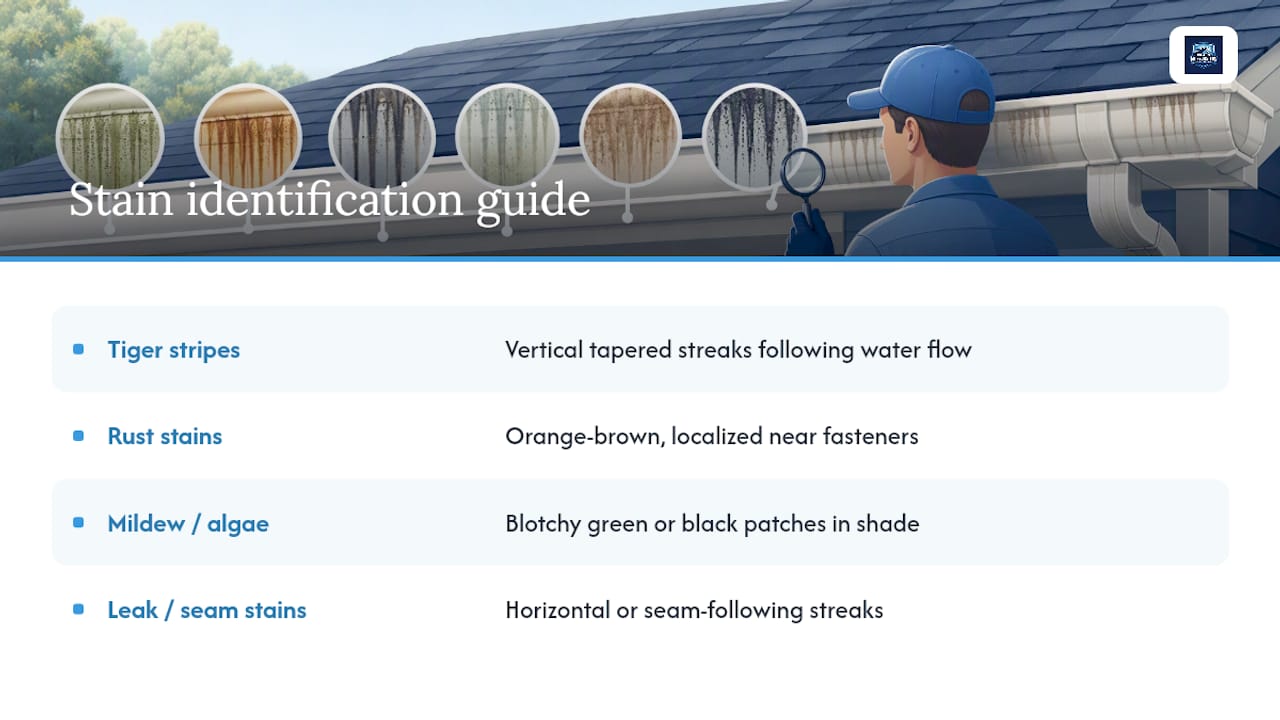
If you're staring at horizontal streaking, or staining that follows a seam line rather than a downward path, you're likely looking at a leak or a sealant failure, not oxidation-bonded residue. That distinction changes your fix entirely. A leak needs resealing or a repair, while a true tiger stripe responds to the brightening and soft-brushing method described earlier. When in doubt, check whether the mark follows gravity in a tapered vertical line. If it does, you're dealing with tiger stripes.
Do tiger stripes get worse in certain seasons?
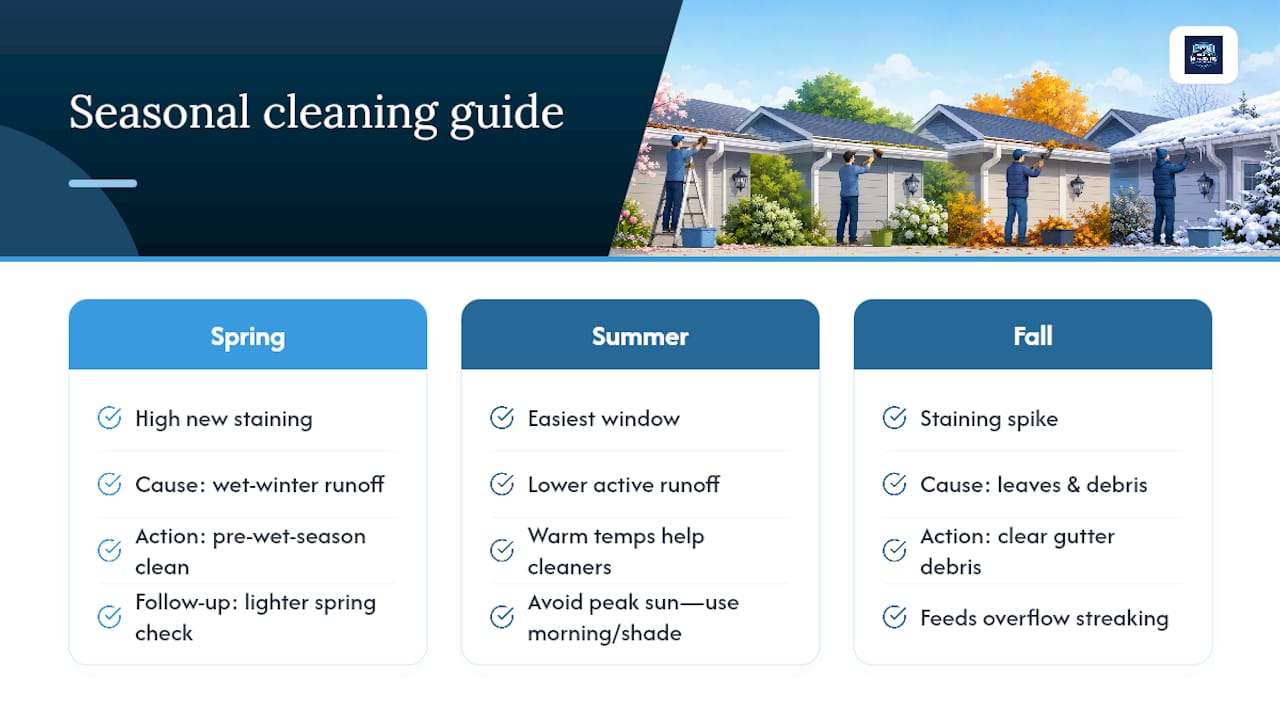
Tiger stripe formation tracks closely with your local rain and shedding cycles, which makes timing your cleaning schedule worth planning around. Spring tends to bring the heaviest new staining after a wet winter, since months of steady rainfall wash pollen, dust, and shingle granules down the roof and directly onto the gutter face. Fall adds another spike as leaves and organic debris pile into the gutter channel, feeding the same overflow pattern that produces vertical streaking.
Summer, by contrast, is often the easiest window for cleaning. Drier conditions mean less active runoff, and warmer temperatures help cleaning products dwell and work without getting diluted by surprise rain. That said, working in direct sun during peak summer heat causes brighteners to dry too quickly, so scheduling for early morning or a shaded section of the house still matters.
The most effective approach ties cleaning to your local wet season rather than a fixed calendar date. A pre-wet-season clean, ideally before the heaviest rains arrive, clears interior debris and freshens the exterior finish before the conditions that cause the worst staining set in. Following up with a lighter check in spring catches whatever built up over the winter before it has a chance to bond and darken further.
Author perspective: DIY versus calling a pro
Most homeowners can handle a first pass on light-to-moderate tiger stripes with the right brightener and a Saturday afternoon. Where the trade-off shifts is repeat staining and multi-storey homes, both of which quietly erase the savings of doing it yourself. Our recommendation is a twice-yearly check, with a proper cleaning before the wet season sets in. Protecting the factory finish matters more than most homeowners realize; once that coating is compromised, every stripe afterward comes back faster and harder to shift.
— Island
How Islandmossbusters handles tiger stripes and gutter upkeep
Islandmossbusters treats gutter tiger stripes as a two-part job: clearing what's built up inside the channel and safely brightening what's bonded to the outside. Our crews pair gutter cleaning with soft-wash gutter brightening and, where it makes sense, gutter guard installation to slow the buildup that causes staining in the first place. Roof cleaning often gets scheduled alongside it too, since reducing shingle runoff at the source means fewer stripes coming back next season.

Homeowners hire us for this work instead of climbing a ladder themselves for a few clear reasons: our crews are insured, we use oxidation-safe, Canadian-made eco-friendly solutions rather than harsh chemical blends, and the results hold up longer because we treat the interior and exterior of the gutter as one job, not two. If your gutters are showing stripes that a DIY pass hasn't fully lifted, or your home's height makes ladder work a real risk, request a quote for gutter cleaning and we'll walk you through what a full service visit looks like for your property.
Sources
Consult manufacturer labels for exact dilution ratios, and see the Cajun Soft Wash guide and Southeast Softwash removal walkthrough for deeper technical detail.
- Tiger Stripes on Gutters: Causes, Removal & Prevention Guide (2026) – Cajun Soft Wash
- Gutter Tiger Stripes Sacramento | Remove Black Streaks | Sacramento Gutter Guard
- How to Clean Gutters and Remove Tiger Stripes – Southeast Softwash
- Liberty Home Guard — gutter cleaning / finish care guidance