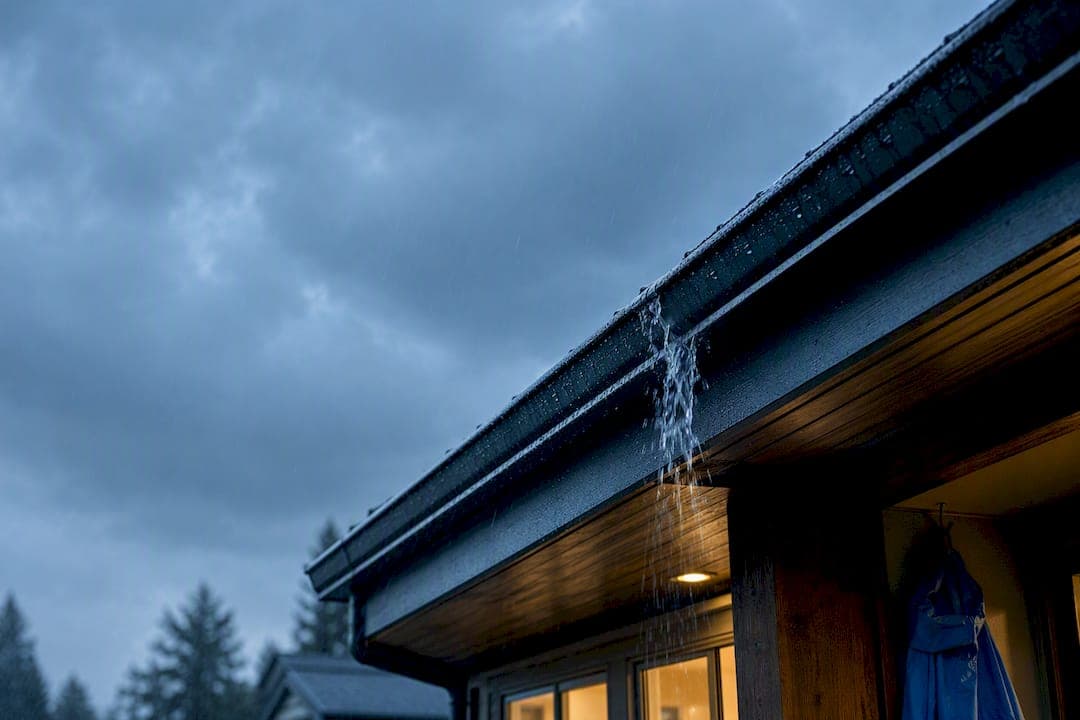
Most gutter overflow in rain comes down to one of four things: clogged debris, a blocked or undersized downspout, wrong pitch or sagging hangers, or a gutter that's simply too small for your roof. Start by clearing debris and flushing every downspout. If overflow stops, you found it. If it doesn't, move on to checking pitch and capacity, or call a pro.
TL;DR:
- Proper gutter sizing and capacity are crucial, as a 5 inch gutter typically handles about 600 square feet of roof, while a 6 inch gutter can cover nearly double that area.
- Regularly cleaning the entire gutter trough and flushing downspouts can resolve most overflow issues caused by debris, even before considering system upgrades.
- Overflow that occurs only during heavy rain usually indicates a capacity problem, while overflow during light rains suggests debris or clogs.
- Installing additional downspouts or upsizing gutters is recommended if measurements show the current system is undersized for your roof's drainage needs.
- Persistent issues like water running behind the gutter or soft fascia require professional inspection to verify pitch, capacity, and structural condition before repairs.
Table of Contents
- What causes gutter overflow in rain: reading the clues
- Fix overflowing gutters: the cheapest steps first
- Is your gutter system big enough? The capacity math
- Gutter guards and overshoot: when the fix backfires
- When gutter overflow means it's time to call a pro
- Our take on chasing gutter overflow the right way
- Get a proper gutter inspection before winter rain hits
- Sources
- FAQ
What causes gutter overflow in rain: reading the clues
You don't need to guess where the problem is. Water tells you exactly where it's failing, if you watch it during a storm.
Professional diagnostics point to five repeat causes: debris clogs, incorrect pitch, blocked or undersized downspouts, insufficient gutter capacity, and missing or damaged drip edges that let water sneak in behind the trough entirely. Debris is the most common offender day to day, but capacity and installation problems show up more often once the rain gets serious, according to The Roofing Brief's breakdown of gutter overflow causes. The location of the overflow narrows it down fast:
- Water spilling over the front lip along the whole run usually means a clog somewhere in the trough or a gutter that's undersized for the roof feeding it.
- Overflow at one specific low spot on the front edge points to bad pitch or a sagging hanger pulling that section down.
- Water running down behind the gutter almost always means the drip edge is missing, damaged, or installed at the wrong angle, letting rain bypass the trough and hit the fascia directly.
- Leaking at seams or end caps signals failed sealant, not a capacity or slope problem at all.
This cause-by-location mapping, documented by The Roofing Brief, is worth pinning to your fridge during the next storm.
Grab your phone before you grab a ladder. During heavy rain, stand back and photograph where water spills, whether it's a single spot or the entire run, and whether it happens in a light drizzle or only during a downpour. That last detail matters more than most homeowners realize: if your gutters handle light rain fine but overflow during a real storm, that's a capacity signal, not a clogging signal. Clogs cause overflow regardless of rain intensity. Capacity problems only show up when the volume outpaces what the system can carry.
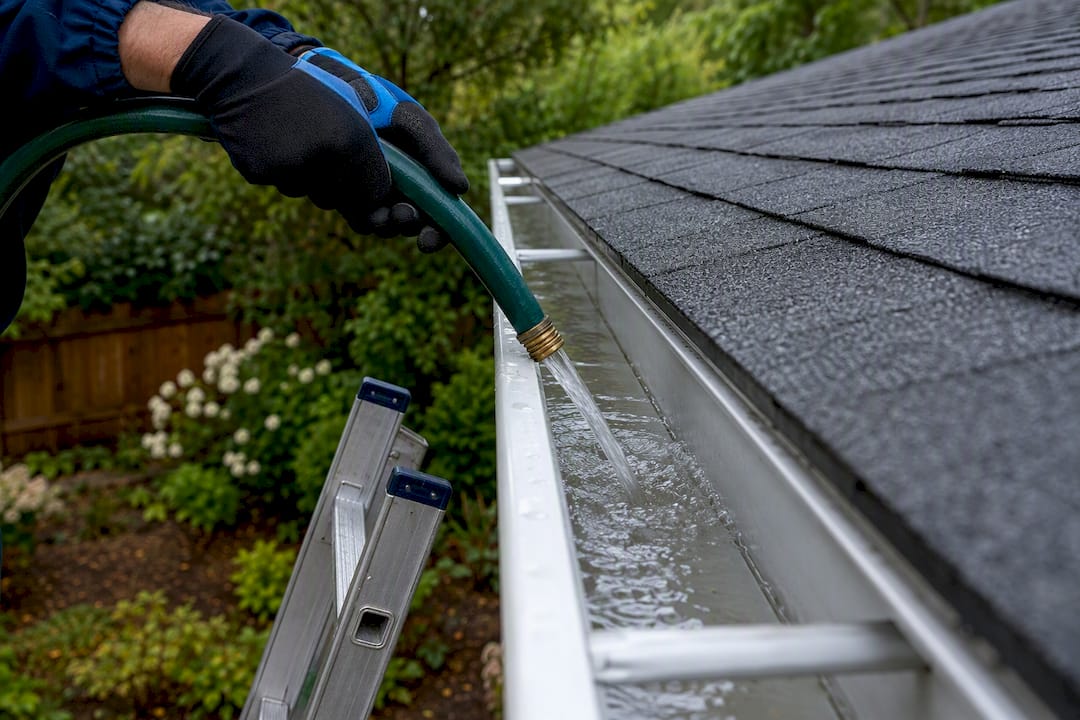
Two field tests help confirm what you're seeing. First, the sound test: stand near a downspout during rain and listen. Silence usually means the blockage sits at or below the elbow. A steady rush means water is flowing but the gutter above still can't keep up, which points to pitch or capacity. Second, once the rain stops, run a garden hose from the far end of the gutter toward the downspout at a moderate flow. This hose test separates seam leaks from slope issues safely, as long as you're working from a stable ladder position, not leaning off the roof edge.
Fix overflowing gutters: the cheapest steps first
Work from cheap to involved. Cleaning costs almost nothing and solves the majority of overflow cases. Upsizing a whole system costs real money and should be your last move, not your first.
- Clean the full trough, not just the visible parts. Scoop out leaves, shingle grit, and sludge from every section, including the corners where debris likes to pack in tight.
- Flush every downspout with a hose, running water from the top opening down through the elbow and out the bottom. If water backs up, the clog is inside the pipe, not the trough.
- Check underground extensions if your downspouts feed into buried drain lines. These clog quietly and homeowners rarely think to check them until water is pooling at the foundation.
- Reseal loose seams and end caps with exterior-grade gutter sealant once they're clean and dry.
- Re-tension sagging hangers by tightening loose screws or adding new hidden hangers every 24-36 inches. A section that's dropped even a quarter inch can hold standing water and cause a local overflow point.
- Add a temporary splash block or diverter under any downspout that's eroding soil or splashing against the foundation, while you work through bigger fixes.
Trade professionals consistently follow this exact order: clean and flush first, then verify pitch, then fix sagging hangers, and only then consider adding downspouts or upsizing, according to guidance from My Discount Roof on gutters that overflow without visible clogs. Proper pitch runs about a quarter inch to a half inch of drop per 10 feet of gutter, sloping toward the downspout. You can check this roughly with a level and a tape measure, or just watch where water pools after a rinse.
Pro Tip: If you're not sure whether a gutter is sagging or just dirty, run the hose test twice: once before cleaning, once after. If overflow disappears after cleaning, you were dealing with debris, not structure.
Is your gutter system big enough? The capacity math
Sometimes a gutter is spotless, perfectly sloped, and still overflows. That's a sizing problem, and it has real numbers behind it.
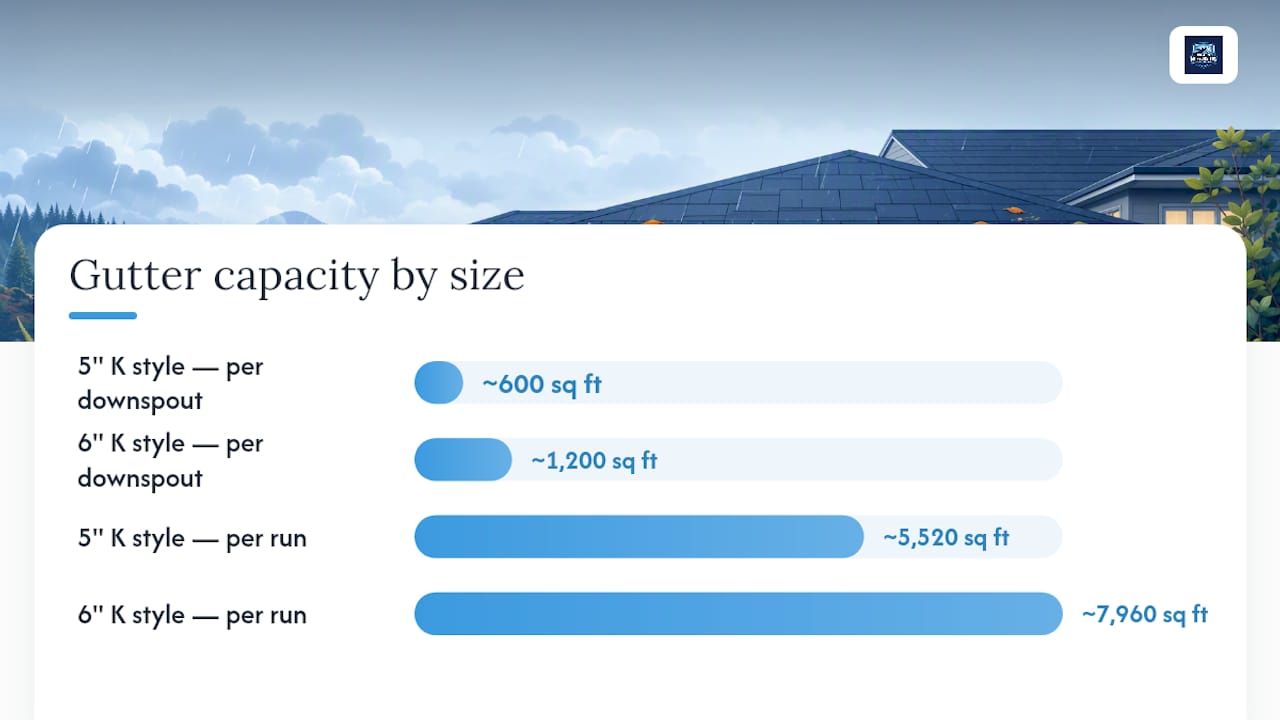
A standard 5 inch K style gutter typically handles roughly 5,520 square feet of roof area when paired with a 2×3 downspout rated for about 600 square feet. A 6 inch K style gutter jumps to roughly 7,960 square feet of coverage with a 3×4 downspout rated for about 1,200 square feet, according to capacity figures from The Roofing Brief. That's close to a 50% increase in handling capacity just from moving up one gutter size.
| Gutter size | Downspout size | Roof area per downspout | Roof area per run |
|---|---|---|---|
| 5 inch K style | 2×3 inch | ~600 sq ft | ~5,520 sq ft |
| 6 inch K style | 3×4 inch | ~1,200 sq ft | ~7,960 sq ft |
To figure out whether your setup is undersized, measure the roof plane draining into each gutter run, factoring in slope. A steep roof sheds rain faster than a low-slope one, which effectively increases the volume your gutter has to handle during the same storm. Heavy-intensity rain events push even correctly sized systems close to their limit, which is why a gutter that's fine most of the year can overflow during one big storm.
Once you know your numbers, you have two options:
- Add a second downspout to an existing run. This is usually the cheaper, faster fix, and it works well when one long run is simply outpacing a single outlet.
- Upsize to a 6 inch system across the board. This costs more and takes longer, but it simplifies long-term maintenance and handles large or complex roofs better than adding outlets piecemeal.
For most single-family homes with one problem run, adding a downspout solves it. For larger roofs with multiple valleys feeding one gutter section, upsizing is usually the better long-term move.
Gutter guards and overshoot: when the fix backfires
Guards are supposed to reduce overflow, not cause it. Sometimes they do the opposite.
Reverse curve and fine mesh guards can actually trigger overflow during heavy rain, because water sheets across the guard's surface faster than it can filter through, and the excess just shoots past the gutter entirely, according to The Roofing Brief's guard analysis. Quality micro mesh guards installed at the correct pitch reduce this risk substantially, but no guard eliminates maintenance completely. They still need occasional clearing, particularly after windstorms pile debris on top rather than inside.
A few things to check before blaming the guard:
- Does overflow only happen with the guard installed, and not before? That's your clearest signal the guard itself is the issue.
- Is your roof pitch steep, or does a wide valley dump concentrated flow onto one gutter section? Steep pitches and valleys both increase the speed and volume of water hitting the guard, which can overwhelm even a well-made design.
- Has the guard shifted or lifted at any point along the run? A guard sitting slightly proud of the gutter lip lets water shoot straight over it.
If you're shopping for gutter guards after ruling out clogs and pitch, look for double layered aluminum systems designed specifically for heavy coastal rain rather than basic screen inserts, which tend to struggle in genuinely wet climates.
When gutter overflow means it's time to call a pro
Some overflow problems are beyond a hose and a ladder, and pushing through them yourself risks bigger repair bills later.
Call a contractor if you notice water running behind the gutter and down the fascia board, soft or rotting trim near the roofline, overflow that keeps coming back even after a full cleaning, or a roof with large valleys funnelling heavy flow into one section. Complicated underground drainage extensions that keep clogging are another sign the setup needs a proper redesign, not another flush.
Before the appointment, gather your evidence: photos of exactly where water overflows, notes from your hose test, and how the pattern changes between light and heavy rain. A solid professional inspection covers pitch verification with a level, capacity math based on your actual roof area, downspout routing checks, and a close look at drip edge and flashing condition, according to Best Gutter Services' inspection guidance. From there, expect a scope that includes re-hanging sections, adding downspouts, upsizing, or in some cases, full replacement. Price mostly comes down to how much of the system needs physical change versus a simple adjustment.
Our take on chasing gutter overflow the right way
Homeowners often jump straight to guards or full replacement when the real fix is a $20 hose test and twenty minutes on a ladder. Some local companies are family run and fully insured, and begin jobs with diagnosis rather than sales pitches for the most expensive options on the list. We've installed enough Alu-Rex guard systems to know they solve real problems, but only after clogging and pitch are ruled out first. On Vancouver Island, timing matters too: catching overflow issues before the fall rains hit hard saves you from a wet winter of pooling water against the foundation.
— Island
Get a proper gutter inspection before winter rain hits
If you've run through the hose test, cleaned the trough, and overflow is still happening, it's worth having someone look at pitch and capacity in person rather than guessing at a fix. A local exterior maintenance company runs full diagnostic visits in the Comox Valley, checking pitch, downspout capacity, and drip edge condition, with photo proof of what they find before recommending anything.

Our gutter cleaning service covers full trough and downspout flushing, and if the inspection shows your guards are contributing to the overflow rather than solving it, we install the Alu-Rex double layered aluminum guard system built for heavy coastal rain rather than basic screens. When moss or roof grit is feeding the clog in the first place, our roof cleaning and moss removal service tackles that at the source, backed by our multi-year moss return guarantee. Every visit includes photos of what we find and a clear quote before any work starts. If you're seeing water pool against your foundation after every storm, book a gutter inspection before the wet season gets worse.
Sources
These trade references back the diagnostic steps and capacity numbers used throughout this guide:
- Gutter overflow: Causes, fixes, and capacity math — The Roofing Brief
- Why are my gutters overflowing but not clogged? — My Discount Roof
- Gutters leak only during heavy rain: Causes, tests and fixes — Best Gutter Services
FAQ
Is it normal for gutters to overflow with heavy rain?
Occasional overflow during an intense downpour can happen even on a well-maintained system if the rain outpaces its rated capacity. Recurring overflow, or overflow during light-to-moderate rain, usually points to a clog, pitch problem, or undersized system rather than normal behaviour.
How do I stop gutters from overflowing in heavy rain?
Start by clearing all debris and flushing every downspout with a hose, since clogs cause the majority of overflow cases. If overflow continues after cleaning, check pitch with a level and consider whether your gutter and downspout sizing matches your roof area, as outlined in the capacity guidelines from The Roofing Brief.
How do I stop water from overshooting my gutters?
Overshoot usually comes from steep roof pitch, wide valleys concentrating flow, or a gutter guard that's letting water sheet across its surface instead of filtering through. Check whether the guard is positioned correctly and sitting flush with the gutter lip, and confirm the trough itself is mounted at the correct height under the drip edge.
Why are my downspouts overflowing?
A downspout that's silent during rain is likely blocked at or below the elbow, while one that's flowing steadily but the gutter above still overflows points to undersized capacity rather than a clog. A single 5 inch downspout typically handles only around 600 square feet of roof area, so larger or steeper roofs often need a second outlet.
When should I call a professional instead of fixing gutters myself?
Call a contractor if you see water running behind the gutter onto the fascia, soft or rotting trim, overflow that returns after a full cleaning, or a roof with large valleys dumping heavy flow into one run. A proper inspection checks pitch, capacity, downspout routing, and drip edge condition before recommending a fix.