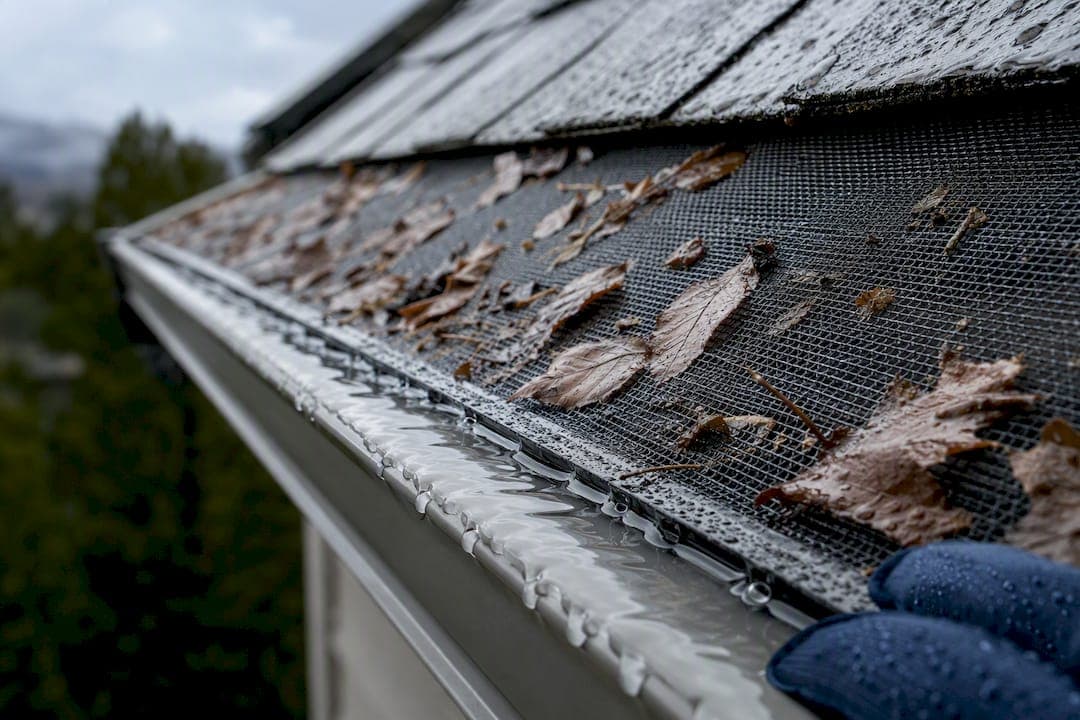
Gutter guards are worth it if you have heavy tree cover, pay for two or more gutter cleanings a year, or climb a ladder you'd rather avoid. They're a nice-to-have, not a must-have, for a low-debris single-storey home. The catch: the type you choose and the quality of the install matter as much as the decision itself. Skip a cheap screen thrown over dirty gutters and you'll end up disappointed either way.
TL;DR:
- High-quality micro-mesh guards can reduce gutter cleaning frequency by about 70 percent, especially in homes with heavy pine needle debris.
- Proper installation and gutter prep are crucial, as poor alignment or installing over damaged gutters can cause water overshoot and guard failure.
- Guards are most cost-effective for homes paying two or more cleanings annually, with break-even typically within five to ten years depending on debris and property type.
- Foam inserts, brushes, and low-grade screens tend to degrade quickly, often needing replacement in two to three years, which negates initial savings.
- Inspect and clean gutters thoroughly before installation, and choose guards that match your debris type and your willingness or ability to perform maintenance.
Table of Contents
- Are gutter guards worth it: how they work and the main types
- What benefits do gutter guards actually deliver?
- Downsides and failure modes homeowners should know about
- Gutter guard costs and the break-even math that actually matters
- How to decide: your gutter guard checklist
- Maintenance and lifespan after installation
- How Island Moss Busters evaluates and installs gutter guards
- Do gutter guards affect home insurance or property value?
- Common myths about gutter guards, cleared up
- How to evaluate a gutter guard warranty and service plan
- Where the conventional advice on gutter guards gets it wrong
- Get your gutters assessed before you invest in guards
- Sources
Are gutter guards worth it: how they work and the main types
Not all gutter guards solve the same problem, and that's the root of most buyer's remorse. Some designs filter debris through fine openings, others rely on curved surfaces that use water's natural clinging behaviour, and a few just plug the gutter opening with a porous material and hope for the best.
Micro-mesh guards use a fine stainless-steel or aluminum mesh, sometimes rated by micron size, that lets water through while blocking needles, seeds, and even shingle grit. Reverse-curve guards channel water around a curved nose and let debris fall off the front edge, using the same principle that keeps water flowing along a curved surface instead of dripping straight down. Screens are flat, perforated covers, usually the cheapest option and the least reliable. Foam inserts sit inside the gutter channel and let water soak through, but they clog easily and hold moisture against the gutter metal. Brush guards are cylindrical bristle inserts that catch large leaves but do little against fine debris.
Installation style matters just as much as the guard type:
- Under-shingle systems tuck beneath the first row of shingles for a locked-in fit, but they require careful roofing work to avoid voiding a roof warranty.
- Clip-on or hook systems attach to the gutter's front lip and are the most common professional install for micro-mesh and reverse-curve products.
- Screw-on guards are the most DIY-friendly but the most prone to shifting or lifting in wind if not torqued properly.
Fit and pitch alignment decide whether any of these designs actually perform. A reverse-curve guard mounted at the wrong angle sends water straight over the gutter instead of into it, and a micro-mesh sheet that isn't pitched to match roof slope collects pine needles instead of shedding them, according to BobVila's testing of pine-needle performance.
What benefits do gutter guards actually deliver?
The honest benefit isn't "never clean your gutters again." It's fewer cleanings, less water damage, and fewer trips up a ladder.
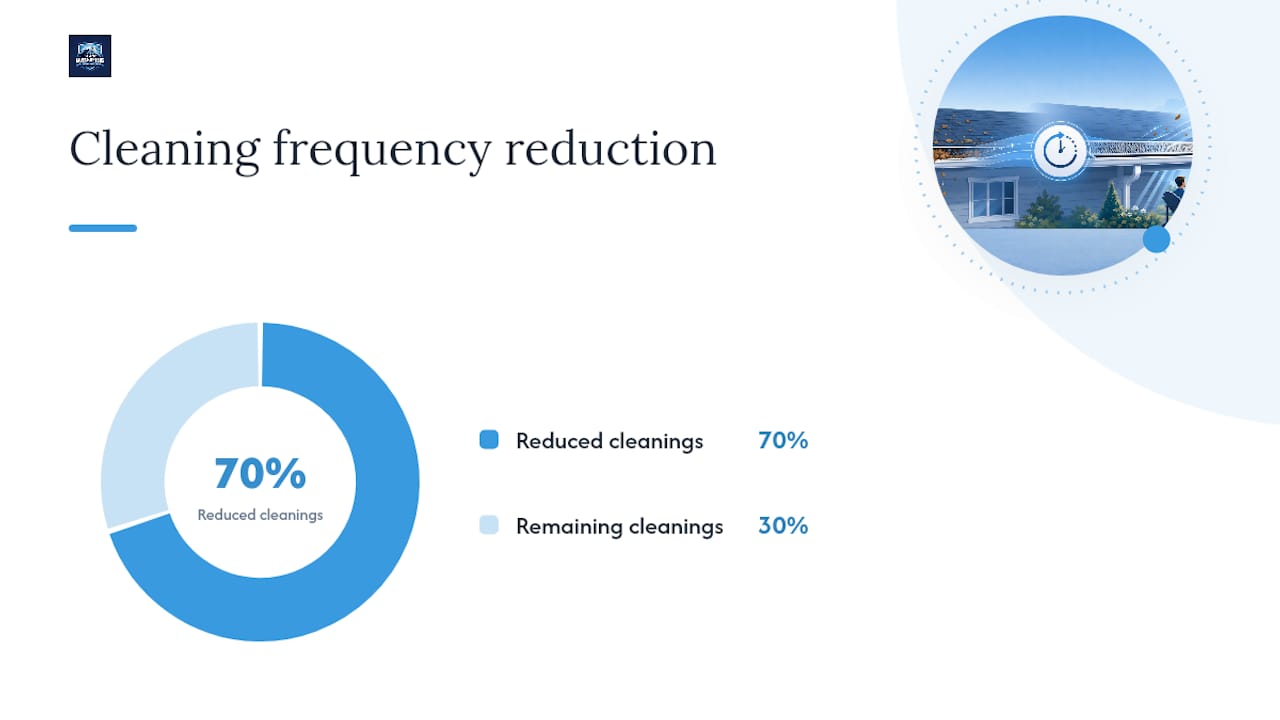
A properly installed, high-quality micro-mesh guard cuts gutter cleaning frequency by roughly 70%, according to This Old House's cost-benefit reporting. That's the single biggest number in this whole decision, and it's the one that should drive your break-even math later.
Beyond fewer cleanings, guards protect against the damage that happens when gutters overflow. Water spilling over a clogged gutter runs down the fascia board, seeps behind siding, and pools at the foundation, three of the most expensive repair categories tied to poor drainage. Preventing overflow is often the real payoff, even when a homeowner can't put a dollar figure on "damage that didn't happen."
There's also a safety dimension that doesn't show up in payback calculators. If your home is two storeys, or you're not steady on a ladder anymore, avoiding two or three climbs a year has value that has nothing to do with money.
Homeowner satisfaction with installed systems tends to run high, though This Old House's coverage is clear that satisfaction depends heavily on matching the right guard type to the debris on your property and getting a clean install. Guards also signal ongoing maintenance to a home inspector or a buyer walking through during a sale, though that's a maintenance cue more than a direct bump to appraised value.
Where guards tend to earn their keep:
- Properties with mature deciduous trees or conifers nearby
- Homes with a history of overflow-related fascia or siding damage
- Two-storey homes or homeowners who'd rather not climb a ladder
- Rental or vacation properties where nobody's checking gutters regularly
Downsides and failure modes homeowners should know about
Gutter guards aren't zero-maintenance, and the marketing that implies otherwise sets homeowners up for disappointment. Independent testing from Consumer Reports shows real variance: some designs perform well, others fail outright, and the difference usually comes down to build quality and mesh grade rather than brand name.
Foam inserts, bristle brushes, and cheap perforated screens are the most common sources of buyer complaints. Foam breaks down and holds moisture that accelerates gutter corrosion. Brush guards let fine debris settle into the bristles, where it decomposes into a compost-like sludge that's harder to remove than leaves would have been. Thin screens sag or curl under snow load and pull away from the fascia.
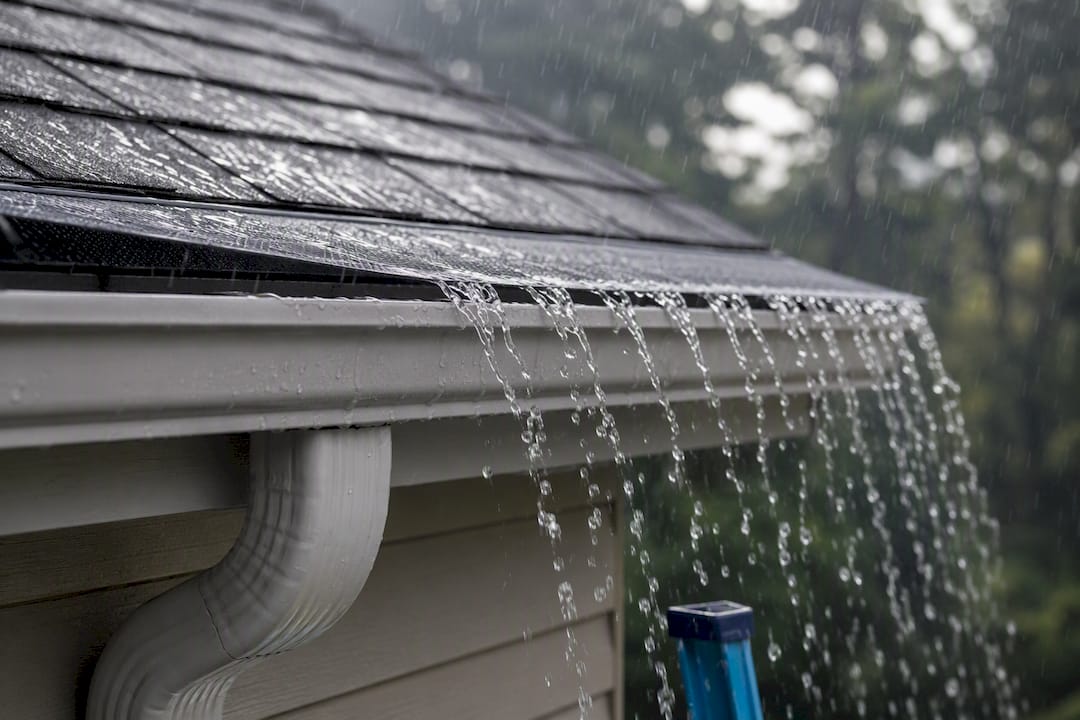
Heavy rain exposes a second failure mode: water overshoot. A reverse-curve guard, or any guard installed at the wrong pitch, can send a heavy downpour sailing past the gutter entirely instead of into it, which defeats the entire purpose of having gutters. This is less a flaw in the concept and more a flaw in a rushed or mismatched install.
The third and most preventable failure mode is installing guards over gutters that are already dirty, sagging, or damaged. The Roofing Brief's cost-benefit analysis and installer guidance both stress that sealing debris and standing water inside a failing gutter system hides the problem instead of solving it, and the damage keeps progressing underneath the guard where nobody sees it until fascia boards start rotting.
Common complaints worth watching for:
- Guards installed without cleaning or repairing gutters first
- Warranty language that excludes "debris sitting on top of the guard"
- Screens or foam that need replacement within two or three years
- Overshoot during intense rain from poor pitch alignment
Pro Tip: Ask any installer to show you the gutters before and after cleaning, not just the guard going on. If they can't produce photos of clean, levelled gutters underneath, assume the guard is being installed over a problem, not a solution.
Gutter guard costs and the break-even math that actually matters
The financial case for gutter guards comes down to one comparison: what you're currently paying to have gutters cleaned versus what a quality guard system costs upfront.
Professional micro-mesh installation, according to installer surveys reported by USA Today, commonly lands in the low thousands of dollars for an average-sized home when installed by a professional crew, with DIY material costs running a small fraction of that for homeowners comfortable doing their own gutter work. Micro-mesh runs higher than screens or foam, but it's also the only type that reliably handles pine needles and fine debris, according to Modernize's pine-needle guard comparison.
Gutter cleaning itself typically costs a set fee per visit, and homeowners who skip professional cleaning often pay for it later in fascia repair or foundation drainage work instead.
Here's the break-even logic in three scenarios:
| Cleanings paid per year | Approximate years to break even | Best fit |
|---|---|---|
| 4x per year (heavy tree cover) | Fastest payback | Homes under mature conifers or near pine stands |
| 2x per year | Moderate payback | Typical suburban lot with some tree cover |
| 1x per year or less | Slowest, sometimes never | Low-debris homes, convenience purchase only |
The Roofing Brief's analysis treats two or more paid cleanings a year as the threshold where guards tend to justify themselves financially, and a conservative rule of thumb holds that homes clearing that bar usually recoup the cost within the guard's working life once you factor in light ongoing maintenance.
The math shifts once you weigh in non-financial value. If you've already had one overflow event that damaged fascia or pooled water near your foundation, or if climbing a ladder is genuinely risky for you, those factors deserve a seat at the table even when the pure payback period runs long. Not every worthwhile purchase needs to pencil out purely in dollars.
How to decide: your gutter guard checklist
Run through these five questions before you commit to any system.
- What's actually falling into your gutters? Broadleaf trees, conifers, and pine needles each demand a different guard. If pine needles are the main debris, Modernize's testing is blunt: micro-mesh is the only type that reliably keeps them out. Brush, foam, screen, and reverse-curve designs all underperform on needles specifically.
- How many times a year do you currently pay someone to clean your gutters? Two or more paid visits a year is the point where most cost-benefit analyses tip in favour of guards.
- Have you had an overflow incident recently? Water stains on fascia, soil erosion near your foundation, or a soggy basement corner after heavy rain are signs your current setup is already failing.
- Are your gutters in good shape right now? Sagging sections, loose hangers, or rust need repair before any guard goes on top. Installing over a failing gutter just hides the problem.
- Are you installing yourself or hiring a professional? Roof pitch, height, and warranty coverage all factor in. A steep or high roofline is a strong argument for professional installation, both for safety and for a proper pitch-matched fit.
Watch for these red flags during any sales conversation:
- Vague warranty language that doesn't specify what voids coverage
- High-pressure, same-day-signature sales tactics
- Any quote that skips inspecting your current gutters before pricing the job
Pro Tip: If an installer quotes you a price without climbing up to look at your gutters first, get a second quote. Pitch, gutter condition, and roofline height all change the price and the right product, and nobody can assess those from the driveway.
Ready to have your gutters cleaned and inspected before deciding on guards? That inspection step alone answers most of the questions above.
Maintenance and lifespan after installation
Guards reduce maintenance. They don't eliminate it, and any installer who tells you otherwise is overselling the product.
Plan on a light annual check: a quick brush-off or rinse of the mesh surface, especially after a windy fall season when needles and seed pods pile up on top of the guard rather than inside the gutter. After major storms, a quick visual check from the ground for sagging or debris buildup takes a few minutes and catches problems early.
There are times you'll need to remove a section of guard entirely, usually for roof repairs or if debris has somehow packed in tight enough to need a manual clear-out. This happens more with brush and foam systems than with micro-mesh, which sheds debris more cleanly when pitched correctly.
Expected lifespan varies by material. Aluminum and stainless-steel micro-mesh systems tend to last the longest, often matching or outlasting the roof itself when properly maintained. Foam and plastic screens degrade faster, especially with UV exposure and freeze-thaw cycling. In wet coastal climates specifically, corrosion resistance matters more than in drier regions, which is why powder-coated aluminum frames paired with stainless mesh tend to outperform cheaper metal combinations over the long run.
None of that matters if the prep work was skipped. A guard installed over gutters that weren't fully cleaned, levelled, and secured traps whatever was left behind, and that trapped debris causes exactly the hidden damage guards are supposed to prevent.
- Annual surface brushing or rinse, more often under heavy conifer cover
- Post-storm visual check for sagging or pooling
- Full gutter clean before removing or reinstalling any guard section
- Watch for early signs of corrosion on lower-grade metal frames
How Island Moss Busters evaluates and installs gutter guards
Every install starts with an assessment, not a sales pitch. Crews check gutter condition, roof pitch, the type of debris coming off nearby trees, and any signs of prior water damage before recommending a product.
In the wet coastal climate across the Comox Valley and the wider Vancouver Island service area, that assessment usually points toward corrosion-resistant micro-mesh systems pitched to match the roofline, since standard screens and foam inserts hold moisture and break down faster in this kind of rainfall. Prep work comes first every time: a complete gutter clean, minor repairs to loose hangers or sagging sections, and a secure, level fit before any guard goes on. Skipping that step is the single most common cause of guard failure, and it's not a step Islandmossbusters skips to save time.
Every install comes with clear warranty terms and a straightforward service process, so you know exactly what's covered if something needs attention down the line.
Do gutter guards affect home insurance or property value?
Gutter guards don't typically lower your home insurance premium on their own, and no major Canadian insurer advertises a discount specifically for having them installed. What they can do is reduce the odds of a water-damage claim, since a clogged gutter that overflows into the foundation or seeps behind siding is exactly the kind of gradual water damage claim insurers scrutinize closely, and sometimes deny outright if they can show a maintenance failure caused it.
On property value, the effect is indirect. A buyer's home inspector won't add a line item for "has gutter guards," but a clean, well-maintained exterior with no visible fascia rot, foundation staining, or sagging gutters reads as a well-cared-for property. That impression shows up in listing photos and in a buyer's confidence during a walkthrough, which matters more at the negotiation table than most sellers expect. If you're prepping a home for sale, guards are one small piece of a larger exterior maintenance story, alongside a clean roof and washed siding.
The safest way to think about it: gutter guards are a damage-prevention tool first, an insurance consideration second, and a property-value factor only in the sense that neglect is visible and care is too.
Common myths about gutter guards, cleared up
"Gutter guards mean you never clean your gutters again." False, and the most damaging myth in this category. Every system needs periodic checks, and skipping them entirely defeats even the best micro-mesh install.
"All gutter guards work the same way." Not close. Foam, brush, screen, reverse-curve, and micro-mesh solve different problems, and choosing the wrong one for your debris type is the most common source of buyer disappointment, as Consumer Reports' testing demonstrates.
"Guards will damage your roof or void your roof warranty." Under-shingle installs done poorly can cause issues, but clip-on and hook systems, the most common professional approach, don't interfere with roofing material or its warranty.
"Cheaper guards save you money." Often the opposite. Foam and low-grade screens degrade fast, clog more than expected, and frequently need replacing within a couple of years, erasing whatever you saved upfront.
"Once installed, guards are guaranteed to stop all clogs forever." No warranty covers debris that accumulates on top of the guard rather than inside the gutter, and most fine print excludes exactly that scenario.
How to evaluate a gutter guard warranty and service plan
Read past the headline "lifetime warranty" claim and find out what's actually excluded. Many warranties cover manufacturing defects in the mesh or frame but exclude debris sitting on top of the guard, which is often the exact failure homeowners experience in heavy pine-needle areas.
Ask for written examples of what triggers a service call versus what the homeowner is expected to handle. A warranty that only mentions "no clog guarantee" without defining what counts as a clog is a warranty that's hard to enforce later.
Check whether the warranty is tied to professional installation. Some manufacturers void coverage if the product wasn't installed by a certified crew, which matters if you're weighing DIY against professional install for cost reasons.
Finally, ask what happens during a service call. Does the company come out and inspect for free within the warranty period? Is there a response-time commitment? A vague answer here is often a preview of what happens if you ever need to use that warranty.
Where the conventional advice on gutter guards gets it wrong
Most gutter guard content treats the decision as a pure math problem: multiply your cleaning cost by a few years and compare it to the install price. That math is useful, but it undersells the two factors that actually predict whether a homeowner is happy a year later: whether the debris type matches the guard type, and whether the gutters were properly prepped before installation.
We'd argue installation quality matters more than brand. A premium micro-mesh product installed over sagging, dirty gutters will disappoint you just as much as a cheap screen. The reverse is also true: a mid-tier product installed correctly, pitched right, and backed by a clear warranty will often outperform a premium product rushed onto a gutter that needed repair first.
If you take one thing from this guide, make it this: inspect and prep before you buy. The guard is the easy part. The gutter underneath it is what actually determines whether the investment pays off.
— Island
Get your gutters assessed before you invest in guards
Islandmossbusters is the practical next step after reading a guide like this one: instead of guessing whether your gutters are ready for guards, a crew inspects the actual condition of your gutters, roofline, and surrounding trees before recommending anything.

A visit starts with a full inspection, checking for sagging sections, loose hangers, and any signs of past overflow damage, followed by professional gutter cleaning to clear out existing debris. From there, you get a straightforward quote for gutter guard installation matched to your debris type, whether that's heavy conifer needle drop or broadleaf litter, along with clear warranty details before any work begins. Crews across the Comox Valley, including Courtenay, Campbell River, and Parksville, follow the same clean-first, install-second standard described throughout this guide. Call 250 650 8123 or book your assessment online to get a quote before the wet season sets in.
Sources
- Are Gutter Guards Worth It? (This Old House)
- Best gutter guards for pine needles (Modernize)
- How well do gutter guards work? (Consumer Reports video summary)
- Are gutter guards worth it? Honest cost-benefit answer (The Roofing Brief)