
Most homes typically need their gutters cleaned twice a year, once in late spring and once in late fall. Add extra cleanings if you have heavy tree cover, live in a high rainfall area, or experience frequent freeze-thaw cycles during winter. Gutter guards cut down on debris, but they do not replace at least one professional inspection every year.
TL;DR:
- Homes with heavy conifer cover may require cleaning four times a year due to continuous needle fall, unlike the typical twice-yearly schedule.
- Gutter cleaning is most effective when performed during late fall after leaf drop and in early spring before the heaviest rains hit.
- Gutter guards reduce debris but do not eliminate the need for at least one professional inspection annually, especially on coastal or heavily forested properties.
- Signs of urgent gutter issues include overflowing during moderate rain, sagging sections, or visible growth, which can lead to water damage or foundation problems if ignored.
- DIY gutter cleaning is feasible for low-pitch, single-story homes in dry conditions, but multi-story or complex roofs are safer and more effective when done by professionals.
Table of Contents
- What does "gutter cleaning frequency" actually mean for your home?
- What factors should change your gutter cleaning schedule?
- When is the best time of year to clean gutters?
- What are the warning signs your gutters need cleaning now?
- Do gutter guards mean you can skip cleaning?
- Should you clean gutters yourself or hire a pro?
- What Island Moss Busters sees on Vancouver Island roofs
- A seasonal gutter checklist for busy homeowners
- Book your seasonal gutter service before the wet season sets in
- Sources
- FAQ
What does "gutter cleaning frequency" actually mean for your home?
When people ask how often to clean gutters, they usually want a number. The honest answer is a range, because a bungalow on a treeless lot in a dry climate has different needs than a two-storey home under a canopy of maple trees on the coast. Still, a baseline exists, and it's a useful starting point before you factor in your own property.
For most residential properties, cleaning twice a year (once in late spring, once in late fall) keeps water moving where it should. That twice-yearly rhythm has become the industry default because it lines up with the two biggest debris events most homes face: spring pollen, seed pods, and winter grit, followed by autumn leaf drop. A single annual clean can work for homes with few overhanging trees and mild weather, but it leaves a long gap where debris quietly builds.
Here's how that plays out across different home types:
- Open-lot homes with little tree cover: one thorough clean in fall is often enough, with a quick spring check.
- Suburban homes with mature deciduous trees nearby: twice a year, spring and fall, is the standard recommendation.
- Homes near heavy conifer stands: three to four cleanings a year, since needles drop steadily rather than all at once.
Spring and fall cleanings aren't interchangeable. A fall cleaning. It clears leaves before they freeze into a solid mass that traps water against your roofline. A spring cleaning removes the decomposed sludge left over from winter and preps your system for the heavier rains that follow. Skip one and you're not saving time, you're just shifting the damage to a different season.
What factors should change your gutter cleaning schedule?
The twice-a-year baseline is a starting point, not a rule that fits every house. A few conditions on your property will push that number up or down, sometimes significantly.
- Tree type and canopy density. Deciduous trees dump most of their leaves in a few weeks each fall, which is why a single autumn clean often covers it. Conifers are different. They shed needles gradually through the year, and homes with conifer overhang typically need three to four cleanings annually rather than one big fall event.
- Rainfall and freeze-thaw cycles. Gutter cleaning frequency is driven largely by regional precipitation and how often temperatures swing above and below freezing. A coastal climate with frequent freeze-thaw cycles puts more stress on a clogged system than a dry inland one, because trapped water expands and contracts, working seams and hangers loose.
- Roof complexity and age. Larger roofs with multiple valleys funnel more water and debris into fewer downspouts. Older, seamed gutters also tend to sag or shift pitch over time, which slows drainage even when they're relatively clean.
- Nearby construction, wildlife, and storms. A renovation next door, birds nesting in a corner, or a windstorm that strips branches can all mean an unplanned cleaning outside your normal schedule.
Pro Tip: Wait for a few dry days before cleaning. Wet, compacted debris is harder to scoop out and hides seam leaks that only show up once the muck is gone.
When is the best time of year to clean gutters?
Timing matters almost as much as frequency. Clean too early in fall and you'll be back up the ladder after the next windstorm. Clean too late and you're chipping frozen debris out of a gutter that's already ice-bound.
- Late fall, after leaf drop but before the first hard freeze, is the priority clean of the year in most climates. This is the window that prevents ice dams from forming over winter.
- Early spring, after the snow has melted but before the heaviest spring rains hit, is your second priority. This clears out decomposed matter and checks for any hangers or seams that shifted over winter.
- Mid-fall or post-storm inspections make sense if you get an early cold snap or a major windstorm dumps branches and leaves outside your normal schedule.
- Coastal and heavily forested properties often need a mid-summer check too, since conifer needle drop and coastal humidity don't pause for the "off season" the way deciduous leaf drop does.
If you're already tackling other fall exterior jobs, it's worth pairing your gutter clean with other cold-weather prep, the same way you'd winterize doors and windows before the first freeze locks everything in place.
What are the warning signs your gutters need cleaning now?
Some problems can't wait for your next scheduled clean. Watch for these red flags between your regular visits:
- Water overflowing the gutter edge during moderate rain, not just downpours.
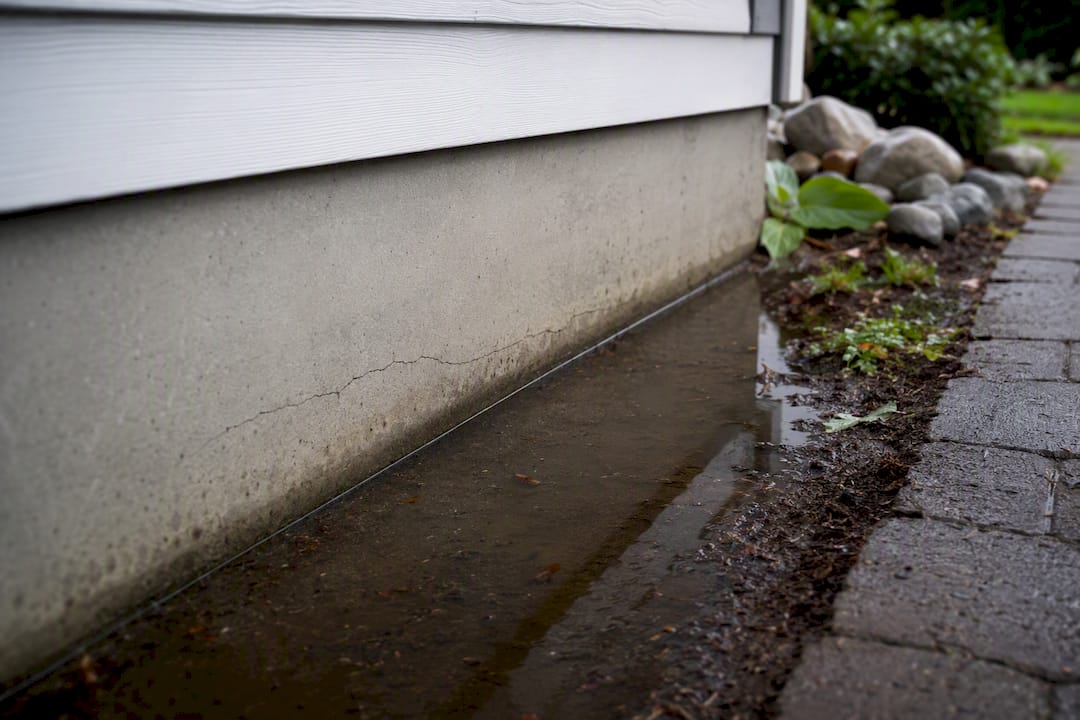
- Pooling or staining near your foundation after it rains.
- Visible plants, moss, or grass growing out of the gutter itself.
- Gutter sections sagging, pulling away from the fascia, or visibly out of level.
The escalation from a clogged gutter to real structural damage happens faster than most homeowners expect. A blocked downspout can back water up into the fascia board within a single wet season, and once wood starts absorbing moisture, rot and mould follow. Left long enough, that trapped water works its way toward your foundation, and in colder months, backed-up water refreezes into ice dams that force meltwater under roof shingles.
Roughly 8 in 10 water damage claims involving a home's exterior can be traced back to a drainage failure, and clogged gutters are one of the most common triggers. Overflow that looks cosmetic in October can mean a foundation repair bill by spring if it's ignored through freeze-thaw season. If you're seeing standing water or cracking near your foundation line, that's also worth a look from a pavement and drainage specialist, since gutter overflow often compounds existing grading issues.
Do gutter guards mean you can skip cleaning?
No, and this is the misconception that causes the most damage down the line. Gutter guards reduce how much large debris enters your system, but they don't make it maintenance-free. Fine grit, pollen, and what installers call "sludge" still work their way through even a good micro-mesh system over time.
- Guards can meaningfully cut cleaning frequency for homes with moderate deciduous leaf drop.
- They do less for homes under heavy conifer cover, where fine needles and resin can clog mesh pores.
- Coastal homes still see sediment and organic buildup accumulate slowly, even with guards installed.
Because of this, professionals recommend at least one inspection a year even on guarded systems, checking for fine debris buildup, guard attachment, and proper water flow at each downspout.
Pro Tip: If you've had guards installed for more than two years without a single inspection, that's overdue. Sludge buildup is gradual, so it won't announce itself the way an overflowing, unguarded gutter will.
Should you clean gutters yourself or hire a pro?
The decision usually comes down to three things: height, roof pitch, and season.
- Single-storey home, low pitch, dry conditions. This is realistic DIY territory for most homeowners with a stable ladder and someone spotting from the ground.
- Two-storey or steep-pitch roof, or any frozen or wet conditions. This is where the risk outweighs the savings. Falls from ladders are a leading cause of home maintenance injuries, and ice or wet moss on a roof edge removes your margin for error.
- Complex rooflines, valleys, or older gutters with known pitch issues. These often need more than a scoop and hose. A professional clean typically includes flushing each run, checking hangers for looseness, and testing downspouts for full flow, not just clearing visible leaves.
A straightforward single-storey clean might take a homeowner an hour or two. A two-storey home with multiple downspouts and guard removal can run half a day once you include ladder setup and cleanup. Weigh that time against the cost of a professional visit, and for most multi-storey homes, hiring out is the more sensible trade.
What Island Moss Busters sees on Vancouver Island roofs
Vancouver Island's wet coastal climate is close to a worst-case scenario for gutter neglect: heavy rainfall, dense tree cover in most neighbourhoods, and stretches of freeze-thaw weather through winter. Islandmossbusters pairs gutter cleaning with roof soft washing and moss removal, backed by a moss return guarantee running two to two and a half years, because the two problems are connected. Moss that's colonizing a roof edge sheds directly into the gutter below it.
Cleaning alone won't fix everything. When gutters hold standing water after a full clean, the cause is usually pitch or a loose hanger, not leftover debris. The fix is adjusting the hanger, not scheduling another cleaning. That's the kind of diagnosis a trained eye catches on-site that a homeowner scooping leaves from a ladder often misses.
A seasonal gutter checklist for busy homeowners
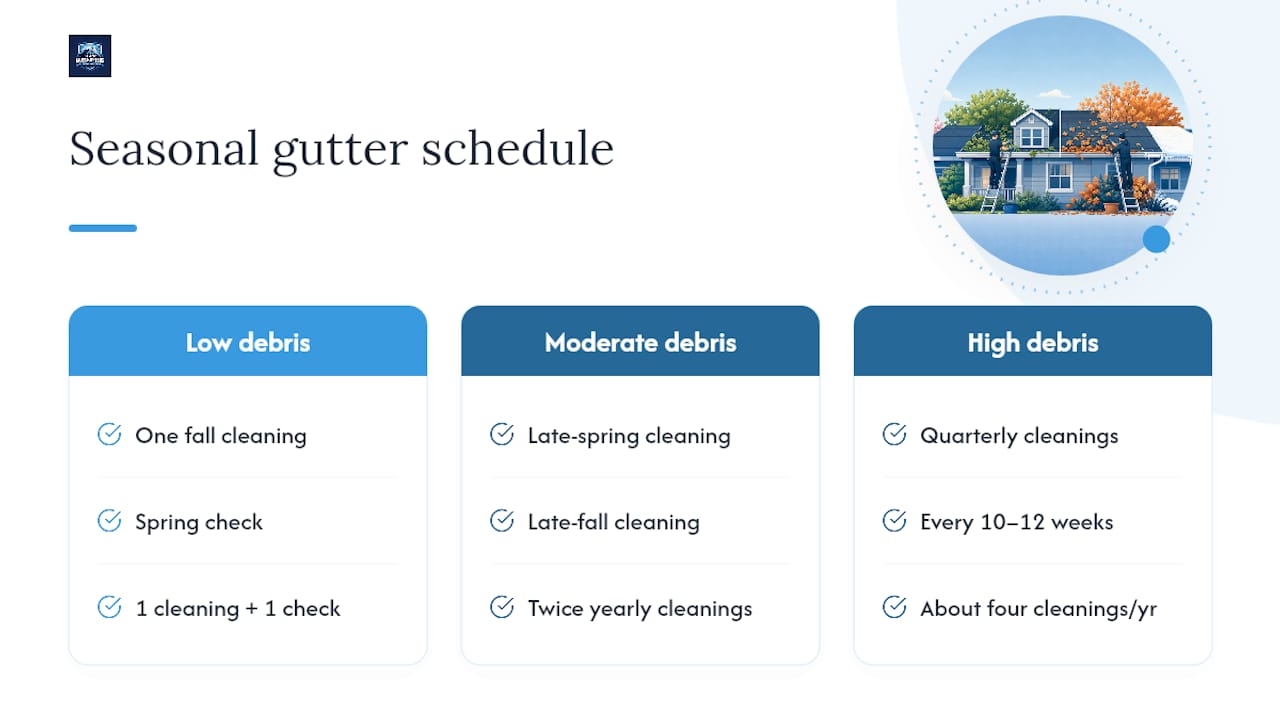
Match your schedule to your property: low debris (few trees, dry climate) means one fall clean plus a spring check. Moderate debris (typical suburban lot with deciduous trees) means clean in late spring and late fall. High debris (conifer cover or coastal exposure) means quarterly cleanings, roughly every ten to twelve weeks.
Right now, do three things: check your downspouts for overflow after the next rain, look for sagging sections along the fascia, and book your fall clean before temperatures drop below freezing overnight.
One safety note that applies regardless of your schedule: never climb a ladder to clean gutters when there's frost, ice, or standing water on the roof edge. That risk isn't worth any cleaning schedule.
— Island
Book your seasonal gutter service before the wet season sets in
A professional exterior cleaning company can be the practical alternative to DIY ladder work for homeowners who want their gutters, roof, and exterior handled properly before winter weather sets in. Instead of juggling a fall clean, a spring clean, and a separate roof check on your own calendar, a seasonal service plan bundles gutter cleaning, inspection, and roof soft washing into one scheduled visit with a crew that already knows what pitch and hanger problems look like.

If heavy tree cover means you're fighting needles or leaves more than twice a year, gutter guard installation using the Alu-Rex double layered aluminum system can cut down on how often you need a crew back out. Homeowners preparing a property for sale, or anyone who just wants moss and roof issues caught before they become foundation issues, can also pair a gutter visit with roof cleaning and moss removal. Call 250 650 8123 or book online at islandmossbusters.com to get your fall cleaning scheduled before the freeze sets in.
Sources
The frequency and timing guidance in this article draws on the Thumbtack gutter cleaning guide, House Beautiful's reporting on professional gutter advice, The Home Depot's seasonal cleaning guidance, and Bob Vila's frequency recommendations.
- How often to clean gutters | Thumbtack guide
- How to clean gutters, according to pros | House Beautiful
- How to clean gutters | The Home Depot
FAQ
What's the little known trick for cleaning gutters?
Wait for a few dry days before you clean. Dry, crumbly debris comes out far easier than wet, compacted muck, and dry conditions make it easier to spot seam leaks that soggy debris would otherwise hide.
How long does gutter cleaning normally take?
A single-storey home with a simple roofline usually takes an hour or two for a DIY clean. Two-storey homes, complex rooflines, or guard removal can stretch that to half a day, which is when hiring a professional crew starts to make more sense.
What's the best time of year to clean gutters?
Late fall, after leaves have dropped but before the first hard freeze, is the priority window in most climates, followed by early spring after snowmelt but before heavy rains. Homes near conifers or on the coast often need a mid-summer check as well.
What happens if you never clean your gutters?
Overflow backs up against your fascia board, leading to rot and mould within a season, and trapped water can refreeze into ice dams that push meltwater under roof shingles. Left unaddressed, that same overflow eventually erodes soil near your foundation.