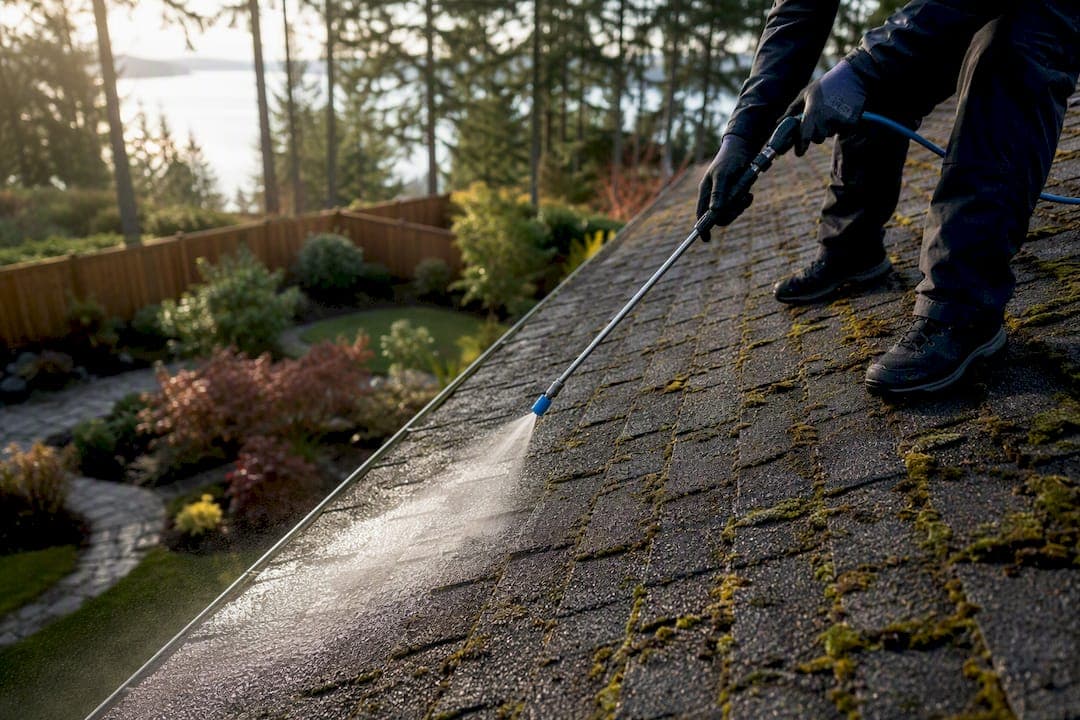
The most reliable eco friendly roof cleaning method for moss, algae, and black streaks is a low-pressure soft wash or a time-release, oxygen-based treatment applied with proper runoff containment. Most homeowners can handle light growth themselves with the right product and gear. Steep roofs, heavy moss buildup, or a home near a stream or storm drain call for a professional crew instead.
TL;DR:
- Soft washing with biodegradable or oxygen-based cleaners is the most eco-friendly option for moderate growth on asphalt, tile, and metal roofs.
- Time-release, no-rinse treatments are ideal for large or hard-to-access roofs, with visible results expected within 1 to 3 weeks, and deeper stains taking up to 24 weeks.
- Manual moss removal is only necessary for thick moss mats and should be combined with chemical treatment; high-pressure washing can damage shingles and void warranties.
- Professional cleaning is recommended for steep roofs, heavy moss buildup, or homes near water to ensure proper containment, inspection, and follow-up care.
- Prevention measures like trimming shade, cleaning gutters, and installing zinc or copper strips are more cost-effective than repeated treatments.
Table of Contents
- Eco-friendly roof cleaning methods compared
- How do you choose the right eco-friendly cleaning method?
- Steps for safe DIY eco-friendly roof cleaning
- When should you hire a professional roof cleaner?
- How do you prevent moss and algae from coming back?
- Why the "just power wash it" advice keeps homeowners paying twice
- Get your roof cleaned the eco-friendly way, without the guesswork
- Sources
Eco-friendly roof cleaning methods compared
Homeowners searching for eco friendly roof cleaning usually land on four real options, and they are not interchangeable. Picking the wrong one can waste a weekend, void a shingle warranty, or send chemical runoff straight into a storm drain.
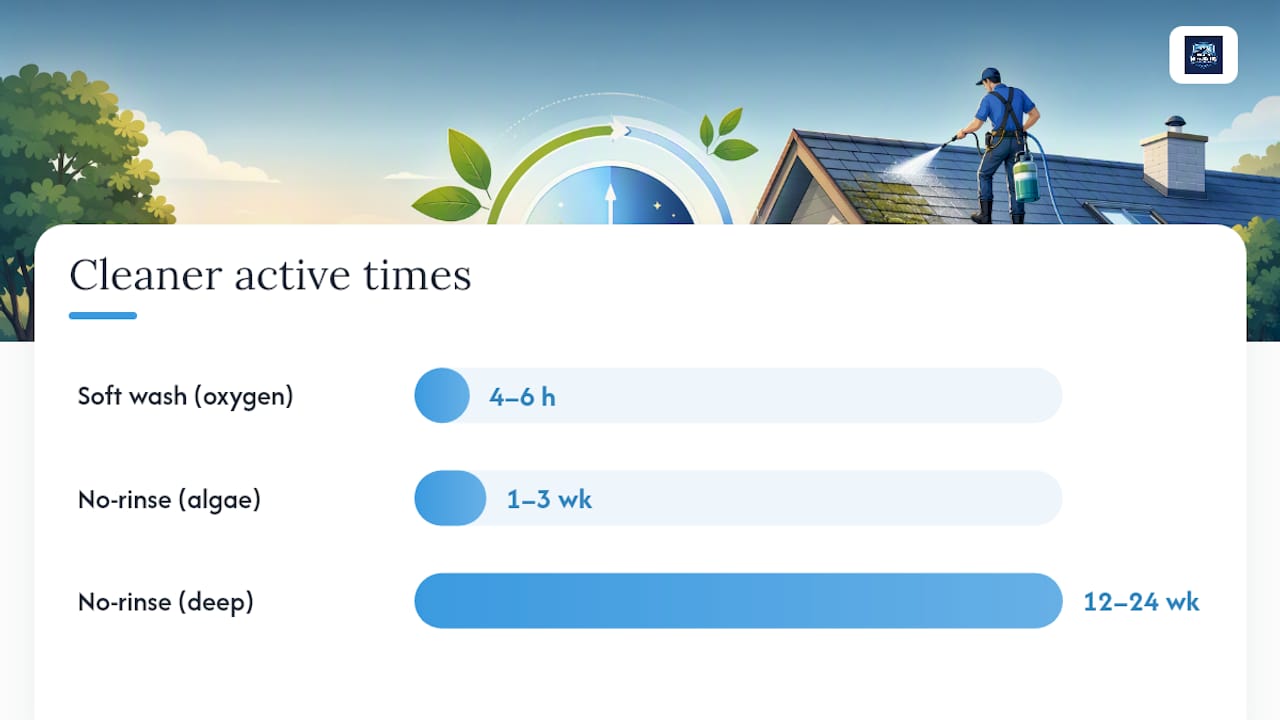
Soft washing with biodegradable or oxygen-based cleaners is the standard most eco safe roof treatment providers use. The process pairs a low-pressure sprayer with a cleaner that breaks down biological growth without blasting off shingle granules. Wash Safe, a widely used contractor-grade product, reports an active biodegradable life of about 4 to 6 hours, which means it does its job and then breaks down instead of lingering in soil or waterways. That short window is part of why oxygen-based cleaners have become the default biodegradable roof cleaner choice for professionals who want results without the collateral damage chlorine bleach can cause to plants, metal fasteners, and paint.
Time-release, no-rinse treatments work differently. You spray, you walk away, and the product keeps working through rain and dew cycles over the following weeks. Citra-Shield, one of the better-known no-rinse formulas, reports visible improvement on green algae within 1 to 3 weeks, while deeper stains and lichen can take 12 to 24 weeks to fully clear. This approach reduces labour and water use significantly, which is why contractors favour it for large or hard-to-access roofs.
Oxygen bleach versus chlorine bleach is really the environmental question at the heart of sustainable roof washing. Chlorine bleach kills growth fast but is corrosive, harsh on landscaping, and slow to break down. Oxygen-based alternatives clean nearly as well without the same long-term soil and plant risk, making them the better non-toxic roof cleaner choice for anyone with a garden underneath the drip line.
Manual moss removal still has a place, but only for thick, established moss mats that a chemical treatment alone won't lift. A soft-bristle broom or a plastic scraper, used gently and always working with gravity rather than against the shingle grain, can knock down heavy clumps before a soft wash finishes the job.
- Soft wash + oxygen cleaner: best all-around choice for asphalt, tile, and metal roofs with moderate growth
- No-rinse time-release: best for large roofs, minimal disruption, and prevention-focused schedules
- Manual removal: reserved for thick moss mats, always paired with a follow-up treatment
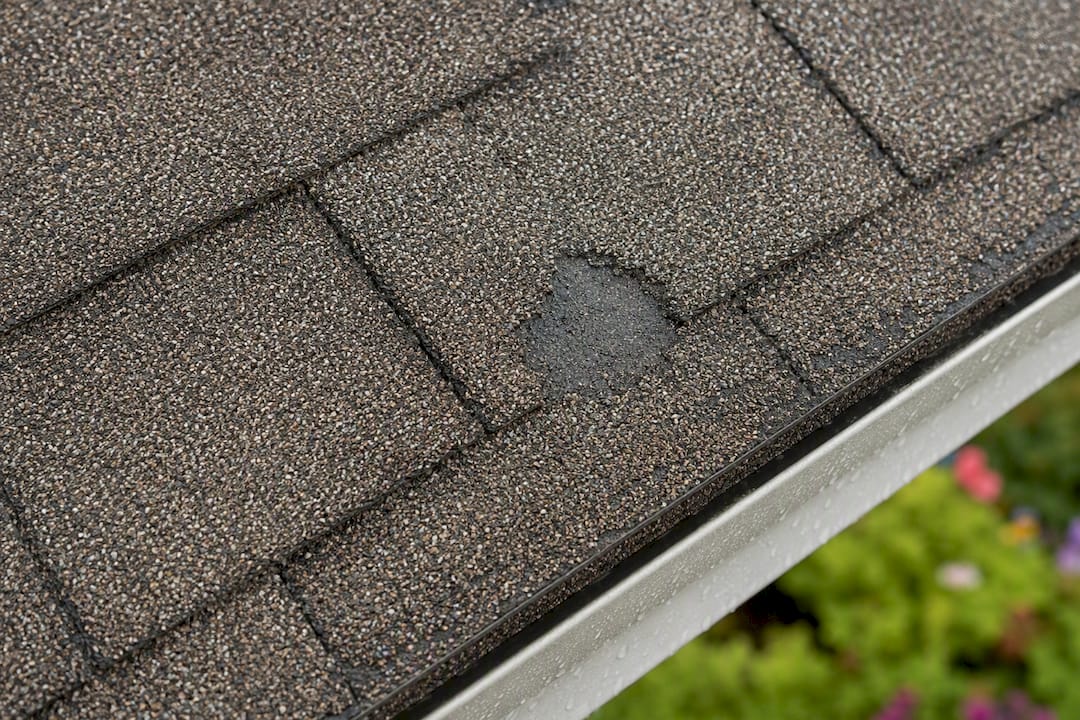
- Pressure washing: almost never the right call on a roof, since high pressure strips protective granules, drives water under shingles, and can void manufacturer warranties outright
How do you choose the right eco-friendly cleaning method?
The right method depends on four things: your roof material, how bad the growth is, what's downhill from your roof, and how comfortable you are on a ladder.
- Check your roof material and warranty terms first. Asphalt shingle manufacturers publish specific guidance on algae and moss prevention, and some warranties specify approved cleaning methods. Cedar shake and clay tile both react differently to moisture and chemical dwell time than asphalt does.
- Assess how much growth you're dealing with. A light green film usually responds to a no-rinse spray alone. Thick moss cushions along the ridge or in shaded valleys usually need manual loosening before any treatment can reach the shingle surface.
- Look at what's downhill. Garden beds, ponds, or a storm drain at the end of your driveway all change how careful your containment needs to be.
- Be honest about your comfort on a ladder and a sloped surface. A single-storey ranch with a shallow pitch is a different job than a two-storey Victorian with a steep gable.
- Weigh cost against timeline. DIY products cost less upfront but take longer to show results and carry more risk if you're not confident on a roof.
Pro Tip: If your roof pitch is steeper than about 6 in 12 (a rise of 6 inches for every 12 inches of run), treat that as your line for calling a professional rather than climbing up yourself.
Steps for safe DIY eco-friendly roof cleaning
Light moss and surface algae are reasonable DIY projects if you respect the process. Skipping steps is how minor jobs turn into insurance claims.
- Inspect first, then pick your weather window. Dry, mild days with no rain forecast for at least 24 hours give a cleaner time to dwell properly.
- Gather the right gear: non-slip footwear, a harness if you're working above single-storey height, a low-pressure pump sprayer, and eye protection.
- Contain runoff before you spray. Cover garden beds with tarps, block nearby storm drains temporarily, and use catch mats along gutters and downspouts, which is standard best practice for protecting waterways during any roof treatment.
- Mix and apply your oxygen-based or no-rinse product according to the label, working from the ridge down.
- Leave it alone. Time-release products need rain and dew cycles to finish working, and manufacturers are clear that rinsing too early strips away active ingredients before they've done their job.
- For heavy moss, loosen it gently with a soft broom before treatment. Never scrape aggressively or use a pressure washer to blast it off.
- Check back in 2 to 4 weeks to see how the treatment is progressing, and plan a light annual follow-up rather than waiting for growth to return in force.
When should you hire a professional roof cleaner?
Some jobs are better left to a crew with the right insurance and equipment. Steep pitches, roofs thick with moss, homes near a creek or lake, and anything where a shingle warranty is on the line all tip the scale toward a professional.
A responsible eco-friendly service follows a clear standard of care:
- Full roof inspection before any product touches the shingles
- Containment measures such as catch mats, temporary berms, and blocked storm drains, since municipalities can require notification before diverting runoff near a watercourse
- Low-pressure soft washing with biodegradable, oxygen-based cleaners rather than bleach or high-pressure equipment
- Gutter clearing as part of the same visit, since clogged gutters feed the moisture that grows moss in the first place
- A documented follow-up plan, not just a one-time spray
When you're comparing quotes, ask specifically what containment steps are included, which product the crew uses by name, and whether there's a guarantee against moss returning. Islandmossbusters is family-run, fully insured, and uses Canadian-made eco-friendly solutions backed by a moss return guarantee of two to two and a half years, which is the kind of detail worth asking any provider to match.
How do you prevent moss and algae from coming back?
Prevention costs less than repeat treatment, and most of it comes down to controlling shade and moisture.
- Trim overhanging branches to cut down shade and let your roof dry faster after rain
- Clear gutters regularly and consider gutter guards, since clogged gutters trap the moisture moss needs to establish
- Consider zinc or copper strips along the ridge as a passive deterrent, though runoff from these metals can affect sensitive plants below, so weigh that against your landscaping
- Set an inspection schedule, roughly annual for shaded, moss-prone roofs and every one to two years for roofs with better sun exposure
A gutter cleaning service on the same schedule as your roof inspection catches most moisture problems before they become moss problems.
Why the "just power wash it" advice keeps homeowners paying twice
Most roof cleaning advice online still defaults to pressure washing because it looks dramatic in a before-and-after video. That is exactly the problem. High-pressure water strips protective granules off asphalt shingles, drives moisture under tile and cedar, and can void a warranty in a single afternoon. The research on oxygen-based and time-release treatments points the other way: slower, gentler, and better for the roof's actual lifespan.
What gets underestimated is containment. Homeowners focus on which cleaner to buy and skip the part where runoff gets blocked from storm drains and garden beds. That's not a minor detail. It's the difference between a genuinely sustainable roof washing job and one that just moved the problem downstream, literally.
If there's one thing to prioritize, it's patience. No-rinse products need weeks, not hours, to finish working. Rinsing early or reaching for a pressure washer out of impatience undoes the whole point of choosing an eco-friendly method in the first place.
— Island
Get your roof cleaned the eco-friendly way, without the guesswork
If you've read this far, you already know the difference between a soft wash done right and a rushed pressure-washing job that damages shingles. Local professional services exist for homeowners who want that difference done for them, correctly, the first time.
Islandmossbusters runs two crews across the Comox Valley, with service reaching Cumberland, Campbell River, Merville, Parksville, and Qualicum Beach. Every job uses Canadian-made eco-friendly cleaners, low-pressure soft-wash technique, and full containment to protect your gardens and the storm drain at the curb. The roof cleaning and moss removal service comes backed by a two to two and a half year moss return guarantee, a length of coverage most roof cleaning providers simply don't offer. Pair it with gutter cleaning on the same visit and you've dealt with the two biggest causes of repeat moss growth in one appointment.
Call 250 650 8123 or book online to get a quote for your roof before the wet season sets in.
Sources
- Moss control & water protection: best practices for roofs near watercourses
- Eco Friendly No Rinse Roof Cleaner & Stain Remover