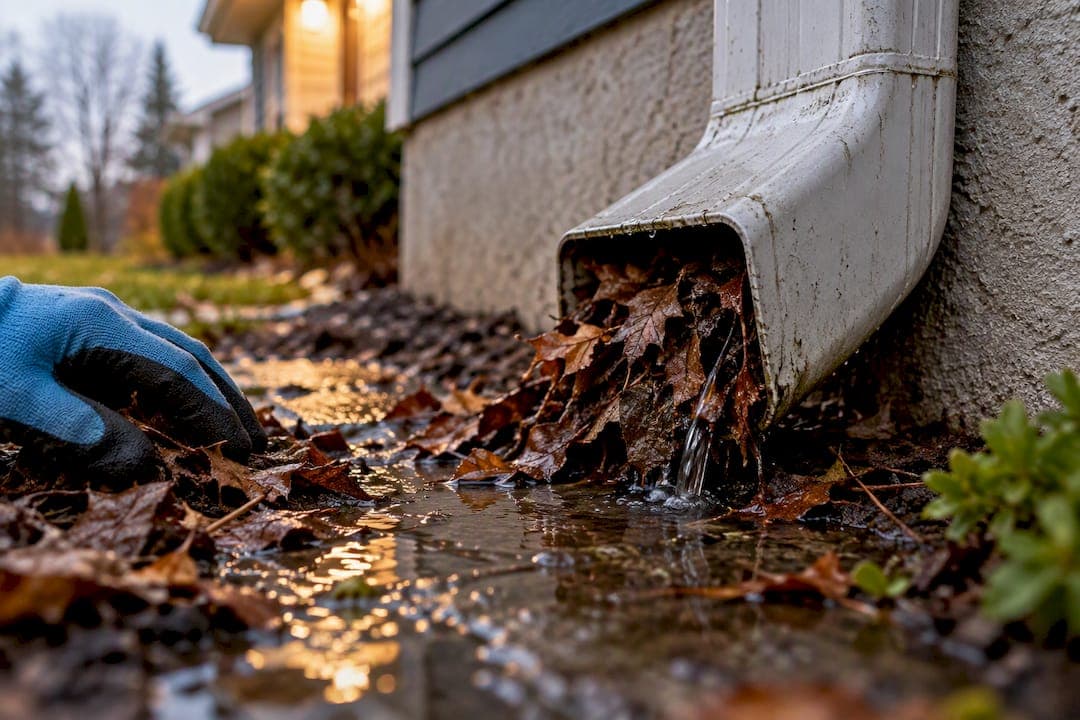
If your gutters overflow during rain, your downspout barely trickles or stays silent, or you notice standing water pooling near your foundation, you likely have a clog. Start by checking the ground-level outlet for flow and clearing any visible debris you can safely reach. If pooling continues or you spot basement moisture, treat it as urgent and look deeper than the gutter.
TL;DR:
- Most clogs originate from debris buildup or blockages in the downspout, which cause overflow, gurgling sounds, and pooling near the foundation.
- Visual signs such as stained siding, sagging gutters, and pest activity indicate prolonged debris accumulation and potential drainage issues.
- Regularly inspect and clear surface debris, run flow tests, and use a plumber's snake or shop vacuum for stubborn blockages; avoid chemical drain cleaners.
- Persistent pooling, basement moisture, foundation cracks, or recurring clogs after cleaning require professional assessment to identify buried line damage or underground obstructions.
- Preventative measures include regular gutter cleaning, installing gutter guards, checking pitch and hangers, and positioning downspout extensions away from the foundation.
Table of Contents
- 1. Visible and performance signs of a clogged downspout
- 2. A safe checklist to find the clog
- 3. Safe DIY unclogging methods and the tools to use
- 4. When to stop DIY and call a professional
- 5. Prevention and maintenance to keep clogs from coming back
- 6. Ice dams and icicles forming near downspouts in cold climates
- 7. Common homeowner mistakes and practical trade-offs
- Clean gutters without the ladder work
- Sources
- FAQ
1. Visible and performance signs of a clogged downspout
A downspout clog rarely hides for long. Your gutters and siding usually show the evidence before you ever touch a ladder.
Water spilling over the gutter edge during a rainstorm is often the first clue. It can mean the inlet near the downspout is blocked, or that the vertical pipe itself is packed with debris and has nowhere to send the water. Either way, the overflow itself is the clearest sign of a blockage, along with a weak trickle or no discharge at all from the outlet.
Watch for these signs as you walk the perimeter of your home:
- Gurgling or dripping sounds from the downspout during rain, suggesting trapped water searching for an exit.
- Standing water, mud, or plant growth sitting inside the gutter trough.
- Nesting material or pest activity, both signs of debris sitting undisturbed for a long stretch.
- Streaking or dark stains on siding below the gutter line.
- Paint damage or soft, rotting wood on the fascia board.
- Gutters sagging, pulling away from the roofline, or leaking at seams and elbow joints.
Any one of these on its own is worth a look. Several together usually mean the blockage has been building for a while.
2. A safe checklist to find the clog
Before you grab a tool, figure out where the blockage actually sits. That saves you from tearing into the gutter tray when the real problem is thirty centimetres underground.
- Check the ground-level outlet first. Look for active discharge, wet soil around the base, or a puddle that never seems to dry.
- Inspect the gutter trough for leaves, shingle grit, and plant growth before assuming the vertical pipe is the culprit.
- Run a controlled flow test with a hose or a bucket poured from the roofline, and watch where the water backs up or slows.
- Listen for gurgling or a hollow, trapped sound, which usually means water is pooling somewhere inside the pipe.
- Note whether flow is merely slow or completely absent. A slow trickle points to a partial clog; no flow at all often means a solid blockage.
Stick to ladder basics: firm footing, someone holding the base if you can arrange it, and a stabilizer to keep the top from sliding on the fascia. If the roofline is steep or the ladder height makes you uneasy, that is your signal to call a professional instead of pushing through it.
Pro Tip: Test flow on a dry day with a hose rather than waiting for the next storm. You will see exactly where the water stalls instead of guessing after the fact.
3. Safe DIY unclogging methods and the tools to use
Most surface clogs come out with basic tools and a bit of patience. Gloves, eye protection, and a stabilizer for your ladder are the minimum before you start.
- Clear surface debris from the gutter trough by hand or with a small scoop, working toward the downspout inlet.
- Flush the system with a garden hose from the top of the downspout, then again from the bottom if water is still backing up.
- For a stubborn blockage, feed a plumber's snake down from the top until you feel resistance give way, then flush again to confirm clear flow.
If the snake and hose combination does not clear it, a shop vacuum with an extension hose can pull compacted debris out from the bottom without adding water pressure to a pipe that is already backed up. Skip chemical drain cleaners entirely. They are designed for plumbing waste lines, not aluminum or vinyl downspouts, and they do nothing for a mechanical blockage of leaves and grit.
Once you think it is clear, check again over the next 24 to 48 hours during or after the next rain. Steady discharge with no overflow means you solved it. A returning trickle or renewed gurgling means something is still catching debris further down, possibly below grade.
Pro Tip: Photograph the outlet before and after clearing it. If the clog comes back within a few weeks, that record helps a contractor diagnose the problem faster.
Know your limits. A downspout on a steep or high roofline, a pipe that is crushed or pulling away from the wall, or a clog that keeps returning after repeated cleaning are all reasons to stop the DIY approach and bring in someone with the right equipment.
4. When to stop DIY and call a professional
Some signs point past a simple debris jam and toward a bigger drainage problem. That is when it is worth calling in help rather than repeating the same fix.
- Pooling at the foundation or basement moisture that persists even after the visible downspout is clear.
- Cracks in the foundation wall or a damp basement smell that shows up after rain.
- The same section clogging again within weeks of a thorough cleaning.
- A downspout on a high or steep roof, or one that is crushed, detached, or clearly damaged.
- Any sign of electrical hazard near the work area, such as wiring close to the gutter line.
These symptoms can point to a collapsed buried downspout, roots blocking an underground connection, or a failing weeping tile or sump system. The NRC's guidance on private-side drainage flags exactly these situations, foundation cracks, basement moisture, buried line failures, as ones where professional inspection matters more than another round of DIY clearing. When you call, describe what you have already tried, when the symptoms started, and any visible damage so the contractor can skip straight to the likely cause.
5. Prevention and maintenance to keep clogs from coming back
A little routine upkeep keeps most downspouts flowing without drama. The goal is to interrupt debris before it has a chance to compact into a real blockage.
- Clean gutters and downspouts regularly throughout the year, including after major storms.
- Consider gutter guards if your property sits under heavy tree cover and debris builds up fast between cleanings.
- Check that hangers are secure and the gutter pitch is correct, since a section holding water instead of draining it invites overflow.
- Point downspout extensions away from the foundation to help prevent water pooling near the building.
- Trim overhanging branches to cut down on leaf and seed litter, and inspect the system after any hard freeze or thaw cycle.
Practical home-maintenance guidance recommends cleaning first and then checking pitch and hangers, since a clean system that still overflows usually has a slope or seam problem rather than a debris problem.
Pro Tip: Mark your calendar for a spring and fall check instead of waiting for visible overflow. By the time water is spilling over the edge, the clog has usually been building for weeks.
6. Ice dams and icicles forming near downspouts in cold climates
Cold weather adds a wrinkle that summer clogs do not have. When melting snow refreezes inside a gutter or downspout, it can form an ice dam that blocks the pipe completely, turning a minor debris clog into a solid wall of ice.
Icicles hanging from the gutter edge or the downspout opening are usually the first visible sign. They form when water backs up, spills over the edge, and refreezes as it drips, rather than draining the way it should. A downspout packed with ice will show the same symptoms as a debris clog, no discharge, gurgling as trapped water tries to move, and overflow at the gutter line during a thaw.

Do not chip at ice with a hammer or sharp tool. That risks cracking the gutter or downspout material, especially on aluminum systems that become brittle in freezing temperatures. A safer approach is to let a natural thaw run its course or use calcium chloride ice melt applied carefully to the gutter trough, never rock salt, which can corrode metal components.
If ice dams form in the same spot every winter, that is usually a sign of poor attic insulation or ventilation letting heat escape and melt snow unevenly on the roof. Persistent ice buildup combined with any sagging or pulling away from the fascia is worth a professional look before the weight causes real damage.
7. Common homeowner mistakes and practical trade-offs
The mistake we see most often is waiting. A homeowner notices a small trickle instead of a steady flow, decides it can wait until the weekend, and by the time they get to it the gutter is overflowing onto the siding. Small clogs are quick to clear. Big ones usually mean a repair, not just a cleaning.
The second mistake is assuming every wet basement is a gutter problem. Sometimes it is a buried line or a foundation issue that no amount of gutter cleaning will fix, and chasing the wrong cause wastes a weekend. Document what you see, standing water, staining, timing, before you call anyone. It makes the diagnosis faster whether you handle it yourself or bring in a crew.
Gutter guards cut down on debris significantly, but they still need an occasional check, especially after big storms. We handle gutter cleaning and gutter guard installation across the Comox Valley when a homeowner would rather not be on a ladder at all.
— Island
Clean gutters without the ladder work
Clearing a clog yourself is fine for a quick fix, but the cycle of climbing, checking, and climbing again gets old fast, especially with a two-storey roofline or a property lined with mature trees. Our crews handle the whole job in one visit: clearing debris, checking flow at the outlet, and flagging anything that looks like a bigger drainage issue before it becomes a foundation problem.
We serve homeowners across the Comox Valley, including Campbell River, Courtenay, and Comox, and if your property backs onto trees or sees heavy debris load every season, ask about Alu-Rex gutter guard installation to cut down on how often you need a cleaning at all. Book a visit at Islandmossbusters or call 250 650 8123 to get your downspouts checked before the next storm rolls in.
Sources
- Canada
- Practical guidance for private-side drainage systems to reduce basement flood risk - NRC Publications Archive
- The overlooked signs of a gutter problem every homeowner should know - BobVila
FAQ
What are obvious symptoms of a downspout runoff problem?
The clearest signs are water overflowing the gutter edge during rain, little or no water exiting the downspout outlet, and standing water pooling near the foundation. Gurgling sounds, staining on the siding, and sagging gutter sections are also common indicators worth checking.
What is the best way to unclog a downspout?
Start by clearing surface debris from the gutter, then flush the pipe with a garden hose from the top and bottom to loosen buildup. A plumber's snake handles stubborn blockages that a hose alone cannot move, and a shop vacuum can pull out compacted debris from below.
How can I prevent downspouts from clogging?
Clean your gutters and downspouts at least twice a year, in spring and fall, and again after major storms. Trimming overhanging branches, checking gutter pitch, and installing gutter guards all reduce how much debris makes it into the system in the first place.
What are the signs that my gutters are blocked?
Look for water spilling over the edge during rain, plant growth or mud sitting in the trough, and pest or nesting activity inside the gutter. Sagging sections, leaks at seams or elbow joints, and staining on the siding below the gutter line all point to a blockage that needs attention.
When should I call a professional instead of clearing the clog myself?
Call a professional if pooling or basement moisture continues after you have cleared the visible downspout, if the same section clogs again within weeks, or if the downspout sits on a steep or high roofline. These situations can point to a collapsed buried line or a failing drainage connection that a surface cleaning will not fix.