The most effective downspout clog prevention combines three things: debris exclusion that suits your trees and roof type, downspouts sized and extended correctly, and inspections at least twice a year. Start today by checking the doorway where your gutter meets the downspout, running a hose through the system, and confirming discharge extends far enough from your foundation. If you find buried lines, repeated backups, or unsafe access points, that's your cue to call a professional.
TL;DR:
- Proper downspout sizing and extension are crucial to prevent clogging by ensuring water flows at least four to six feet away from your foundation.
- Mesh gutter guards and inline filters significantly reduce debris reaching the doorway, especially in heavy tree cover or moss-prone climates.
- Inspect and clean gutters and downspouts at least twice a year, with more frequent checks recommended for coastal or heavily wooded areas.
- Maintaining clear entry points and removing organic debris before winter reduces the risk of blockages caused by compacted or hardened material.
- Professional services that include moss removal, guard installation, and system assessment offer longer-lasting solutions compared to DIY fixes, especially in challenging climates.
Table of Contents
- Where and why downspouts clog: the doorway and common causes
- Which downspout clog prevention method actually works?
- Practical maintenance checklist for keeping downspouts clear
- How many downspouts do you need, and how far should they discharge?
- How do you clear a clogged downspout safely?
- Island Moss Busters: why professional, climate-aware maintenance matters
- DIY versus professional care: weighing cost, effort, and risk
- How Island Moss Busters can help protect your downspouts
- Sources
- FAQ
Where and why downspouts clog: the doorway and common causes
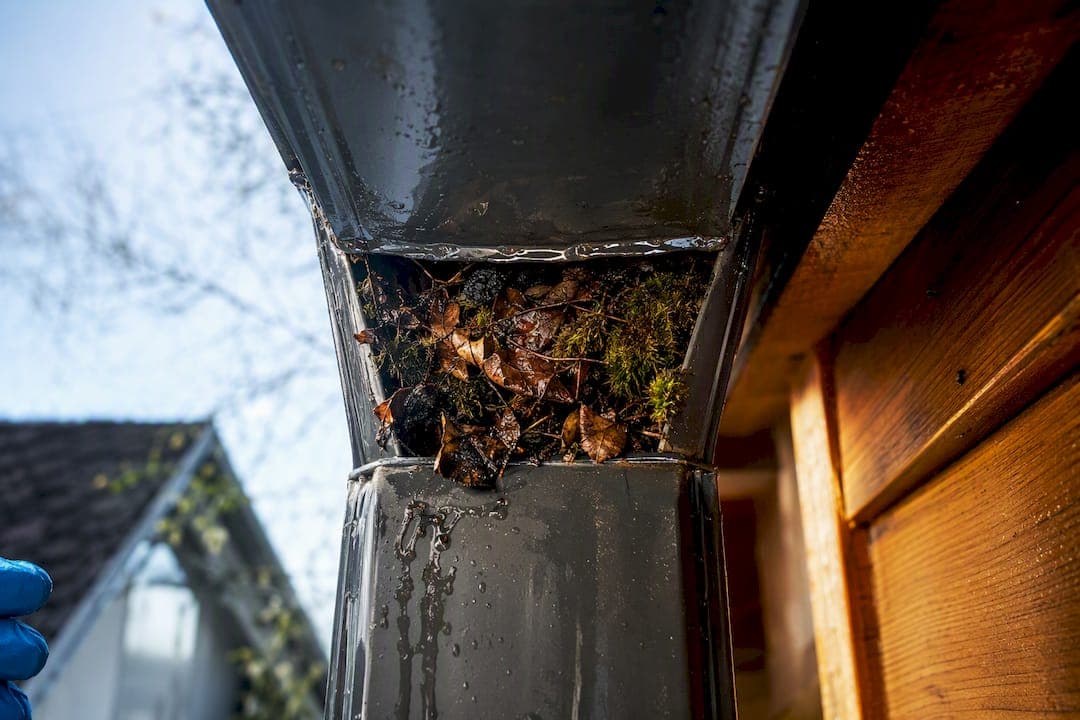
Almost every downspout clog starts in the same place: the doorway. That's the narrow transition where your gutter trough funnels water into the downspout opening, and it's the single most predictable failure point in the entire system. Water slows down here, debris piles up, and a gutter that looks perfectly clean from the ground can still be blocked solid at this one junction.
Cleaning the gutter run without checking the doorway is a common mistake. Homeowners often scoop leaves out of the trough and feel satisfied but may miss an actual clog just below where the trough narrows into the pipe.
What piles up there depends on the season and what's growing near your roof:
- Leaves and pine needles in fall, especially under maple, oak, or conifer canopy
- Shingle grit that sheds steadily from asphalt roofing as it ages
- Pollen and seed pods in late spring, which form a paste when they get wet
- Moss and algae fragments washed down from a roof with active moss growth, common on Vancouver Island's north and shaded slopes
Undersized downspouts make all of this worse. A 2×3 inch downspout pushing water from a long gutter run, or a poorly fitted elbow joint with a tight bend, gives debris more surfaces to snag on. Every joint is a potential bottleneck, and the doorway is simply the first and tightest one water reaches.
This is also why cleaning frequency matters more than most homeowners assume. Government of Canada home maintenance guidance recommends inspecting and cleaning gutters and downspouts at least twice a year, in early spring and late autumn, specifically to stop organic debris from compacting before it hardens into a real blockage.
Which downspout clog prevention method actually works?
Every prevention method on the market claims to solve the clog problem. Some genuinely reduce debris reaching the doorway; others just buy you a season before you're back up the ladder.
-
Downspout strainers. These mesh domes sit at the gutter outlet and physically block large debris from entering the pipe. They're cheap and easy to install yourself, but they need clearing every few weeks in leaf season because debris collects on top of the strainer instead of inside the downspout. That's a trade rather than a fix.
-
Downspout wedges. A wedge sits inside the downspout opening at an angle, designed to let water pass while deflecting leaves and twigs. Wedges do work reasonably well against larger debris, but they do little against grit, pollen, or moss fragments, and they still need periodic removal and cleaning since debris accumulates against the angled surface.
-
Inline filters. Installed a short distance down the downspout itself, these catch what strainers and wedges miss. They're a solid middle option for homes without heavy tree cover, though they add another component that needs its own seasonal check.
-
Gutter guards. Guard performance depends entirely on material and mechanism. Mesh and perforated aluminum guards outperform cheap vinyl covers because they keep fine debris moving across the surface instead of letting it settle and mat down. A well installed mesh or aluminum guard, like the double layered Alu-Rex system, meaningfully reduces how much material ever reaches the doorway. Cheap vinyl guards often just relocate the clog to the guard's own surface.
-
Scheduled cleaning with no add-ons. Straightforward, low cost, and reliable if you actually stick to the schedule. The catch is consistency: most missed cleanings happen because homeowners assume the gutters look fine from the ground.
For a property with light tree cover, a strainer or wedge paired with a spring and fall cleaning is often enough. For heavy canopy, a mesh or aluminum guard installed by a professional cuts your manual cleaning load dramatically, though it doesn't eliminate the need for an annual check at the doorway itself.
Practical maintenance checklist for keeping downspouts clear
A little routine effort beats an emergency call every time. Build your year around two anchor points and a few storm checks in between.
Spring (after the wettest months):
- Clear compacted leaves and grit from gutter troughs and the doorway
- Flush each downspout with a hose to confirm free flow
- Check splash blocks and extensions for cracks or misalignment
Late autumn (before leaf drop finishes and freeze sets in):
- Remove accumulated leaves before they compact under fall rain
- Re-check downspout discharge points for erosion or blockage
- Clear catch basins on any buried downspout runs
After major wind or rain events: a quick visual check for sagging gutters or debris buildup catches small problems before winter locks them in.
Use a stable ladder, work with a helper when possible, and avoid gutter work on wet or icy roofs.
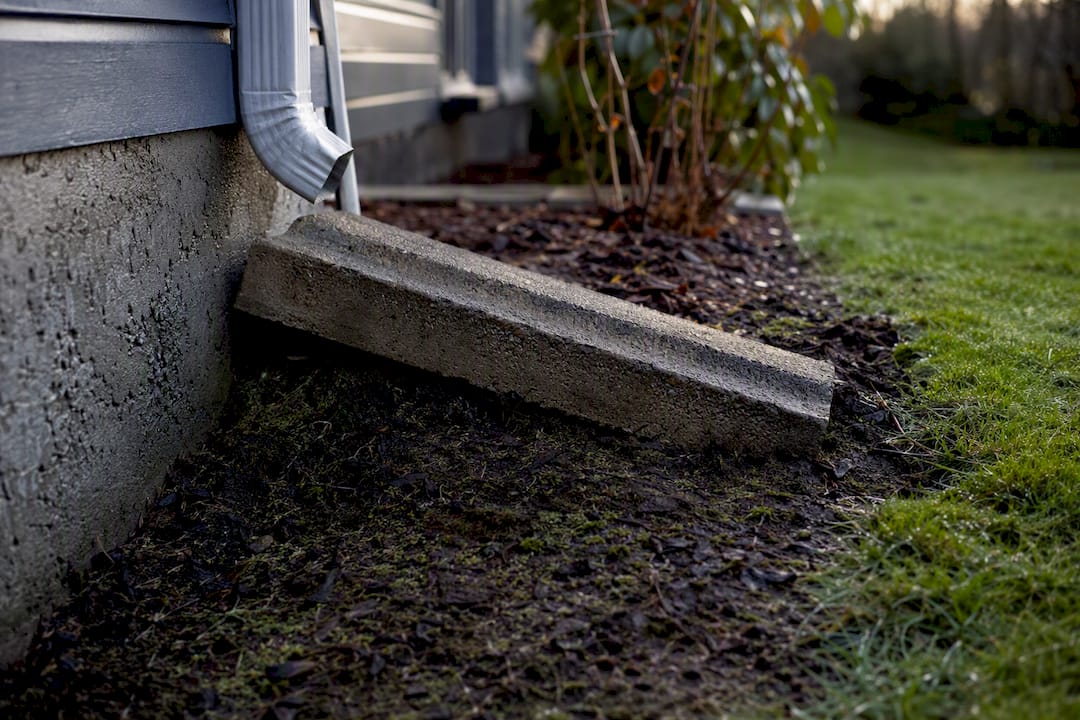
Pro Tip: If your splash block has shifted or sunk into the soil, water pools right against your foundation instead of draining away. Reset it on a slight downward slope every spring.
Stop and call a professional if you can't safely reach the gutter line, if water backs up no matter how much you clear, or if you suspect a buried run has collapsed.
How many downspouts do you need, and how far should they discharge?
Most downspout bottlenecks trace back to sizing decisions made when the system was installed, not to debris at all. The standard installer guideline calls for one downspout per roughly 20 feet of gutter run. A longer run feeding a single undersized downspout overwhelms it during heavy rain, even with a perfectly clean doorway.
Downspout cross-section needs to match the gutter it drains. A common pairing is a 5-inch gutter with a 2 by 3 inch downspout, and a 6-inch gutter with a 3 by 4 inch downspout. A larger gutter feeding an undersized pipe creates exactly the kind of pressure and turbulence that pushes debris to jam at the doorway.
Discharge distance matters just as much as pipe size. CMHC home maintenance guidance recommends downspouts extend at least four to six feet from the foundation, or use a splash block to redirect water that distance. On sloped lots or compacted clay soil, you may need to extend farther still to keep water from pooling back toward the basement wall.
For buried downspout runs:
- Install an inline catch basin to trap shingle granules and debris at a single accessible point
- Clean that catch basin annually, since it's designed to fill rather than pass debris through
- Locate and mark cleanout access points before winter, when frozen ground makes digging difficult
How do you clear a clogged downspout safely?
Most clogs respond to a methodical, low-risk approach. Skip straight to a plumber's snake and you risk damaging joints you didn't need to touch.
-
Run the hose flow test. Feed water into the gutter at the highest point and watch where it slows or backs up. A clog near the top usually means debris at the doorway; a clog lower down points toward the elbow or the underground run.
-
Flush from the bottom up. Detach the lowest section or extension and run a hose upward into the pipe. This often dislodges compacted debris that resists gravity alone.
-
Use a plumber's snake or wet/dry vacuum for stubborn blockages. Feed the snake in gently rather than forcing it, and use the vacuum on wet debris that a hose can't move.
-
For buried runs, check the cleanout first. A drain bladder attached to a hose can clear underground blockages, but if there's no accessible cleanout, or if water backs up toward the house no matter what you try, stop and bring in a professional rather than risk a broken underground line.
Inspection frequency matters more than most homeowners realize. Twice yearly inspection, spring and late autumn, catches organic debris before it compacts into the kind of blockage that resists a simple hose flush.
Homes with heavy tree cover or persistent coastal rain often need checks more often than that baseline, since debris accumulates faster than the standard schedule accounts for.
Island Moss Busters: why professional, climate-aware maintenance matters
Vancouver Island's wet coastal climate doesn't give gutters much of a break. Moss thrives on shaded roof slopes here in a way it simply doesn't in drier regions, and that moss sheds fragments straight into your gutter system all winter long.
Islandmossbusters built its core service around that exact problem. The company's gutter cleaning work pairs naturally with roof soft washing and moss removal, backed by a two to two and a half year moss return guarantee that matters specifically because moss keeps coming back in this climate if it isn't addressed at the source.
A professional visit typically includes:
- Full gutter and downspout clearing, including the doorway transition most homeowners miss
- Assessment of whether your current sizing and extension meet the guidelines above
- Gutter guard installation using the Alu-Rex double layered aluminum system, for homes where heavy tree cover makes manual cleaning a losing battle
[Testimonial placeholder] [Case study placeholder]
DIY versus professional care: weighing cost, effort, and risk

DIY maintenance works fine for a single storey home with light tree cover and easy ladder access. The real cost isn't the hose and gloves. It's the time spent at least twice a year, the risk of a ladder mishap, and the guesswork involved in judging whether your sizing is actually adequate.
Professional installation earns its cost back fastest on homes with heavy moss, steep or multi storey rooflines, or a history of repeat clogs. A resized downspout or a properly installed mesh guard installed once, correctly, tends to outlast several seasons of piecemeal DIY fixes. On a coastal, moss prone roof, that gap between DIY and professional value widens considerably, since moss and organic debris regenerate faster than a twice yearly schedule can always keep up with.
— Island
How Island Moss Busters can help protect your downspouts
There's a real gap between clearing debris yourself every few months and having a system that stays clear on its own. That's the gap Islandmossbusters closes for homeowners across the Comox Valley and Vancouver Island who'd rather not spend another weekend on a ladder guessing whether the doorway is actually clean.

The team offers experienced crews, uses eco friendly cleaning solutions, and backs its roof moss removal service with a multi-year return guarantee. If your gutters back up every fall or your downspouts discharge too close to your foundation, a gutter cleaning visit paired with a gutter guard assessment solves both problems in one appointment instead of an ongoing string of DIY fixes. Call 250 650 8123 or book a free estimate at Islandmossbusters before the wet season sets in.
Sources
Homeowners can verify the guidance above directly through Government of Canada home maintenance recommendations, CMHC's home performance guidance, and seasonal roof maintenance tips from JH Roofing covering broader preventive scheduling.
FAQ
How do I keep my downspout from clogging?
Combine a debris exclusion method suited to your tree cover, such as a mesh gutter guard or wedge, with correct downspout sizing and extension, then inspect and clean the system at least twice a year, in spring and late autumn.
Do downspout wedges actually work?
Wedges reduce large debris like leaves and twigs reaching the downspout interior, but they don't stop fine grit or moss fragments, and they still need periodic clearing since debris builds up against the angled surface.
How do I keep chipmunks and small animals out of my downspouts?
A properly fitted mesh guard or strainer at the gutter outlet blocks the opening small animals use to enter, while also catching the debris that would otherwise attract them in the first place.
What should I put at the bottom of a downspout?
A splash block or a rigid extension that carries water four to six feet from your foundation prevents pooling against your home, and an inline catch basin is worth adding if the downspout feeds an underground run.
How often should downspouts be inspected and cleaned?
Twice a year, in early spring and late autumn, is the standard baseline, though homes with heavy tree cover or a wet coastal climate often need more frequent checks.