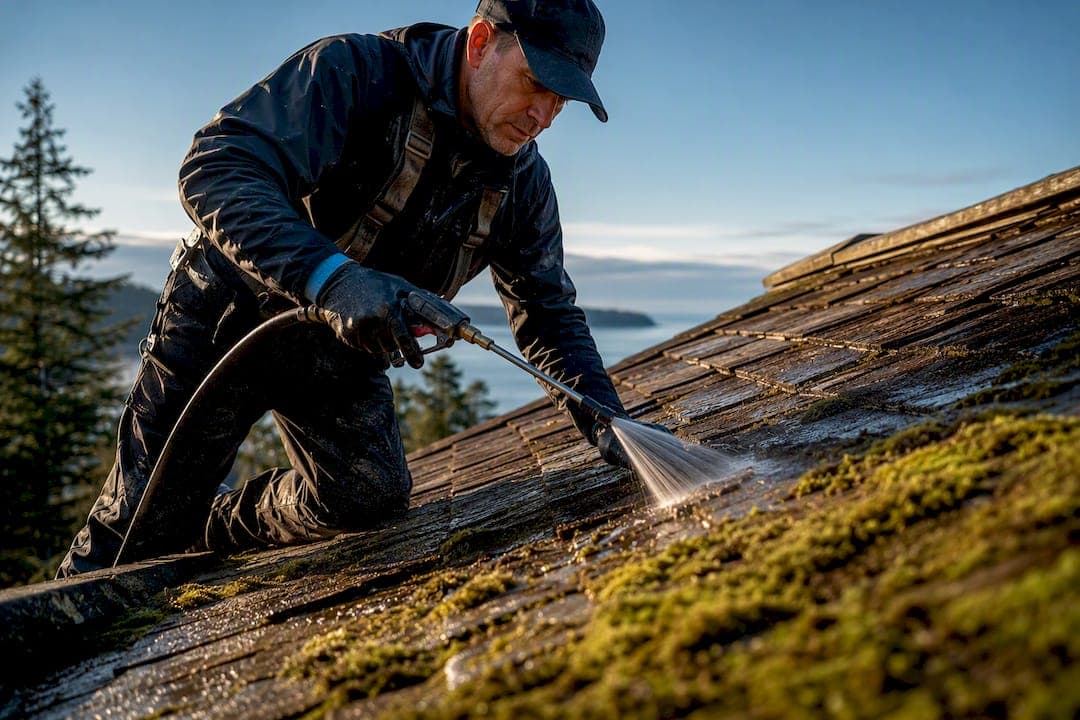
Use a low-pressure, chemical-first soft-wash, never a pressure washer, or hire a cedar specialist such as Islandmossbusters. An oxygen-based cleaner with proper dwell time kills moss and algae at the root, while pressure washing strips wood fibres and forces moisture into your shakes. If your roof has heavy growth, brittle shingles, or is more than one storey up, calling a pro protects both your safety and your investment.
TL;DR:
- Soft-wash cleaning with an oxygen-based cleaner and proper dwell time effectively kills moss at the root without damaging the wood or forcing moisture absorption.
- DIY is suitable only for single-story roofs with light moss coverage and solid shakes, while heavy growth, steep pitches, or brittle shakes should always involve professional help.
- Maintaining a cedar roof involves annual debris removal, spot cleaning for new moss, and reapplying breathable preservatives every four to seven years to prevent moisture retention and rot.
- Preventative measures such as zinc or copper ridge strips, gutter cleaning, and trimming overhanging branches significantly slow moss regrowth by managing moisture and exposure.
- Professionals use eco-friendly solutions, proper equipment, and guarantees like moss-return promises, making their service more reliable and less damaging than pressure washing or DIY shortcuts.
Table of Contents
- What is the safest way to clean a cedar roof?
- Should you clean your cedar roof yourself or hire a pro?
- How often should you clean and maintain a cedar roof?
- How do you stop moss from coming back?
- What safety and environmental precautions matter most?
- What does Islandmossbusters do differently on cedar roofs?
- What homeowners consistently get wrong about cedar roof care
- Book a cedar roof soft-wash with Islandmossbusters
- Sources
What is the safest way to clean a cedar roof?
The safest method is a soft-wash, and it works in a specific order. Skip a step, or rush the dwell time, and you either waste your effort or damage the shakes you're trying to protect.
Here's how it comes together, from first look to final rinse:
- Inspect the roof first. Walk the perimeter with binoculars or check from a ladder at the eaves. Note heavy moss patches, curled or cracked shakes, and any spots where water seems to be pooling.
- Clear debris and protect the surroundings. Sweep loose needles and leaves out of valleys and gutters, and cover nearby plants and flower beds with plastic sheeting or a tarp before any cleaner touches the roof.
- Apply an oxygen-based or manufacturer-approved fungicidal cleaner. Use a low-pressure garden sprayer, not a pressure washer wand, and follow the label's dwell time exactly. This waiting period is what kills moss and algae at the root rather than just knocking off the visible growth.
- Rinse with a garden hose on a shower setting. No jets, no scrubbing, no scraping at stubborn patches. Dead moss often stays attached for weeks after treatment, and it should detach naturally with rain rather than being pried off.
- Let the roof dry completely before applying any preservative. Depending on humidity and sun exposure, that usually means two to three full dry days. Cedar that looks dry on the surface can still hold moisture underneath, so don't rush this stage.
- Pick your weather window carefully. Overcast days with several dry days forecast afterward give the cleaner time to work and the wood time to dry, without a downpour rinsing everything away early.
Pro Tip: Test any cleaner on a small, hidden section of roof first. Cedar varies in age and porosity, even across the same roof, and a patch test saves you from an unpleasant surprise on the whole surface.
Should you clean your cedar roof yourself or hire a pro?
A modest amount of moss on a single-storey, walkable roof is a reasonable DIY project if you're comfortable on a ladder and have the right low-pressure gear. Heavy growth, steep pitches, or shakes that feel spongy or brittle underfoot are a different story entirely, and that's where a specialist earns their fee.
Signs it's safe to DIY:
- The roof is single-storey with easy, stable ladder access
- Moss coverage is light to moderate, not thick mats
- Shakes feel solid, not cupped, cracked, or soft
Signs to call a professional instead:
- Heavy moss or algae covering large sections
- Steep pitch, multiple storeys, or tricky access points
- Cupped, brittle, or visibly deteriorating shakes
- You want a workmanship or moss-return guarantee in writing
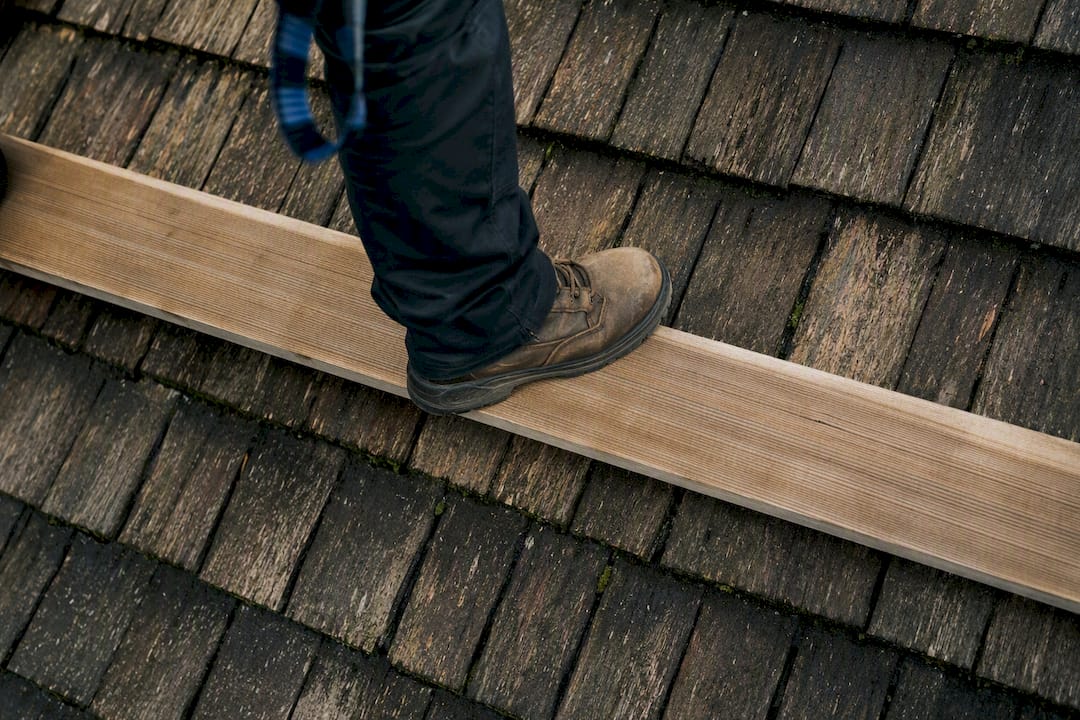
Professionals bring more than a bigger sprayer. Insured crews use walk boards to spread their weight instead of stepping directly on shakes, choose eco-friendly cleaning products formulated for wood roofs, and often back the job with a guarantee, such as a multi-year moss-return promise. Before you hire anyone, ask what method they use, whether they carry liability insurance, and what their inspection covers. Any contractor who leads with "pressure washing" or can't explain their process in plain terms is a red flag.
How often should you clean and maintain a cedar roof?
Cedar rewards a steady maintenance rhythm far more than a one-time deep clean. Walk the roof (or have someone walk it) once a year to clear debris from valleys and check for early moss growth. Clean whenever you spot new growth rather than waiting for it to spread, and plan on reapplying a breathable preservative roughly every four to seven years, leaning toward the shorter end if you're in a shaded, wet climate where moss returns faster.
The maintenance gap is enormous: a well-maintained cedar roof can last several decades with careful upkeep, while a neglected one may fail much sooner. Same material, wildly different outcomes.
What drives cost when you do hire help? A few things, and they explain why quotes vary so much from one house to the next:
- Roof area and pitch — steeper roofs need more safety equipment and take longer to work
- Infestation level — a light dusting of moss costs less to treat than thick, established mats
- Access and complexity — dormers, skylights, and multiple roof planes add time
- Landscaping protection needs — extensive gardens or delicate plantings near the roofline require extra care
- Local labour rates — costs shift by region and by crew size
Cleaning has limits, too. If shakes are already split, curling badly, or rotting through, no amount of soft-washing brings them back. At that point you're looking at partial repair or, eventually, replacement, and a good contractor will tell you that honestly instead of selling you another clean.
How do you stop moss from coming back?
Prevention is cheaper than repeated cleanings, and most of it comes down to managing moisture rather than fighting moss after the fact.
- Install zinc or copper ridge strips. Rain washing over these metals releases a mild residue that suppresses moss growth on the courses just below the ridge, though the effect fades a few shingle courses down.
- Keep gutters and keyways clear. Trapped debris holds water against the wood, which is exactly the damp environment moss needs to establish itself.
- Trim overhanging branches. More sunlight and airflow across the roof surface dries shakes faster after rain, which alone slows regrowth.
- Choose breathable, penetrating preservatives with UV inhibitors and fungicide. Avoid film-forming sealers entirely. Sealing cedar traps moisture underneath the surface, which accelerates rot instead of preventing it.
- Manage runoff. Direct roof runoff away from delicate plantings and hard surfaces so cleaning residue doesn't pool where it can cause staining or plant stress.
What safety and environmental precautions matter most?
Never stand directly on brittle or wet shakes. A foot through a shingle is an easy way to turn a cleaning day into a repair bill, and it's why professionals use walk boards or distribute their weight across broader footing rather than stepping shake to shake.
Before applying any cleaner, soak nearby plants with plain water and cover anything delicate. Diluting to the label's recommended strength matters as much as the cleaner itself. Over-concentrating a solution doesn't clean faster, it just increases runoff toxicity and the risk of harming your lawn or garden beds below.
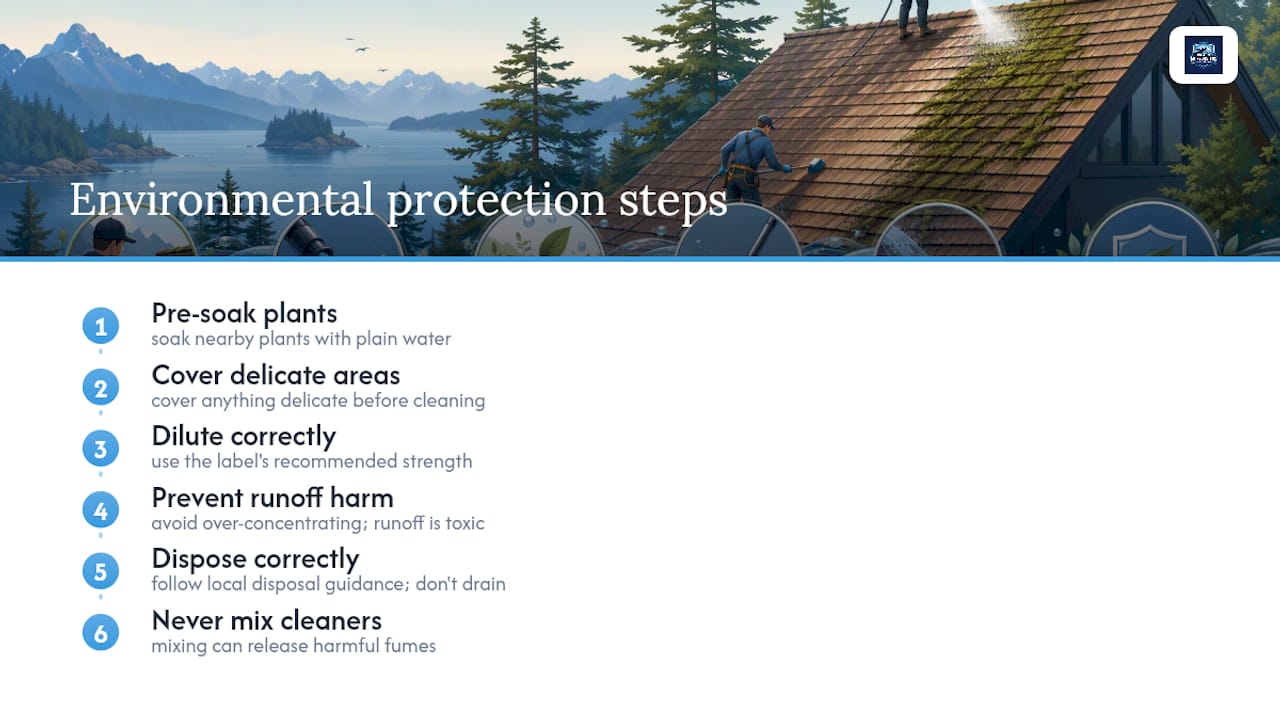
Pro Tip: Never mix cleaning products, even if you think combining "a little extra strength" will speed things up. Some combinations release harmful fumes, and manufacturers formulate their dwell times and dilution ratios for a reason. Follow local disposal guidance for any leftover solution rather than pouring it down a storm drain.
What does Islandmossbusters do differently on cedar roofs?
Islandmossbusters is a family-run, fully insured company operating crews in the Comox Valley and Vancouver Island region. Every job uses eco-conscious cleaning solutions, chosen specifically because cedar shakes don't tolerate harsh chemicals or high pressure well.
The flagship service, roof soft washing and moss removal, follows the same principles covered above: chemical-first treatment, proper dwell time, and a gentle rinse rather than anything resembling a pressure wash. It is backed by a moss-return guarantee, which is a meaningful commitment in a coastal climate where regrowth is constant.
Crews protect landscaping before treatment begins, use safe-access equipment instead of walking directly on shakes, and pair roof work with gutter cleaning so debris that feeds future moss growth doesn't sit and accumulate. For homeowners in Courtenay or Campbell River, the same soft-wash standard applies regardless of which crew shows up.
What homeowners consistently get wrong about cedar roof care
Most cedar roof damage isn't caused by moss. It's caused by homeowners trying to fight moss the wrong way, usually with a rented pressure washer and good intentions. The conventional advice you'll find in a lot of home-improvement content still treats pressure washing as an acceptable shortcut for a "tougher clean," and that advice is simply wrong for this material. Cedar isn't concrete or vinyl siding. It's a soft, porous wood that absorbs water and pressure damage in ways that don't show up until years later, when shakes start cupping or splitting prematurely.
The bigger miss, though, is treating cleaning as a one-time fix instead of part of an ongoing moisture-management routine. A single soft-wash without a maintenance schedule behind it is a temporary win. The roofs that hit 40 or 50 years aren't the ones that got the most aggressive clean, they're the ones that got a gentle clean on a consistent schedule, with preservative reapplied before the wood ever dried out completely. If you take one thing from this guide, prioritize the calendar over the intensity of any single cleaning.
— Island
Book a cedar roof soft-wash with Islandmossbusters
Islandmossbusters is the alternative to guesswork and rental equipment for cedar roof care: a fully insured, family-run crew that uses the same soft-wash method outlined in this guide, backed by a moss-return guarantee most DIY jobs simply can't match.
Booking starts with a straightforward inspection. A crew member checks moss levels, shake condition, and access before quoting the job, so there are no surprises once work begins. The soft-wash itself follows the same low-pressure, chemical-first process covered earlier: cleaner applied, dwell time respected, gentle rinse, full drying period before any preservative goes on. Afterward, you'll get maintenance advice tailored to your roof's exposure and shading, so you know roughly when to expect the next service rather than guessing.
If your cedar roof has visible moss, dark streaking, or you simply haven't had it looked at in a few years, request a quote for roof cleaning and moss removal and get a straight answer on what your roof actually needs.
Sources
- Cedar maintenance FAQ - Cedar Shake & Shingle Bureau
- The definitive guide to cleaning & preserving cedar shake roofs - Ecohome
- Cedar shake roof maintenance: Cleaning & treating - The Roofing Brief
- Best roof cleaner - BobVila