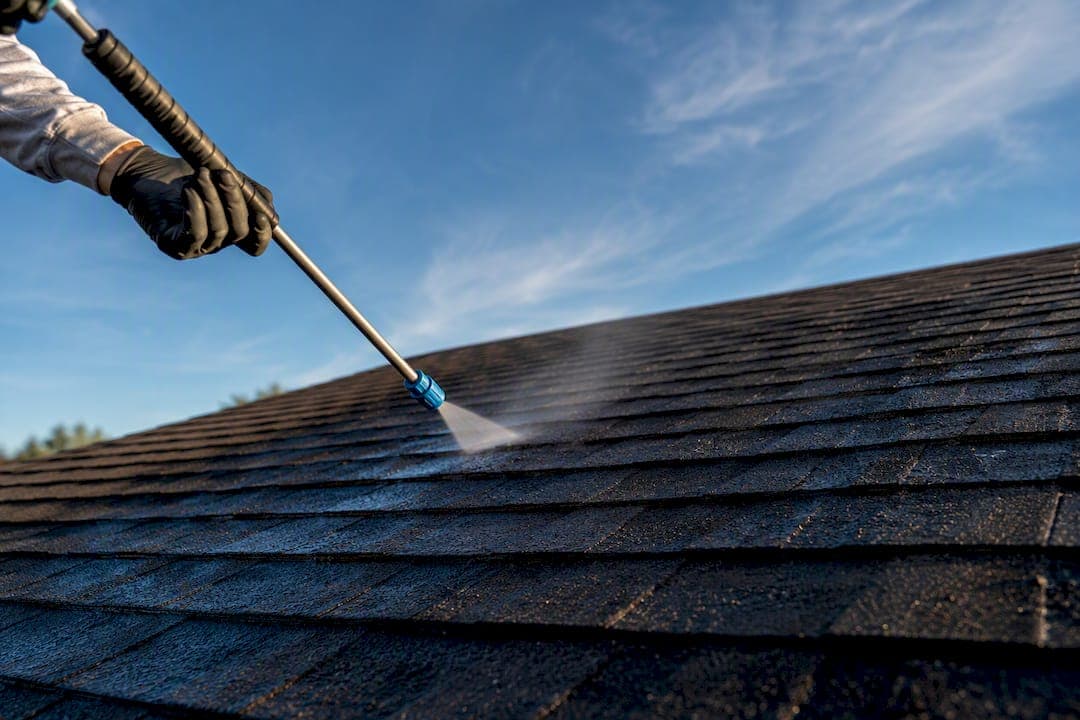
Those black streaks running down your shingles are almost always roof algae, a living organism called Gloeocapsa magma, and not soot, mould, or dirt. The good news: it's mainly cosmetic, though it can trap moisture against your shingles over time. The fix is a soft-wash treatment, either done yourself carefully or by a professional, and never a pressure washer.
TL;DR:
- Black streaks on roofs are caused by algae feeding on limestone in asphalt shingles, which can accelerate shingle wear over time.
- Proper removal involves a low-pressure soft wash using chlorine or oxygen bleach, avoiding high-pressure washing that damages shingles.
- Streaks tend to reappear within two to four years unless combined with preventative measures like zinc or copper ridge strips and algae-resistant shingles.
- Identifying whether the stain is algae, moss, lichen, or debris helps target the correct cleaning approach and prevent unnecessary costs.
- Hiring professionals is recommended for steep, fragile, or heavily infested roofs, especially when nearby landscaping needs protection or when safety risks are involved.
Table of Contents
- What causes black streaks and why they form where they do
- Is it algae, moss, lichen, or something else entirely?
- How do you safely remove black streaks from a roof?
- What actually stops black streaks from coming back?
- Should you clean it yourself or call a professional?
- What does Island Moss Busters actually offer?
- What homeowners get wrong about roof streaking
- Ready to get rid of those streaks for good?
- Where this guidance comes from
- Sources
What causes black streaks and why they form where they do
The organism behind those streaks is a cyanobacterium called Gloeocapsa magma, and it produces a dark pigment as a natural defence against UV light. That pigment is what you're seeing bleed down your shingles in dark, uneven trails.
Here's the part most homeowners don't know: the algae isn't just sitting on your roof, it's eating it. Gloeocapsa magma feeds on the limestone filler used in many asphalt shingle formulations, which explains why some roofs develop heavy streaking while a neighbour's roof, with a different shingle blend, stays clean for years.
A few conditions make streaking worse:
- Shade and orientation. North-facing slopes and tree-shaded sections dry out slower, giving algae the moisture window it needs to establish.
- Rain patterns. Water washes pigmented algae downhill, which is why streaks almost always point vertically and worsen below the point of first growth.
- Humidity and airborne spores. Algae spreads neighbourhood to neighbourhood on wind and rain, so if the house next door has streaking, yours is a likely candidate too.
Coastal and rainforest climates see this constantly, since the same humidity that keeps lawns green all winter also keeps algae fed.
Is it algae, moss, lichen, or something else entirely?
Not every black or dark mark on a roof is algae, and treating the wrong problem wastes time and money. Run through this quick check before you touch a hose:
- Vertical black or greenish black streaks, worse on shaded slopes point to algae.
- Raised, cushiony green or brown patches, especially near valleys and edges where debris collects, are moss, not algae.
- Crusty, flaky patches in grey, orange, or pale green, with a texture like dried paint, indicate lichen, which grips shingles harder and takes longer to remove.
- Dark streaking concentrated near flashing, vents, or seams is often extractive bleeding, a chemical residue leaching from roofing materials rather than a living organism.
- Soot, tree sap, or windblown debris stains tend to be patchy and irregular rather than following water flow lines.
Two extra checks worth doing: look in your gutters for a gritty buildup of granules, which can signal shingle wear rather than a surface stain, and check your attic for signs of trapped moisture. InspectApedia's diagnostic guide is a solid reference if you're still unsure, and when a stain doesn't match any of these patterns, a professional inspection beats guessing.
How do you safely remove black streaks from a roof?
The short answer: use a soft-wash treatment with either a diluted sodium hypochlorite (chlorine) mix or sodium percarbonate (oxygen bleach), applied at low pressure. ARMA's own cleaning guidance recommends exactly this approach and is explicit that pressure washing has no place on asphalt shingles.
Here's how a careful DIY soft-wash goes, step by step:
- Protect your landscaping first. Pre-wet plants and shrubs near the roofline, cover drains, and rinse anything the runoff might touch.
- Test a small, hidden patch of roof before treating the whole surface, and confirm the mix doesn't discolour or damage the shingles.
- Gear up properly. Wear eye protection, gloves, and a mask when mixing or spraying chlorine-based cleaners, and keep kids and pets away from the work zone.
- Apply the cleaner at low pressure, ideally under 100 psi, using a pump sprayer rather than a wand.
- Let it dwell. Most soft-wash treatments need 15 to 20 minutes of contact time to break down the algae before rinsing.
- Rinse top to bottom with garden-hose pressure only, letting gravity carry the loosened residue down and off the roof.
- Repeat on stubborn spots rather than increasing the pressure or the chemical concentration.
Do not, under any circumstance, use a pressure washer or a high-PSI nozzle on asphalt shingles. It strips the protective granules and can shorten the life of your roof significantly, according to industry cleaning research. Never walk on a wet, treated roof unless you have real experience with roof footing. It's slick, and one bad step is a bad day.
Pro Tip: If you're choosing between chemistries, oxygen bleach is gentler on nearby lawns and gardens but works more slowly than chlorine, so budget extra dwell time if you're avoiding harsher chemicals near sensitive landscaping.
What actually stops black streaks from coming back?
A one-time cleaning buys you time, not immunity. Untreated roofs can see streaking return within two to four years, sooner in wet coastal climates, unless you pair cleaning with prevention.
Two upgrades make the biggest difference:
- Zinc or copper ridge strips. Installed along the roof ridge, these release trace metal ions every time it rains, and the ions wash downhill, inhibiting new algae colonies before they take hold. It's a low-maintenance, install-once fix.
- Algae-resistant (AR) shingles. If you're already due for a reroof, AR shingles are formulated to resist Gloeocapsa magma growth, and manufacturers like Owens Corning often back this with specific warranty language worth reading closely.
Routine maintenance matters just as much as either upgrade. Trim back overhanging branches to cut shade and reduce leaf litter, and keep your gutters clear so debris and standing moisture don't feed new growth right at the roofline.
A roof with zinc strips and regular gutter maintenance can often go years longer between algae treatments than one left untreated after cleaning.
Should you clean it yourself or call a professional?
The decision usually comes down to a handful of practical factors, not preference alone:
- Roof height and pitch. Steep or multi-storey roofs raise the fall risk fast; leave those to a pro with proper fall protection.
- Roof age and condition. Older shingles are more fragile, and a wrong chemical mix or extra pressure can do real damage.
- How heavy the growth is. Light surface streaking is a reasonable DIY job; thick, established colonies often need commercial-grade treatment.
- Landscaping sensitivity. Mature gardens, koi ponds, or sensitive lawns near the roofline call for someone who knows runoff control.
Before hiring anyone, ask for proof of insurance, confirm they use a roof-specific soft-wash method (never pressure washing), ask how they protect landscaping, and get any moss-return promise in writing. Walk away from anyone pushing a pressure washer, unable to show insurance, or without roofing-specific references.
What does Island Moss Busters actually offer?
Island Moss Busters handles roof soft washing, moss removal, and gutter cleaning as core services across the Comox Valley, with coverage reaching Campbell River, Cumberland, Merville, Parksville, and Qualicum Beach. Every roof soft-wash job comes backed by a two to two and a half year moss return guarantee, a rare commitment in this industry and a direct answer to how often streaking comes back untreated.
The crews use Canadian-made eco-friendly solutions, protect landscaping during application, and are fully insured. If your roof shows heavy streaking or you're just not comfortable working at height, booking a roof cleaning inspection is the fastest way to get a straight answer on what your roof needs.
What homeowners get wrong about roof streaking
Most guides treat black streaks as either a cosmetic annoyance to ignore or an emergency to panic over, and both takes miss the point. The research is clear that Gloeocapsa magma is primarily a surface issue, but "primarily cosmetic" doesn't mean "harmless forever." Trapped moisture under algae colonies can, over years, contribute to premature shingle wear, especially on roofs that are already older or under warranty scrutiny.
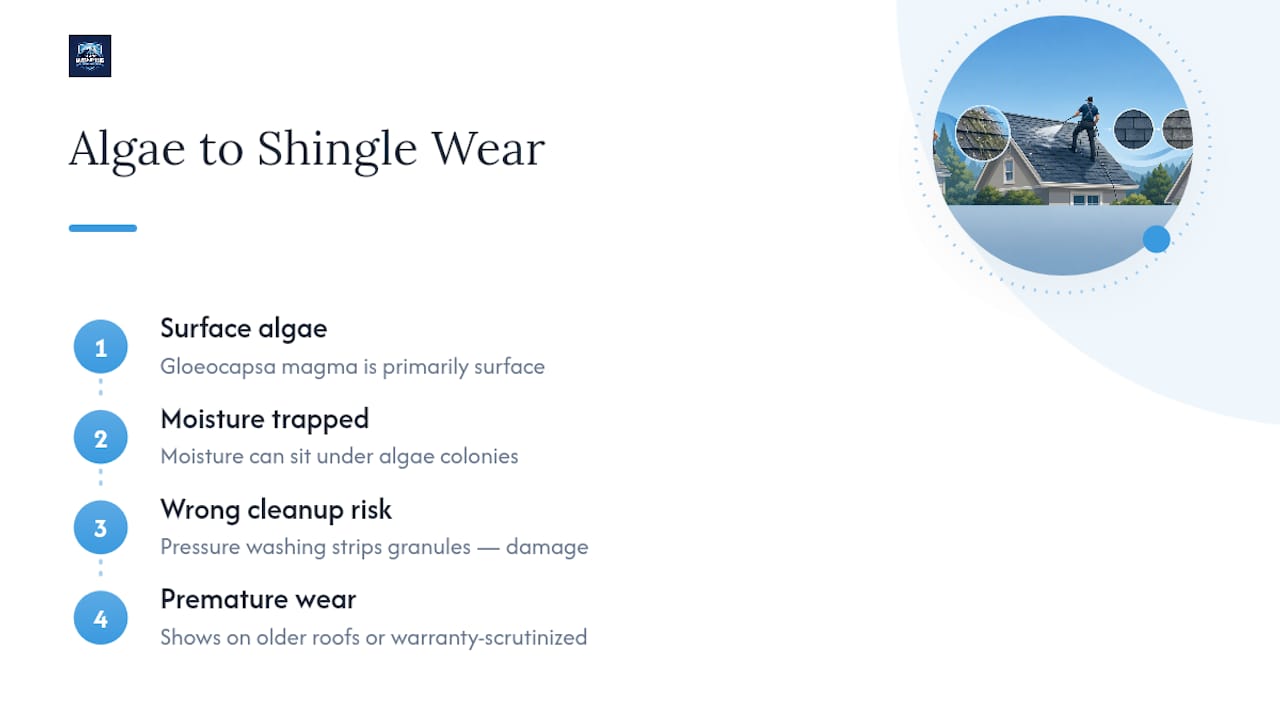
Where conventional advice really falls short is the DIY messaging. Plenty of online tutorials show pressure washers making quick work of streaks, and it does look satisfying. But every credible industry source, including ARMA's own guidance, treats that as roof damage in progress, not a cleaning method. Stripped granules don't grow back.
If there's one thing worth prioritizing, it's this: solve the drainage and shade problem before you solve the stain by following general preventative-maintenance guidance on trimming branches and clearing debris. Trimmed branches, clear gutters, and a ridge strip do more for long-term roof health than any one-time cleaning ever will. Cleaning without prevention is a repeat expense, not a fix.
— Island
Ready to get rid of those streaks for good?
A professional soft-wash with full landscaping protection, backed by a moss return guarantee, takes the guesswork and the risk out of dealing with black streaks yourself. Island Moss Busters runs this exact process across the Comox Valley and reaching towns like Parksville and Qualicum Beach, using low-pressure application and Canadian-made eco-friendly cleaners that protect your shingles instead of stripping them.
If your roof is older, steep, or shows heavy moss alongside the streaking, get it looked at before deciding on a cleaning method. You can request a quote or book an inspection through the roof cleaning service page, browse full details at Islandmossbusters, or call 250 650 8123 to talk through what your roof actually needs.
Where this guidance comes from
The cleaning steps and warnings in this guide track directly with ARMA's algae and moss prevention guidance, the asphalt roofing industry's own technical standard for safe shingle care. MicrobeWiki's profile on Gloeocapsa magma explains the biology behind the pigment, while InspectApedia's stain diagnosis guide is worth bookmarking if you're ever unsure what you're looking at. If your shingles are new, check with the manufacturer before applying any cleaner. Some warranties have specific requirements around cleaning methods.
Sources
- Algae streaks on a roof: cause, clean, prevent | The Roofing Brief
- Roof stain identification, diagnosis, cause, and cure — InspectApedia
- Gloeocapsa magma — MicrobeWiki
- How to clean roof stains — Family Handyman