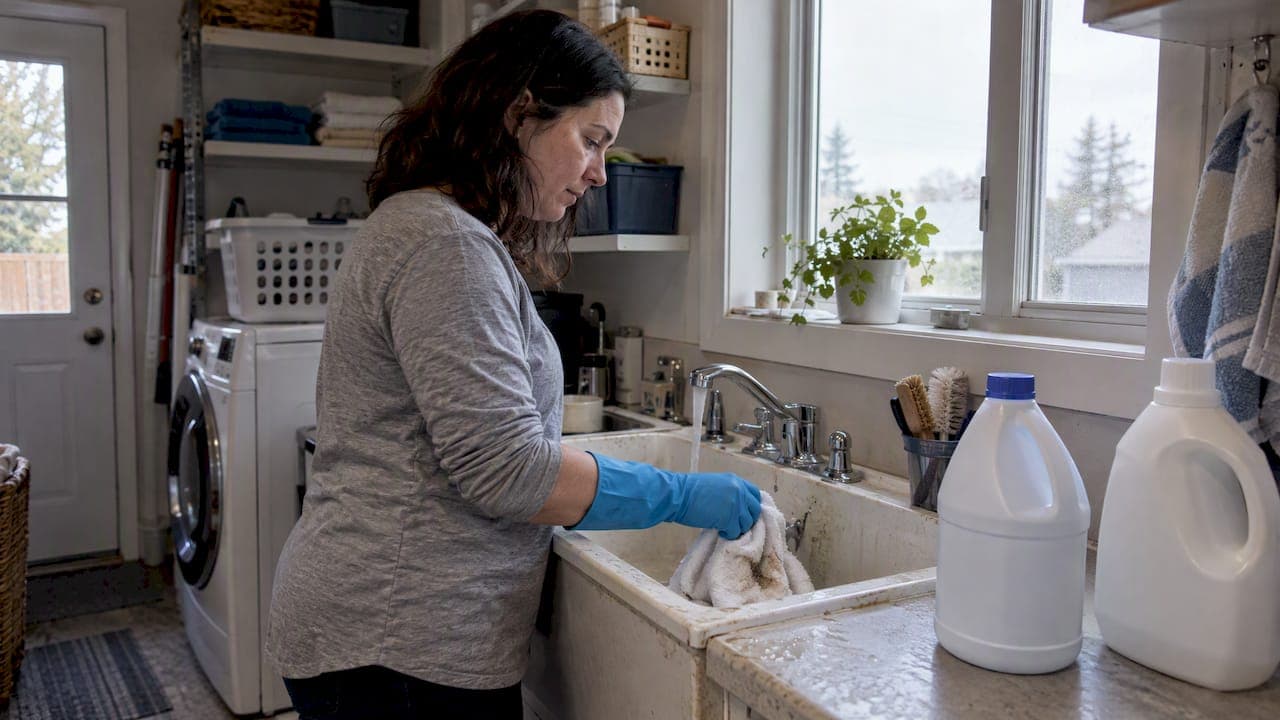
For most everyday cleaning, a biodegradable cleaner is the better default: it breaks down safely, carries far less risk to waterways, and handles the bulk of household grime without the hazards that come with chlorine bleach. Bleach still earns its place for narrow jobs like disinfecting a sickroom surface or whitening a stubborn stain, where its classification as very toxic to aquatic life and mixing hazards call for careful, occasional use. We break down the chemistry, the safety rules, and the task-by-task picks below.
TL;DR:
- Biodegradable cleaners like sodium percarbonate and enzymatic solutions effectively handle most household cleaning tasks without the environmental risks of bleach.
- Mixing bleach with acids or ammonia releases toxic chlorine gas or chloramine vapours, which can cause serious health hazards within minutes.
- Bleach is chemically breakdownable but not truly biodegradable, remaining very toxic to aquatic life despite eventually converting into chloride and water.
- Oxygen-based disinfectants and plant-based surfactants provide safer, effective alternatives for disinfecting, whitening, and removing grime without handling hazardous fumes.
- For tricky or delicate cleaning jobs, hiring a professional using eco-friendly, low-impact methods is often safer and more effective than DIY bleach-based approaches.
Table of Contents
- Is bleach biodegradable? Chemical breakdown vs biological biodegradation
- Health and safety risks: mixing hazards, fumes, and storage warnings
- How bleach stacks up against biodegradable cleaners for common jobs
- Practical biodegradable alternatives and how to use them
- Practical safety rules for using bleach and alternatives at home
- A cleaner's perspective: why professionals often reach for low-impact solutions first
- An alternative: hiring an eco-conscious professional for tricky cleaning jobs
- FAQ
- Sources
Is bleach biodegradable? Chemical breakdown vs biological biodegradation
Biodegradability means microorganisms can break a substance down into harmless natural compounds. Chemical decomposition is different: a substance can change form through a reaction without ever being processed biologically. Bleach falls into the second camp. Sodium hypochlorite, the active ingredient in household chlorine bleach, eventually degrades into chloride and water, but that happens through chemical reaction, not biological digestion, and the pace depends on pH, temperature, and concentration.

That distinction matters for how we classify its environmental risk. Health Canada's hazard assessment lists sodium hypochlorite as very toxic to aquatic life, carrying the H400 hazard code even though it eventually breaks down chemically. A compound can be impossible to call "biodegradable" in any meaningful sense while still disappearing from a test tube within hours.
Wastewater treatment plants remove a good share of the chlorinated by-products that household bleach use creates, and research from The Cleaning Institute notes significant biodegradation of these compounds in activated sludge systems. The acute risk shows up before treatment, when concentrated bleach hits soil, a storm drain, or a fish tank directly.
A few points worth holding onto:
- Chemical breakdown is not the same as biodegradation, even though both end with the original substance gone.
- Sodium hypochlorite is rated very toxic to aquatic life despite its eventual breakdown into chloride and water.
- Treatment plants handle much of the resulting by-product load, but direct or concentrated releases remain the real hazard.
Health and safety risks: mixing hazards, fumes, and storage warnings
Bleach is one of the few cleaning products where a simple mistake in the laundry room can send someone to the emergency department. The risk almost always comes from mixing.
- Bleach plus an acid, including vinegar or some toilet bowl cleaners, releases chlorine gas.
- Bleach plus ammonia, found in many window cleaners, produces toxic chloramine vapours.
- Either reaction can cause coughing, chest tightness, and eye irritation within minutes, and children, older adults, and people with asthma face the highest risk.
- Diluted bleach solutions lose strength quickly and should never be stored. Mix only what you plan to use right away.
- If exposure happens, get to fresh air immediately, ventilate the room, and contact a Poison Centre for guidance.
Reports of chloramine exposure to Canadian Poison Centres more than doubled in October and November 2020 compared with the same months in 2019, which is why federal safety alerts warn so plainly against mixing bleach with any other cleaning product.
How bleach stacks up against biodegradable cleaners for common jobs
Bleach earns its reputation for a reason: it kills a broad range of pathogens quickly and lifts stubborn stains on white fabric and hard surfaces. What it does not do well is cut grease or organic soil, which is why pre-cleaning with detergent always has to come before disinfecting.
Oxygen-based cleaners, built on hydrogen peroxide or sodium percarbonate, whiten fabrics without the colour damage bleach causes, and at the right concentration and contact time they handle many disinfecting tasks too. Enzymatic cleaners and plant-based surfactants excel at the jobs bleach struggles with, including grease, protein stains, and general grime.
A quick task guides:
- Disinfecting a sickroom or high-touch surface: a registered disinfectant, which may be bleach-based or an oxygen-based alternative with a verified contact time.
- Whitening laundry: an oxygen-based brightener rather than chlorine bleach, to protect colour and fabric fibres.
- Routine kitchen or bathroom grime: an enzymatic or plant-based surfactant cleaner paired with scrubbing.
- Mould or mildew spot treatment: diluted bleach works, but ventilation is essential, and a biodegradable alternative is often enough for light cases.
Practical biodegradable alternatives and how to use them
A handful of ingredients cover almost everything a bleach bottle promises, without the aquatic toxicity rating or the mixing hazards.
Sodium percarbonate, the powder behind most oxygen boosters, releases hydrogen peroxide when dissolved and works well for laundry brightening and soaking stained fabric.

Enzymatic cleaners target organic matter directly, which makes them strong performers on pet stains, food residue, and bathroom grime, though they are not formulated for rapid pathogen kill. Plant-based surfactant concentrates handle everyday degreasing and multi-surface cleaning with a lighter environmental footprint.
A few habits make these alternatives work as intended:
- Check the label for a registered disinfectant active ingredient when true disinfection, not just cleaning, is the goal.
- Match the contact time listed on the product, since wiping it off too soon undercuts its effectiveness.
- Store concentrates in their original containers, since dilution ratios and shelf life vary by product.
- Favour products with transparent ingredient lists over vague "natural" marketing claims.
Together they cover most whitening and light disinfecting jobs that would otherwise call for bleach, as explained in this eco-friendly cleaning tips guide.*
Practical safety rules for using bleach and alternatives at home
Whatever you use, a few habits keep the job safe and effective.
- Always follow the dilution ratio on the product label rather than estimating by eye.
- Mix only the amount you need for that cleaning session, since diluted bleach solutions degrade within hours.
- Open a window or run an exhaust fan whenever you are using a strong chemical cleaner indoors.
- Wear gloves and eye protection when handling concentrated bleach or any product with a corrosive warning.
- Rinse treated surfaces afterward and pour leftover solution down the drain with running water rather than storing it.
- Reach for a biodegradable alternative by default when ventilation is limited or the job is routine rather than a true disinfecting need.
Pro Tip: If a room doesn't have a window or a working fan, treat that as your cue to switch to an oxygen-based or enzymatic cleaner instead of bleach.
A cleaner's perspective: why professionals often reach for low-impact solutions first
Years of washing roofs and exteriors in a wet coastal climate have taught our crews to default to the gentlest method that still gets the job done. We use eco-friendly solutions and low-pressure techniques because they protect the surfaces we're cleaning and the plants, soil, and waterways around every property.
Stronger chemistries still have a place. Severe biological growth or a situation with specific sanitizing requirements sometimes calls for something beyond a standard biodegradable cleaner. But those are the exception, not the starting point, on almost every job we take on.
— Island
An alternative: hiring an eco-conscious professional for tricky cleaning jobs
Some jobs are better left to a professional, especially when the surface is delicate, the work involves height, or moss and grime keep returning no matter what you spray. We handle these situations with low-pressure methods and eco-friendly solutions built for exterior surfaces, backed by a multi-year moss return guarantee on roof cleaning.
A few signs it's time to call in a pro instead of reaching for another bottle:
- Roof moss or algae keeps coming back despite regular DIY treatment.
- The job involves ladders, steep pitches, or second-storey windows.
- Siding, gutters, or solar panels need cleaning without damaging the surface underneath.
If any of that sounds familiar, our roof cleaning and moss removal service and house washing service are a good place to start. You can request a quote or check availability any time through Island Moss Busters.
FAQ
Is there an eco-friendly alternative to bleach?
Yes. Hydrogen peroxide, sodium percarbonate (oxygen bleach), and enzymatic cleaners cover most whitening, disinfecting, and stain-removal jobs that bleach is typically used for. They break down into simpler, less harmful compounds and avoid the aquatic toxicity rating attached to chlorine bleach.
What do hospitals use to clean instead of bleach?
Healthcare settings generally reserve bleach-based disinfectants for specific high-risk situations and otherwise rely on registered disinfectants chosen for the surface and pathogen involved. Routine cleaning in most settings uses detergent-based products first, since removing organic matter is a necessary step before any disinfectant can work properly, as general cleaning and disinfecting guidance outlines.
What cleaner is better than bleach?
For routine household cleaning, a biodegradable surfactant-based cleaner or an enzymatic formula outperforms bleach because it lifts grease and organic soil that bleach leaves behind. For whitening fabrics, an oxygen-based brightener protects colour and fibres in a way chlorine bleach cannot.
Is bleach considered biodegradable?
No. Sodium hypochlorite breaks down chemically into chloride and water, but that process is not biological biodegradation, and Health Canada's hazard assessment classifies it as very toxic to aquatic life.
Sources
- Canada
- Reduce your risk: toxic gases — never mix bleach with other cleaning products — Government of Canada recalls/alerts
- Sodium hypochlorite — The Cleaning Institute (research summary)