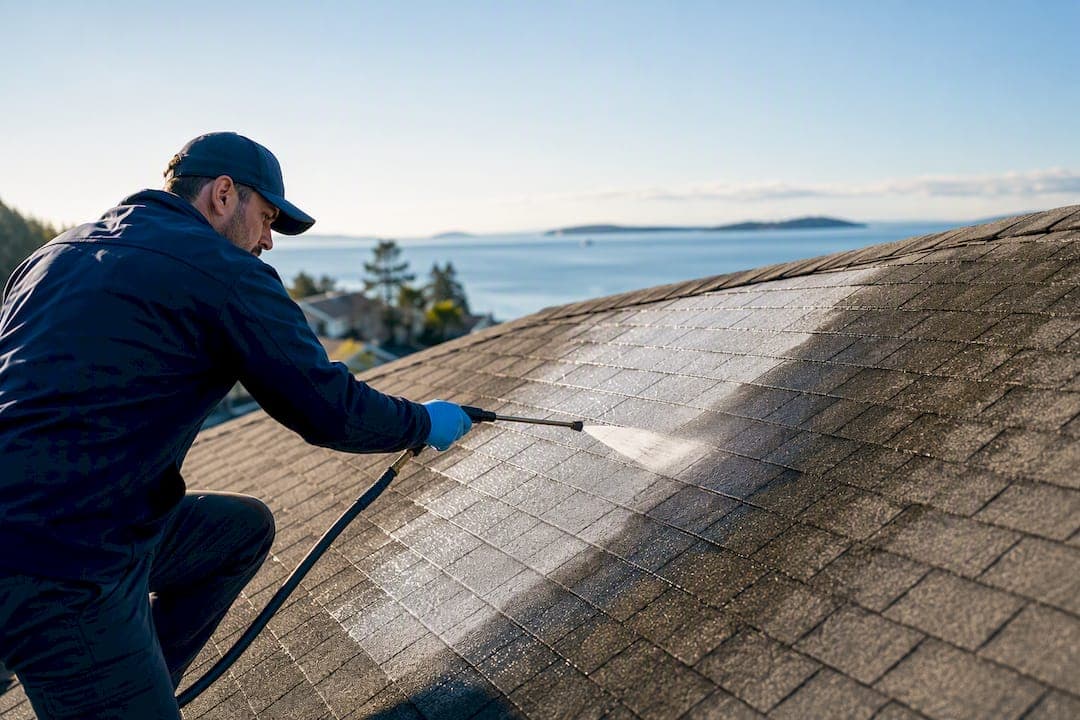
The safest and most effective way to handle asphalt shingle cleaning is a low-pressure soft wash using a properly diluted biocide or oxygen-based cleaner, applied from the ground up or by a trained crew. Pressure washing does the opposite of what you want; it strips protective granules and can void your shingle warranty. If your roof is steep, aging, or heavily mossed, call a licensed soft-wash professional instead of climbing up there yourself.
TL;DR:
- Soft washing with a proper biocide or oxygen-based cleaner is the safest method, and it kills algae at the root without damaging shingles.
- Pressure washing can strip protective granules, void warranties, and accelerate roof wear by forcing water under shingles, causing long-term damage.
- Homeowners should inspect roofs from the ground, ensure proper solution dwell time, and avoid aggressive scrubbing or chemical mixing to prevent voiding warranties.
- A professional soft-wash service is advisable for steep pitches, heavy moss buildup, or older roofs, with proper insurance, chemical use, and runoff protection.
- Routine maintenance like gutter clearing, branch trimming, and installing zinc or copper strips can slow moss growth and extend roof lifespan.
Table of Contents
- Why soft washing works and which cleaners to help clean asphalt shingles
- Step-by-step soft-wash: pre-checks, mixing, application, and post-checks
- Mistakes that void warranties or speed roof failure
- Routine tasks and passive measures to slow regrowth
- When should you hire a professional roof soft-wash service?
- The core of this company's work is roof soft washing and moss removal, often backed by a moss-return guarantee. The use of eco-friendly solutions aims to kill moss and algae at the root without harming surrounding landscaping.
- Ready for a professional soft wash on your roof?
- Where these recommendations come from
- Sources
Why soft washing works and which cleaners to help clean asphalt shingles
Soft washing and pressure washing solve the same problem with very different approaches, and only soft washing is safe for your roof. Soft washing uses low water pressure combined with a cleaning solution that kills the algae, moss, and lichen colonies living on your shingles. Pressure washing blasts them off the surface with force, which damages protective granules.
That distinction matters because of what's actually growing on your roof. Those black streaks aren't dirt. They're colonies of Gloeocapsa magma, a type of cyanobacteria that feeds on the limestone filler inside your shingles. Left untreated, it doesn't just look bad. It slowly eats away at the material that holds your shingles together, which shortens the life of the whole roof.
Soft washing kills the organism at the root rather than scraping it off the surface, which is why it holds up longer and does less damage.
What cleaners actually work:
- Sodium hypochlorite (bleach-based solutions): the industry standard for killing algae and moss, typically diluted based on how severe the growth is.
- Oxygen-based cleaners (sodium percarbonate): a gentler, eco-friendly alternative that's worth considering if you've got sensitive landscaping, pets, or a vegetable garden right under the roofline.
- Manufacturer-approved cleaning products: always check what your shingle brand recommends before mixing anything yourself.
Pro Tip: Wet down all plants, shrubs, and grass near the drip line before you start, and again right after. A thorough soak dilutes any runoff before it can settle into the soil.
Dwell time is where most DIYers get impatient. A properly mixed solution needs several minutes of contact time to actually kill the organism, not just bleach it visually white. Rinsing too soon undoes most of the work.
Step-by-step soft-wash: pre-checks, mixing, application, and post-checks
Before you touch a hose, walk the perimeter of your house and look up. A ground-level inspection tells you most of what you need to know without putting you at risk.
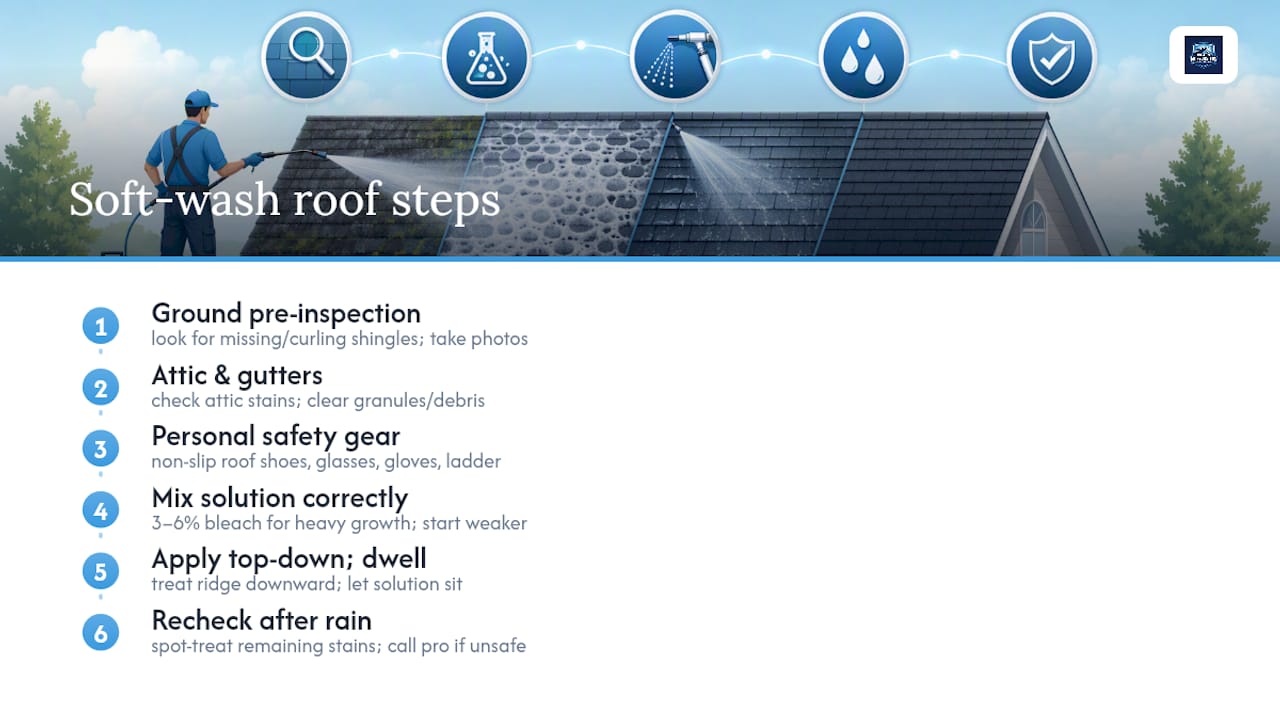
1. Do a pre-job inspection from the ground. Check for missing or curling shingles, sagging spots, and heavy moss buildup, especially in valleys and around chimneys. Take photos now. If you ever need to file an insurance claim or dispute a contractor's work later, documented "before" photos protect you.
2. Check your attic and gutters. Look for water stains on the attic ceiling, which can signal a leak that cleaning won't fix. Clear gutters of granules and debris. A pile of granules in the gutter is an early sign your shingles are already wearing thin.
3. Gear up properly. You'll want non-slip footwear rated for roof work, safety glasses, chemical-resistant gloves, and a properly anchored ladder. If your roof pitch is steeper than a gentle slope, this is already a job for a harness and fall protection, or better yet, a professional crew.
4. Mix your solution correctly. Professional soft-wash setups run a low-pressure pump with a proportioner valve and separate draw lines for fresh water and chemical, plus a surfactant added for cling so the solution sticks to the shingle instead of sheeting straight off. Concentrations for sodium hypochlorite commonly run in the 3 to 6 percent range for heavy infestations, but always start weaker and adjust up. If you're using a garden pump sprayer instead of a proper rig, keep pressure low. This is about chemistry doing the work, not force.
5. Work top-down, one section at a time. Start at the ridge and work downward in small, manageable sections so the solution runs downhill over the area you just treated. This lets gravity help you clean.
6. Let it dwell. Don't rush the rinse. Give the solution time to work, generally longer than most homeowners expect. Many professionals don't rinse the roof at all. They let the next rainfall carry the dead organic material away naturally, which is gentler on the shingles than a forced rinse.
7. Recheck after the next rain. Look for any spots that still show discolouration. Those may need a second, lighter application rather than a repeat of the full process.
Stop and call a professional if you notice: soft or spongy spots underfoot, moss so thick it's lifting shingle edges, shingles that feel brittle or crack when you walk near them, or a roof pitch steep enough that footing feels unstable. None of those are DIY situations, and pushing through them risks a fall or a roof that needs full replacement sooner than it should.
Mistakes that void warranties or speed roof failure
The single biggest mistake homeowners make is reaching for a pressure washer because it feels faster and more thorough. The Asphalt Roofing Manufacturers Association explicitly recommends against pressure washing asphalt shingles, and most manufacturer warranties treat high-pressure cleaning as misuse that voids coverage outright.
Here's what pressure washing actually does to your roof:
- Strips granules, exposing the asphalt layer underneath to UV damage and accelerating wear.
- Leaves root structures intact. Blasting off visible moss doesn't kill the organism underneath; the now-porous surface actually recolonizes faster than untreated shingles.
- Drives water under shingle edges, which can lead to leaks that show up weeks or months later.
Beyond pressure washing, aggressive scraping and stiff wire brushes cause similar damage by physically dislodging granules. If you're removing thick moss clumps by hand, use a soft-bristle brush or plastic scraper and work gently, lifting rather than grinding.
Mixing your own chemical cocktails is another common misstep. Combining bleach with ammonia-based cleaners, for instance, produces dangerous fumes. Stick to one product, follow the label, and never guess at ratios.
Weather matters more than most people think, too. Walking a roof in extreme heat softens shingles and makes them prone to scuffing under your boots, while a frosty or icy roof turns into a fall hazard almost instantly. And before any water or chemical touches the roof, cover or thoroughly pre-wet nearby plants, patio furniture, and any painted surfaces below the runoff path.
Routine tasks and passive measures to slow regrowth
A clean roof stays clean longer when you handle a few low-effort tasks on a schedule rather than waiting for black streaks to show up again.
- Inspect and clear debris twice a year, in spring and fall, paying close attention to valleys and gutters where leaves and needles trap moisture. Regular seasonal maintenance catches small problems before they become expensive ones.
- Trim back overhanging branches. Shade and leaf litter are exactly what moss and algae need to thrive, so keeping tree canopies back from the roofline reduces both moisture retention and debris buildup.
- Consider zinc or copper strips at the ridge line. Installed during a shingle replacement or as a retrofit, these strips release trace metal ions with each rainfall that inhibit algae and moss regrowth on the slopes below them.
- Watch your gutters for granule buildup. A steady accumulation of granules is often the first sign that your shingles are aging and may need attention sooner than the roof's rated lifespan suggests.
- Check attic ventilation annually. Poor airflow trapped heat and moisture accelerates shingle failure from underneath, which no amount of surface cleaning can fix.
Keeping gutters genuinely clear does more than protect your roof edge. It also cuts down on the standing debris that attracts pests looking for a damp, sheltered nesting spot, a connection worth knowing if you've ever dealt with a gutter-related pest problem.
When should you hire a professional roof soft-wash service?
Some roofs are simply not DIY territory, and knowing the line ahead of time saves you a trip to the emergency room.
- Assess the risk factors honestly. A steep pitch, a second or third storey, heavy moss coverage, an older roof nearing the end of its rated life, or any pre-existing damage all point toward hiring a pro rather than climbing up yourself.
- Ask about insurance and method. A reputable contractor should carry liability coverage and confirm in writing that they use low-pressure soft washing, not a pressure washer with a wide-angle tip.
- Ask what chemicals they use and at what concentration. A pro who can answer this specifically, rather than vaguely, generally knows what they're doing.
- Ask how they protect your landscaping and where runoff goes. Proper practice includes pre-wetting plants, diverting runoff away from sensitive beds, and never letting concentrated chemical pool near roots or storm drains untreated.
- Ask for documentation. Before-and-after photos, and a written guarantee against moss return, are reasonable things to expect from any professional service.
Cost varies with roof size, pitch, moss severity, and how easy the property is to access, so treat any number you hear as a starting point for a conversation, not a fixed quote, until someone has actually looked at your roof.
The core of this company's work is roof soft washing and moss removal, often backed by a moss-return guarantee. The use of eco-friendly solutions aims to kill moss and algae at the root without harming surrounding landscaping.
Every job starts with documentation. We note pre-existing damage before we touch a shingle, protect plants and hardscaping along the runoff path, and if moss does return within the guarantee window, we come back and re-treat it at no extra charge. Most homeowners pair a roof soft wash with gutter cleaning and house washing in the same visit, since a clean roof paired with clear gutters does more for a home's long-term health than either service alone.
— Island
Ready for a professional soft wash on your roof?
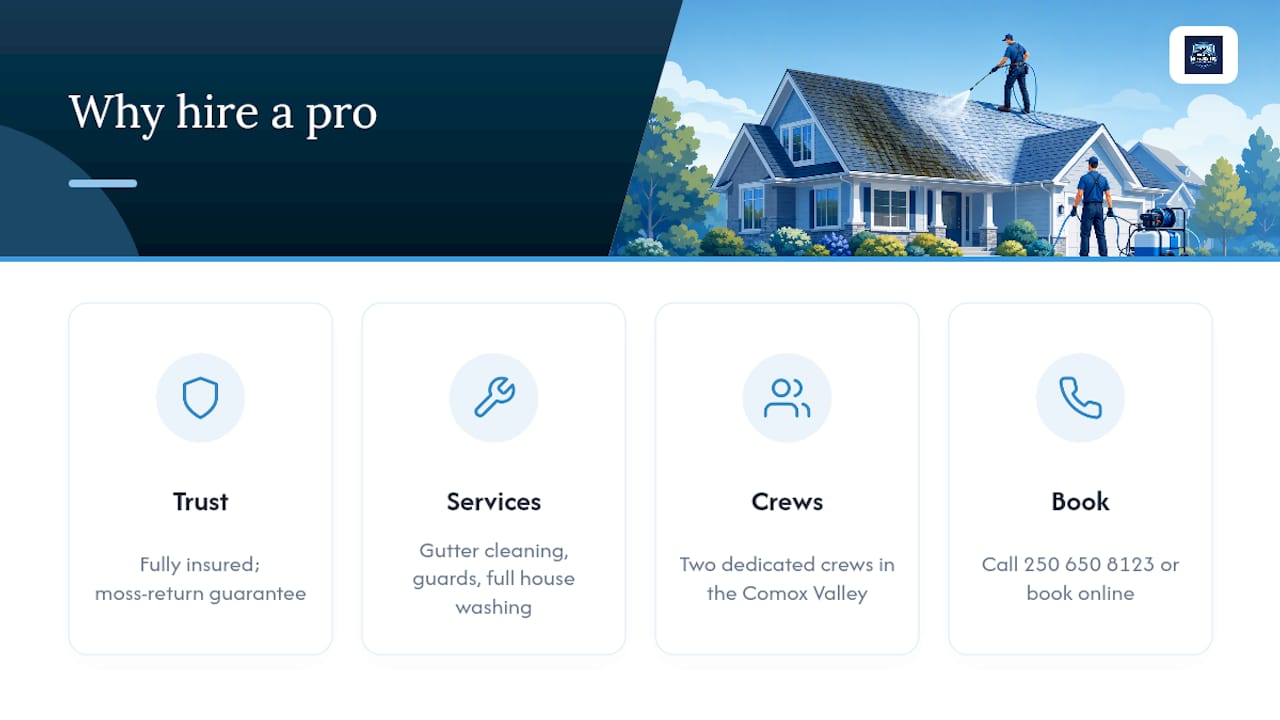
If reading through the mixing ratios and dwell times above made climbing a ladder with a bleach solution sound less appealing, that's the exact gap Islandmossbusters is built to fill. We're fully insured, run two dedicated crews across the Comox Valley, and back every roof job with a moss-return guarantee that most homeowners can't get from a one-off DIY weekend or a general handyman.
Beyond the roof itself, we handle the jobs that go hand-in-hand with it: gutter cleaning to keep granules and debris from backing up your downspouts, gutter guard installation if you're tired of clearing them altogether, and full house washing to match a freshly cleaned roof with siding that looks just as good. If your home is in Campbell River or Parksville, we've got dedicated crews serving those areas too.
Ready to see what a properly soft-washed roof looks like? Call us at 250 650 8123 or book your roof cleaning service online and get a real quote based on your actual roof, not a guess.
Where these recommendations come from
The safety and method guidance in this article draws from the Asphalt Roofing Manufacturers Association's official position against pressure washing, IKO's homeowner maintenance guidance on inspection cadence, and a detailed professional soft-wash process breakdown covering equipment and technique. Manufacturer maintenance pages, like CertainTeed's, add useful detail on ventilation and long-term roof health worth checking before you start any cleaning project of your own.
Sources
- Algae & Moss Prevention and Cleaning for Asphalt Roofing Systems – Asphalt Roofing Manufacturers Association (ARMA)
- Shingle roof maintenance tips for homeowners - IKO Roofing Products
- How to soft wash a roof: full process from a 25-year veteran